






Сравнение лучших французских криптобирж
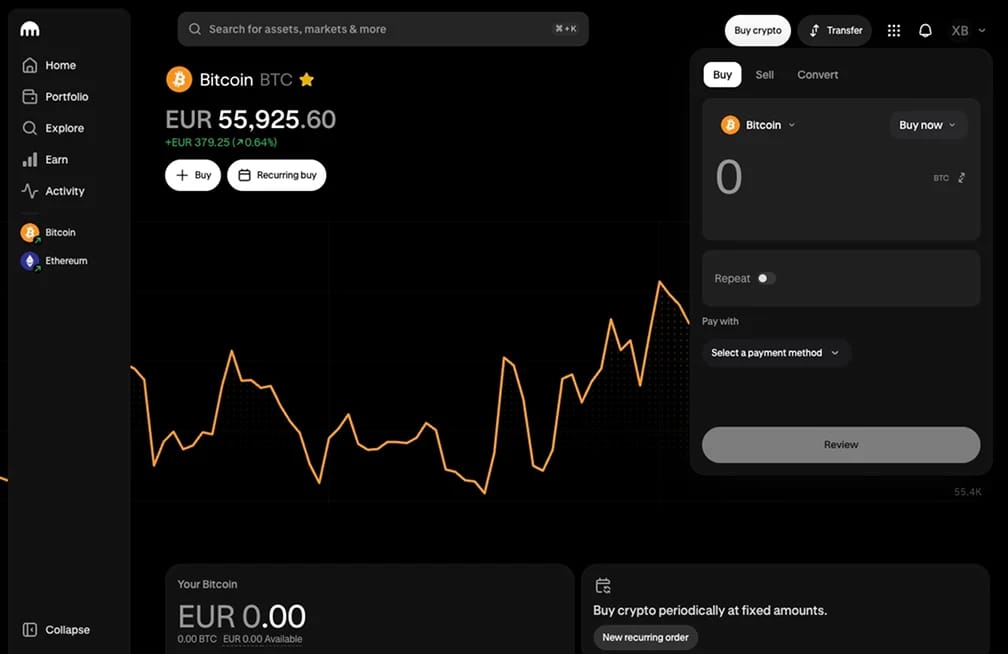
1. Kraken
Kraken — лучшая криптовалютная биржа во Франции, потому что ни одна другая площадка здесь не может сравниться с ней по уровню безопасности, качеству исполнения и глубине регулирования. Ее европейское юридическое лицо, Payward Europe Solutions Limited, стало первой компанией, которую Central Bank of Ireland авторизовал в качестве CASP в июне 2025 года (это разрешение распространяется на Францию через европейский паспорт EEA), и за пятнадцать лет работы Kraken ни разу не потеряла клиентские средства из-за взломов.
Расходы радуют тех, кто освоил профессиональный интерфейс. Kraken Pro начинается с 0,25% для maker и 0,40% для taker, что значительно ниже встроенной наценки простого экрана покупки, а стаканы заявок в EUR являются одними из самых глубоких в Европе. На платформе представлено около 450 активов, многие из которых подходят для stake с выплатой наград дважды в неделю, а квалифицированные клиенты могут получить доступ к регулируемым деривативам через лицензированную группу MiFID II на Кипре.
Опыт использования во Франции оставляет приятное впечатление для американского бренда. Сайт работает на французском языке, депозиты SEPA и SEPA Instant бесплатны, а во время нашего тестирования вывод средств поступил на французский счет на следующий рабочий день. Институциональным клиентам доступны OTC-стол и полный доступ к API. В нашем обзоре Kraken платформа подробно разбирается по функциям, а также глубже рассматриваются меры безопасности.
Плюсы
- Пятнадцать лет работы без потери клиентских средств при поддержке ежедневных отчетов о подтверждение резервов.
- Глубокие евро-стаканы заявок и комиссии Kraken Pro от 0,25% отлично подходят для крупных ордеров из Франции.
- Первая авторизация MiCA CASP, выданная Central Bank of Ireland и успешно перенесенная во Францию по паспорту EEA.
Минусы
- Стандартный экран покупки криптовалюты добавляет наценку, в несколько раз превышающую указанную комиссию Pro, что является простой ловушкой для новых пользователей.
- Доступ к деривативам требует отдельного субаккаунта, регулируемого CySEC, и прохождения опросника на соответствие требованиям.
- Новые токены появляются значительно позже, чем на Gate, а многие малокапитализированные монеты не добавляются вовсе.
2. Bybit
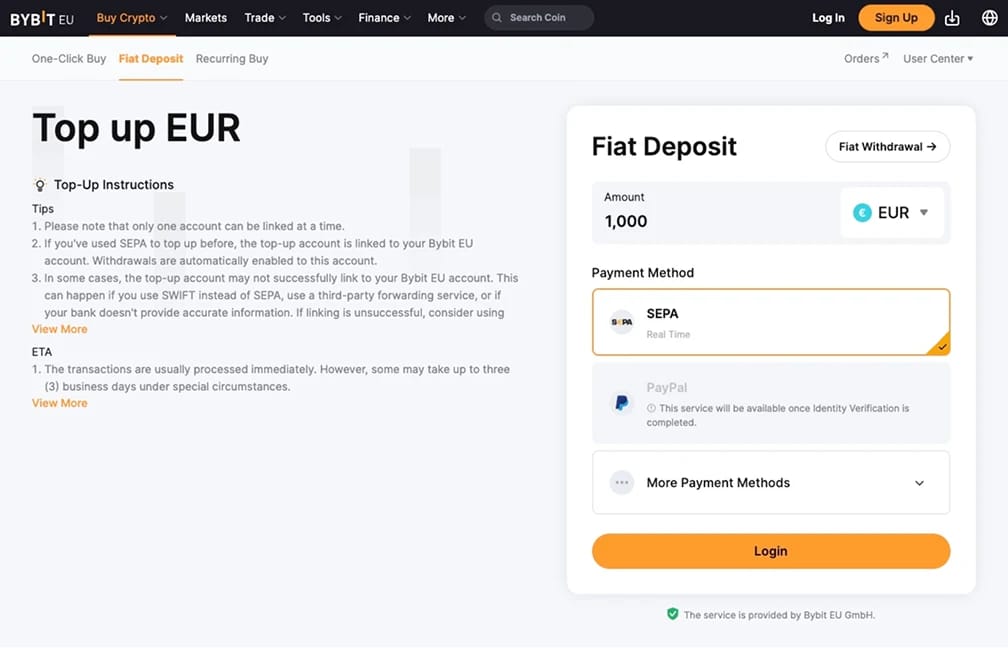
Bybit — это самый выгодный способ активной торговли во Франции. Это европейская платформа, созданная с учетом эпохи MiCA, а не адаптированная под нее. Французские аккаунты обслуживаются на bybit.eu, управляемой из Вена компанией Bybit EU GmbH на основании разрешения австрийского регулятора FMA, к которому в августе 2026 года добавилась австрийская лицензия эмитента электронных денег для платежного филиала. Bybit является второй по величине биржей в мире по торговому объему.
Ни один конкурент не превосходит ее по стоимости. спот-ордера обходятся в фиксированные 0,10% для обеих сторон стакана, депозиты SEPA и SEPA Instant бесплатны, а карты, Apple Pay и Google Pay дополняют список вариантов пополнения. На платформе EEA торгуется около 600 криптовалют, а также предлагаются продукты Earn, copy trading, сеточные боты, маржинальная спотовая торговля, демо-торговля, Bybit Pay и карта Bybit.
Удобство использования во Франции — несомненное достоинство. Интерфейс, приложение и служба поддержки работают на французском языке, а в ходе нашего тестирования перевод через SEPA Instant был готов к торговле уже через несколько минут. бессрочные контракты по-прежнему недоступны на европейском юридическом лице, так как заявка инвестиционной компании находится на рассмотрении. Наш обзор Bybit охватывает всю платформу и объясняет различия между глобальным и европейским юридическим лицом.
Плюсы
- Фиксированная спот-комиссия 0,10% и бесплатное пополнение через SEPA Instant делают конвертацию евро в криптовалюту дешевле, чем у любого здешнего конкурента.
- Австрийский FMA контролирует криптоструктуру в соответствии с MiCA, а платежную структуру — на основании отдельной лицензии эмитента электронных денег.
- Полная локализация на французский язык охватывает интерфейс, приложение и службу поддержки.
Минусы
- Деривативы недоступны на европейской платформе до тех пор, пока не будет получено ожидаемое разрешение инвестиционной фирмы.
- Кража холодного кошелька в феврале 2025 года на сумму $1,4 миллиарда остается крупнейшим взломом биржи за всю историю наблюдения, несмотря на то что клиентам возместили убытки в течение нескольких дней.
- Каталог EEA, насчитывающий около 600 активов, составляет лишь малую часть того, что предлагает глобальная Bybit, а MiCA не допускает пары с USDT на платформу.
3. Bitpanda
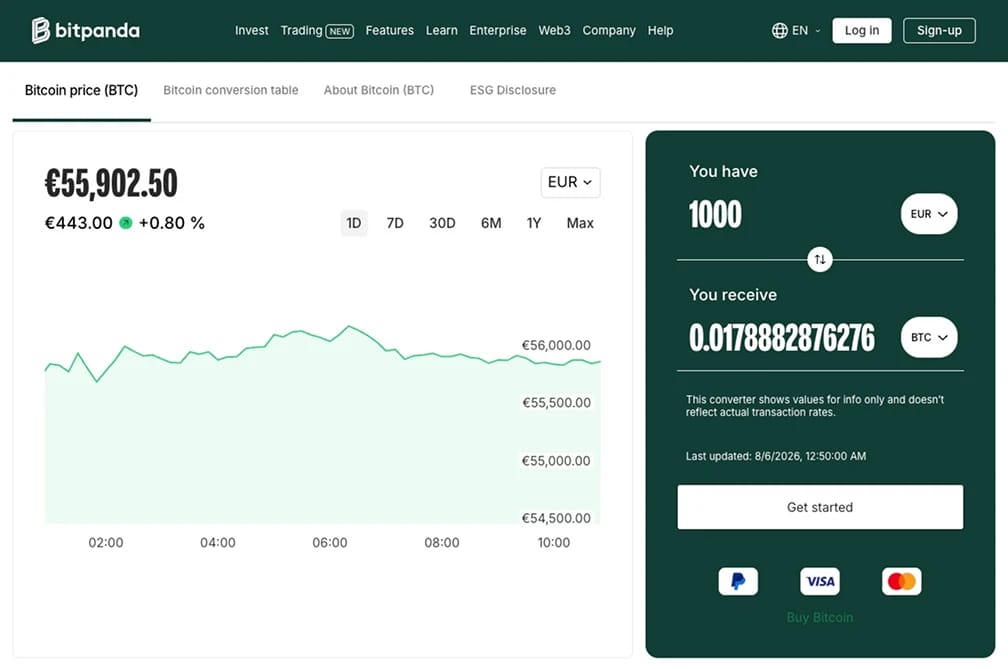
Bitpanda — лучший выбор для французских инвесторов, которые хотят хранить цифровые активы рядом с традиционными. Венская компания обладает тремя разрешениями MiCA от немецкого BaFin, мальтийского MFSA и австрийского FMA, обслуживает более 7 миллионов европейцев и предлагает более 600 криптовалют, дробные акции, ETFs, сырьевые товары и драгоценные металлы. Это делает ее нашим главным выбором для пользователей, желающих объединить все свои инвестиции в одном приложении.
Больше всего французские пользователи ценят ее сберегательные планы. Прямой дебетовый перевод SEPA еженедельно или ежемесячно списывает фиксированную сумму с французского счета и автоматически инвестирует ее, превращая усреднение долларовой стоимости в фоновый процесс. Карта Bitpanda Card позволяет тратить любой баланс на терминале с автоматической конвертацией. Биржа также предлагает маржинальную торговлю с 10x leverage на криптовалюту и до 20x leverage на акции и ETFs.
Обратной стороной является ценообразование: Bitpanda взимает одни из самых высоких комиссий в отрасли. Мгновенные покупки добавляют спред до 1,49%, заложенный в котировку, что в несколько раз превышает стоимость limit order на Bybit или Gate, причем точная сумма сбора остается скрытой до появления котировки. Активным трейдерам стоит поискать другие варианты, в то время как пассивные инвесторы могут счесть удобство оправдывающим эту переплату.
Плюсы
- Три разрешения MiCA от разных регуляторов ЕС обеспечивают Bitpanda необычайно солидную историю лицензирования.
- Криптовалюта, дробные акции, ETFs и металлы торгуются с одного франкоязычного счета с автоматизированными сберегательными планами.
- Карта Bitpanda Card конвертирует любой актив в евро в точке продажи с начислением кэшбэка за траты.
Минусы
- Совокупные расходы на покупку в размере до 1,49% являются самыми высокими в этом рейтинге.
- Котировки на основе спреда трудно сопоставлять с ценами в стакане заявок.
- Отсутствие деривативов и ограниченная глубина для серьезных спот-операций.
4. Gate
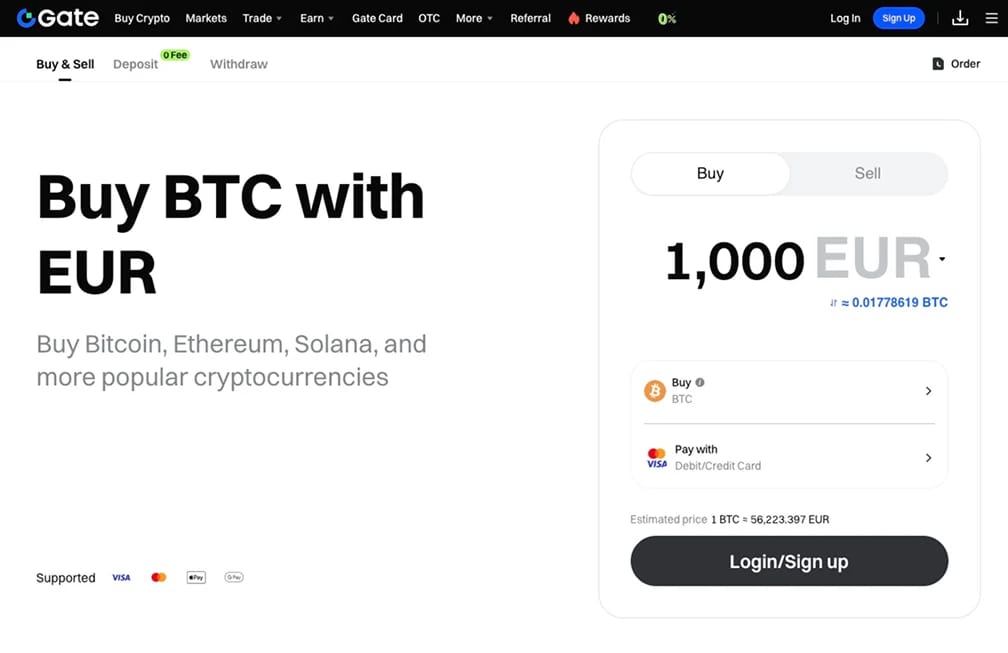
Gate заслуженно занимает свое место благодаря охвату широкого спектра нишевых активов, предлагая крупнейший в мире выбор криптовалют. Мальтийский регулятор MFSA авторизовал Gate Technology Ltd в рамках MiCA в сентябре 2025 года, в феврале 2026 года последовала платежная лицензия ЕС, и на европейской платформе представлено более 1000 криптовалют, что не имеет аналогов для резидента Франции.
Ценообразование здесь одно из лучших, уступая только OKX. Спотовые комиссии начинаются с 0,09% для maker и 0,10% для taker до применения скидок токена GT, а аккаунт включает в себя launchpad, торговые боты, копирование портфелей и продукты Earn. Для токенов, которые Kraken или Coinhouse не будут добавлять в листинг еще месяцы, если вообще добавят, Gate обычно является первой регулируемой биржей, которая их поддерживает.
Компромиссы заключаются в удобстве использования и ликвидности. Меню уходят на несколько уровней вглубь, промоакции загромождают экран, а низколиквидные пары соседствуют с высоколиквидными без каких-либо разделителей, поэтому широкий спред может незаметно обойтись дороже, чем экономия на низкой комиссии. Для новичков это может быть чрезмерно сложно. Мы рассматриваем Gate как второстепенный аккаунт для доступа к токенам, что подробно объясняется в нашем обзоре Gate.
Плюсы
- Более 1000 добавленных в листинг криптовалют образуют самый широкий регулируемый выбор, доступный во Франции.
- Начальные комиссии в размере 0,09% и 0,10% являются самыми низкими в этом рейтинге, причем боты и launchpad включены.
- Авторизация MiCA от MFSA сочетается с отдельной лицензией платежного учреждения ЕС для того же юридического лица.
Минусы
- Многие нишевые токены торгуются с низкой ликвидностью, а спреды по небольшим парам могут превышать экономию на комиссиях.
- Интерфейс требует больше времени на освоение, чем любой из представленных здесь конкурентов.
- Пополнение в евро ограничено SEPA, банковским переводом и картами, причем расчеты происходят немного медленнее, чем на Bybit, судя по нашим тестам.
5. Coinhouse
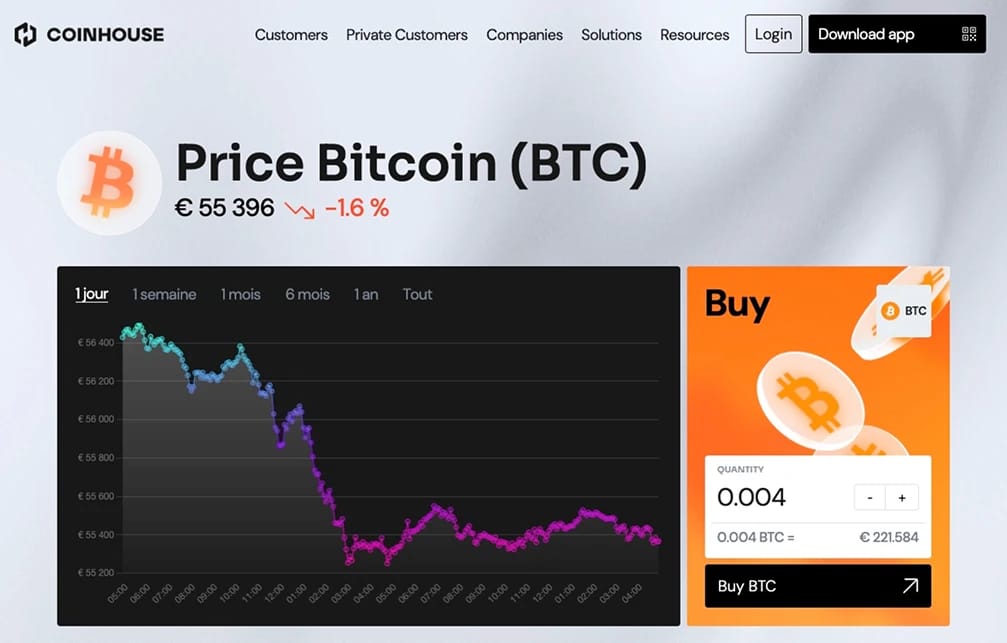
Coinhouse — единственная платформа в этом рейтинге, контролируемая из Парижа. Основанная в 2014 году как La Maison du Bitcoin и ставшая первой компанией, зарегистрированной в качестве PSAN в 2020 году, она завершила этот круг 7 мая 2026 года, когда AMF предоставила ей авторизацию MiCA CASP под номером A2026-013. Для инвестора, который хочет, чтобы компания, регулятор и служба поддержки находились во Франции, ничего лучше не найти.
Местная привязка распространяется и на налоги, упрощая процесс налогообложения для местных инвесторов. Coinhouse выпускает интегрированный отчет IFU, который соответствует французской декларации, поддержка работает на французском языке из Парижа, а тщательно отобранный каталог примерно из 75 проверенных активов подходит инвесторам, которые ценят руководства выше широты выбора. Премиальные тарифы добавляют выделенных консультантов для более крупных портфелей.
Комиссии — это плата за такое позиционирование. Покупки за SEPA обходятся в 0,89%, покупки по карте достигают 1,79%, а торговые издержки составляют 1,29%, при этом подписки снижают ставки при больших объемах. Здесь нет стакана заявок, нет margin и нет доступа к малокапитализированным активам, поэтому активные трейдеры будут совмещать Coinhouse с более дешевой торговой площадкой. Мы рекомендуем использовать Coinhouse для пополнения счета, а для торговли применять другие платформы, перечисленные здесь.
Плюсы
- Единственная выданная AMF авторизация MiCA в этом рейтинге, принадлежащая парижской компании с франкоязычной службой поддержки.
- Интегрированный финансовый отчет IFU упрощает ежегодную декларацию, охватывая данные, требуемые Формой 2086.
- Тщательно отобранный список из примерно 70 проверенных активов и премиальные консультационные тарифы подходят для взвешенного долгосрочного инвестирования.
Минусы
- Комиссии в размере от 0,89% до 2,49% в несколько раз превышают те, что взимают платформы со стаканом заявок.
- Около 70 активов полностью исключают альткоины с меньшей капитализацией и новые запуски.
- Отсутствуют стакан заявок, деривативы или продвинутые инструменты для активных стратегий.
6. OKX
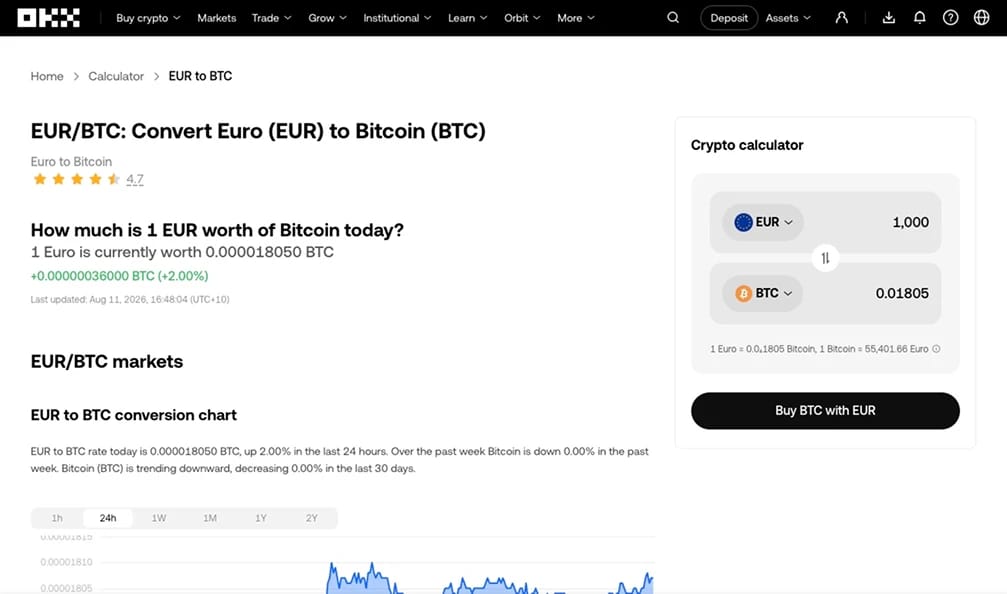
OKX завершает рейтинг для трейдеров, которым нужны профессиональные инструменты и bridge в Web3. Ее мальтийская структура, OKX Europe Limited, получила авторизацию MiCA от MFSA 27 января 2025 года, став одной из первых глобальных бирж, получивших ее и охватывающих девять из десяти услуг, определяемых MiCA. Лицензия MiFID II для деривативов последовала в марте 2025 года, а лицензия платежного учреждения ЕС — в феврале 2026 года.
Издержки на исполнение ордеров соперничают с Gate в нижней части рынка. Комиссии за спот-торговлю начинаются с 0,08% для maker и 0,10% для taker, на европейской платформе торгуется около 300 криптовалют, а аккаунт объединяет сетку и DCA-боты, copy trading и продукты Earn. Встроенный кошелёк OKX открывает DeFi, NFT и ончейн-торговлю из одного приложения — комбинацию, которую не предлагает ни одна другая платформа в этом списке.
Прозрачность резервов является реальным отличительным признаком: ежемесячные proof of reserves публикуются с использованием криптографической верификации zk-STARK. Тем не менее послужной список не безупречен, поскольку глобальное подразделение OKX выплатило властям США урегулирование на сумму около $505 миллионов в феврале 2025 года из-за прошлых нарушений требований комплаенса. Наш обзор OKX дает полную оценку платформе.
Плюсы
- Одна из первых выданных авторизаций MiCA в сочетании с лицензиями MiFID II и платежными лицензиями ЕС от мальтийского регулятора MFSA.
- Входные комиссии от 0,08% и 0,10% с ботами, copy trading и встроенным Web3-кошельком для ончейн-доступа.
- Ежемесячные proof of reserves, подтвержденные с помощью доказательств zk-STARK, что относится к числу наиболее надежных практик прозрачности на рынке.
Минусы
- Урегулирование в США в 2025 году на сумму около $505 миллионов числится в истории группы, несмотря на то, что оно предшествует лицензии европейского юридического лица.
- Насыщенный интерфейс и функции Web3 могут перегрузить пользователя, совершающего покупку впервые.
- Каталог ЕЭЗ, насчитывающий около 300 активов, уступает Bybit и Gate, а MiCA сохраняет ограничения на пары с USDT.
Как выбрать криптовалютную биржу во Франции
Каждая платформа из списка выше имеет действующую авторизацию MiCA, поэтому выбор сводится к местонахождению регулятора, совместимости с банками и тому, какая модель комиссий подходит под ваш стиль торговли. Пять проверок отделяют разумный выбор от дорогостоящего.
- Подтвердите точное лицензированное юридическое лицо: Каждая авторизация называет одну компанию, например Bybit EU GmbH, а не просто Bybit. Сопоставьте название в условиях обслуживания с белыми списками AMF или реестром ESMA. В нашем руководстве по лучшим криптовалютным биржам с лицензией MiCA представлен сокращенный список платформ, прошедших отбор.
- Протестируйте SEPA Instant с вашим банком: Переводы с Crédit Agricole, BNP Paribas, Société Générale, BoursoBank и Revolut поступают за считанные минуты на указанных выше платформах. Банковские карты добавляют комиссии процессора и более широкий спред, поэтому рассматривайте их как крайнюю меру.
- Завершите верификацию до пополнения: Вводите свои данные точно так же, как они указаны в паспорте или удостоверении личности (CNI), так как несоответствие имен задерживает первые депозиты чаще всего. Платформы также собирают налоговые данные в соответствии с DAC8, действующим с января 2026 года.
- Оцените полную стоимость транзакции: Опубликованная комиссия соседствует с двумя менее заметными затратами: спредом при мгновенной покупке и комиссией за вывод средств. Лимитный ордер в профессиональном интерфейсе регулярно обходит экспресс-кнопку на 1% или более.
- Протестируйте вывод заранее: Выведите небольшую сумму в евро и совершите небольшой криптоперевод на первой неделе. Надежная платформа показывает каждую комиссию перед подтверждением и возвращает евро на ваш счет в течение одного рабочего дня.
Регулирование криптовалют и Bitcoin во Франции
Покупка, хранение и торговля криптовалютой полностью легальны во Франции. С 1 июля 2026 года единственными законными провайдерами являются CASP, авторизованные в соответствии с MiCA, лицензированные напрямую AMF или получившие паспорт из другого государства-члена EU, при этом ACPR осуществляет надзор за мерами по борьбе с отмыванием денег.
Даты ниже показывают, как Франция пришла к текущей нормативно-правовой базе:
- Май 2019 г.: Закон PACTE создал режим PSAN, сделав Францию одной из первых стран EU, регулирующих криптовалюту.
- Март 2020 г.: Coinhouse стала первой зарегистрированной PSAN, и в итоге более 100 компаний присоединились к белого списку AMF.
- Май 2022 г.: Binance France получила регистрацию PSAN, сделав Францию своей европейской базой.
- 30 декабря 2024 г.: MiCA вступила в силу для поставщиков услуг криптоактивов по всему EU, открыв 18-месячный переходный период во Франции.
- 7 мая 2026 г.: AMF предоставила Coinhouse авторизацию CASP, присоединившись к местным обладателям лицензий, таким как Deblock, SwissBorg, Deskoin и Circle France.
- 24 июня 2026 г.: Binance отозвала свою греческую заявку MiCA и сообщила французским клиентам, что ни одно юридическое лицо группы не будет авторизовано вовремя.
- 1 июля 2026 г.: Переходный период завершился, режим PACTE был отменен, и на следующий день AMF исключила оставшиеся PSAN из своего реестра. Binance приостановила услуги для французских пользователей, оставив открытыми вывод средств, при этом margin-позиции и кредиты были принудительно закрыты к 1 октября 2026 года.
Предоставление криптоуслуг во Франции без авторизации MiCA теперь является уголовным преступлением. Прежде чем вносить средства на какую-либо платформу, найдите юридическое лицо в ее условиях и подтвердите его в белом списке AMF или реестре ESMA.
.webp)
Как DGFiP облагает налогом криптовалюту во Франции?
DGFiP рассматривает криптовалюты как actifs numériques в соответствии со статьей 150 VH bis налогового кодекса, и 2026 год принес первое изменение ставок за последние годы. Вот краткая сводка налогообложения криптовалют во Франции:
- Фиксированный налог на прирост капитала в размере 31,4%: LFSS 2026 повысил CSG на доходы от капитала с 9,2% до 10,6%, увеличив социальные отчисления до 18,6%. В сочетании с неизменным подоходным налогом в размере 12,8% PFU на случайный прирост криптовалюты достигает 31,4% по сравнению с 30%, а лица с высокими доходами, попавшие под надбавку CEHR, могут столкнуться со ставкой 38,6%.
- Налогом облагаются только выходы в фиат: Продажа криптовалюты за евро или ее трата на товары и услуги запускает налогообложение. Crypto-to-crypto swap остаются за пределами сферы действия для частных лиц, что является одним из самых мягких правил в Европе.
- Годовое освобождение от налога в размере €305: Общий объем отчуждений на сумму менее €305 в год освобождается от налога, хотя порог измеряет стоимость отчуждения, а не прибыль, и его преодоление делает весь прирост налогооблагаемым.
- Профессиональная деятельность облагается более высокими налогами: trading в условиях, близких к профессиональным, а также доходы от майнинга и staking подпадают под режим BNC по прогрессивным ставкам до 45%.
- Декларации обязательны: Доходы указываются в Formulaire 2086, и каждый аккаунт на платформе со штаб-квартирой за пределами Франции требует ежегодного заполнения Formulaire 3916-bis, даже если он пуст. С января 2026 года DAC8 требует от авторизованных платформ отчитываться о транзакциях французских клиентов перед налоговым органом, поэтому декларации должны совпадать с тем, что уже получает DGFiP.
Дебаты по бюджету 2026 года привели к предложению включить криптовалюту в восстановленный налог на роскошь на непроизводительные активы, но правительство исключило его из финального закона, поэтому криптовалютные активы остаются вне сферы действия IFI. Подайте декларацию до весеннего дедлайна вашего département и проконсультируйтесь с французским специалистом, если ваша деятельность носит частый или крупный характер.
.webp)
Принятие криптовалют во Франции
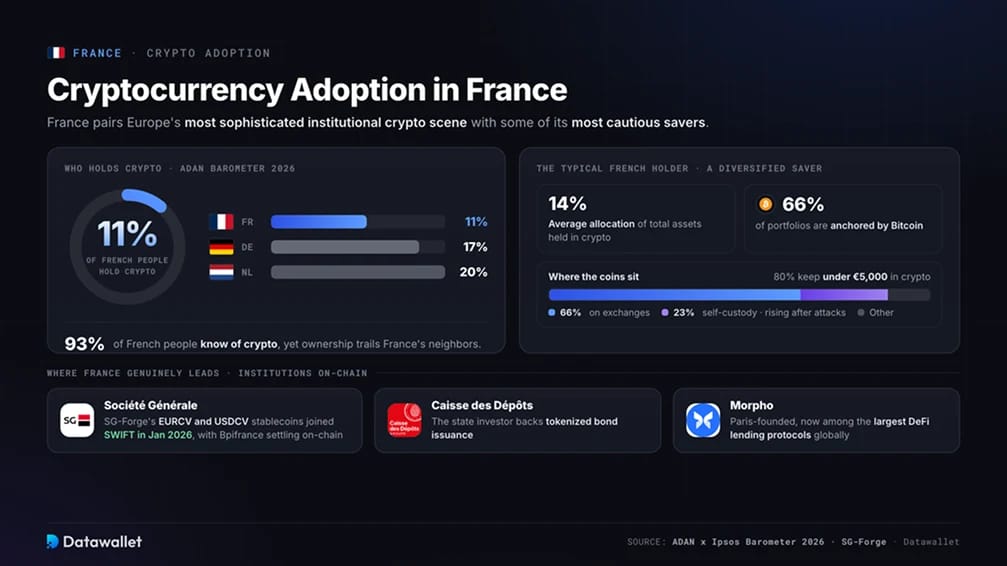
Франция сочетает одну из самых искушенных криптоиндустрий Европы с одними из самых осторожных инвесторов. Барометр ADAN 2026 года, проведенный совместно с Ipsos среди 7 000 европейцев, включая 2 000 респондентов из Франции, показал, что 93% французов знают о криптовалюте, в то время как около 11% владеют ею, уступая Германии с 17% и Нидерландам с 20%.
Типичный французский держатель больше похож на диверсифицированного инвестора, чем на спекулянта. Средняя доля в активах составляет 14%, 80% хранят в криптовалюте менее €5 000, большинство совершают транзакции реже одного раза в месяц, а Bitcoin составляет основу 66% портфелей. Кастодиальное хранение меняется медленно: 66% по-прежнему хранят средства на биржах, а 23% теперь контролируют собственные ключи, что ускорилось на фоне волны физических нападений на французских держателей криптовалют в течение 2025 и 2026 годов.
Институциональный сектор — это сфера, в которой Франция действительно лидирует. SG-Forge от Société Générale выпускает евровый стейблкоин EURCV и долларовый аналог USDCV, подключила EURCV к SWIFT в январе 2026 года и в мае заключила партнерское соглашение с Bpifrance для интеграции расчетов в стейблкоинах в операции государственного инвестирования. Caisse des Dépôts поддерживает выпуск токенизированных облигаций, а основанная в Париже Morpho стала одним из крупнейших DeFi-протоколов кредитования в мире.
Как купить Bitcoin во Франции
Самый дешевый надежный путь — это депозит SEPA Instant на биржу с авторизацией MiCA, а затем limit order на профессиональном интерфейсе BTC/EUR.
- Выберите авторизованную платформу: Убедитесь, что оператор имеет действующую авторизацию MiCA в записях AMF или ESMA. Kraken — наш первый выбор по безопасности и исполнению, а Coinhouse — это лицензированная AMF местная альтернатива.
- Пройдите верификацию личности: Загрузите паспорт или CNI, завершите проверку на наличие живого человека и добавьте justificatif de domicile, если потребуется, так как незавершенная верификация оставляет счета с лимитами, а вывод средств — замороженным.
- Депозит в евро через SEPA: Подтвердите перевод в своем банковском приложении, и большинство платформ зачислят средства в течение нескольких минут с помощью SEPA Instant. Переводы из крупных французских банков и Revolut прошли успешно в ходе нашего тестирования.
- Разместите лимитный ордер: Откройте пару BTC/EUR в профессиональном режиме и укажите свою цену. Кнопка мгновенной покупки скрывает наценку, которая обычно значительно превышает заявленную комиссию.
- Переведите долгосрочные активы в офлайн: Храните то, что планируете оставить на долгосрок, на аппаратноом кошельке, сравнивая модели с помощью нашего списка лучших криптокошельков, и проверяйте адрес и сеть перед подтверждением.
Экспортируйте историю транзакций несколько раз в год, а не восстанавливайте ее в апреле. DAC8 означает, что DGFiP все равно получает данные вашей биржи, а ваши декларации за 2086 и 3916-bis должны соответствовать им.
Заключение
Вопрос, определявший французскую криптосферу на протяжении многих лет, а именно является ли платформа должным образом регулируемой, был решен 1 июля 2026 года. Эпоха PSAN завершилась, Binance ушла, и все серьезные участники торгуют по лицензии MiCA под активным надзором AMF или аналогичного регулятора.
Kraken лидирует по надежности своей истории безопасности, ликвидности в евро и исполнению ордеров. Bybit является недорогим вариантом с полноценной поддержкой на французском языке, Bitpanda добавляет криптовалюту в более широкий портфель, Gate открывает доступ к широкому кругу альткоинов, Coinhouse предлагает единственную штаб-квартиру с лицензией AMF, а OKX подходит продвинутым трейдерам, переходящим в ончейн.
Две привычки важнее рейтинга. Пополняйте счет через SEPA, а не с карты, используйте лимитные ордера вместо экспресс-экрана и ведите прозрачный учет с первого дня, поскольку фиксированный налог в размере 31,4% и DAC8 превратили налогообложение криптовалюты во Франции в задачу сверки данных.
Наша методология
Платформы квалифицировались только при наличии полной авторизации MiCA и доступности в реальном времени во Франции. Оценка основывалась на шести критериях:
- Trust Score: Оценка Datawallet по 5-балльной шкале, учитывающая качество регулятора, прозрачность резервов, историю инцидентов и продолжительность безупречной работы.
- Проверка лицензии: Мы отследили каждое действующее юридическое лицо по белым спискам AMF и реестру ESMA и подтвердили услуги, которые покрывает его разрешение.
- Пополнение в евро из Франции: Мы внесли депозиты через SEPA и SEPA Instant со французских счетов, замерили время доступности для торговли и зафиксировали варианты с картами и мобильными устройствами.
- Реальная стоимость торговли: Мы провели реальную покупку BTC/EUR на каждой платформе и объединили комиссию, спред и сборы за вывод средств в единый показатель полного цикла.
- Покрытие активов в EEA: Мы подсчитали каталог европейского юридического лица, а не глобальной платформы, поскольку делистинги из-за соблюдения требований определяют, чем на самом деле может торговать французский аккаунт.
- Французская релевантность: Мы оценили поддержку на французском языке, взаимодействие с основными французскими банками, инструменты налоговой отчетности и местное юридическое присутствие.
Тестирование завершилось в августе 2026 года, после истечения переходного периода, и каждая лицензия была повторно проверена по публичным реестрам перед публикацией. Наша редакционная методология описывает весь процесс.
.webp)