







Compare Top French Crypto Exchanges
1. Kraken
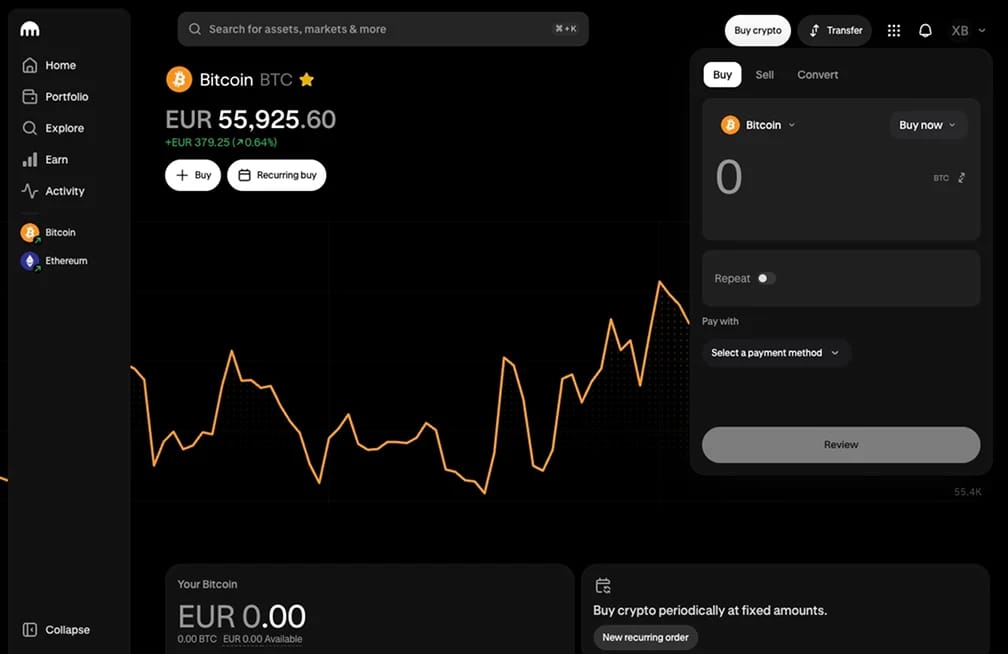
Kraken is the best crypto exchange in France because nothing else here matches its combination of security record, execution quality, and regulatory depth. Its European entity, Payward Europe Solutions Limited, was the first firm the Central Bank of Ireland authorized as a CASP in June 2025, a permission that reaches France through the EEA passport, and in fifteen years of operation Kraken has never lost client funds to a breach.
Costs favor anyone who learns the professional interface. Kraken Pro starts at 0.25% maker and 0.40% taker, far below the simple buy screen's built-in markup, and its EUR order books are among the deepest in Europe. Roughly 450 assets are listed, many stakeable with rewards paid twice weekly, and eligible clients can access regulated derivatives through a MiFID II-licensed group entity in Cyprus.
The French experience holds up well for an American brand. The site runs in French, SEPA and SEPA Instant deposits are free, and in our testing a withdrawal reached a French account the next business day. Institutions get an OTC desk and full API access. Our Kraken review breaks the platform down feature by feature and dives deeper into the security measures.
Pros
- Fifteen years of operation without losing client funds, backed by Proof of Reserves attestations published daily.
- Deep euro order books and Kraken Pro pricing from 0.25% suit larger orders placed from France.
- The first MiCA CASP authorization issued by the Central Bank of Ireland, passported cleanly into France.
Cons
- The default Buy Crypto screen adds a markup several times the posted Pro fee, an easy trap for new users.
- Derivatives access requires a separate CySEC-regulated subaccount and an appropriateness questionnaire.
- New tokens list well after Gate, and many small caps never arrive.
2. Bybit
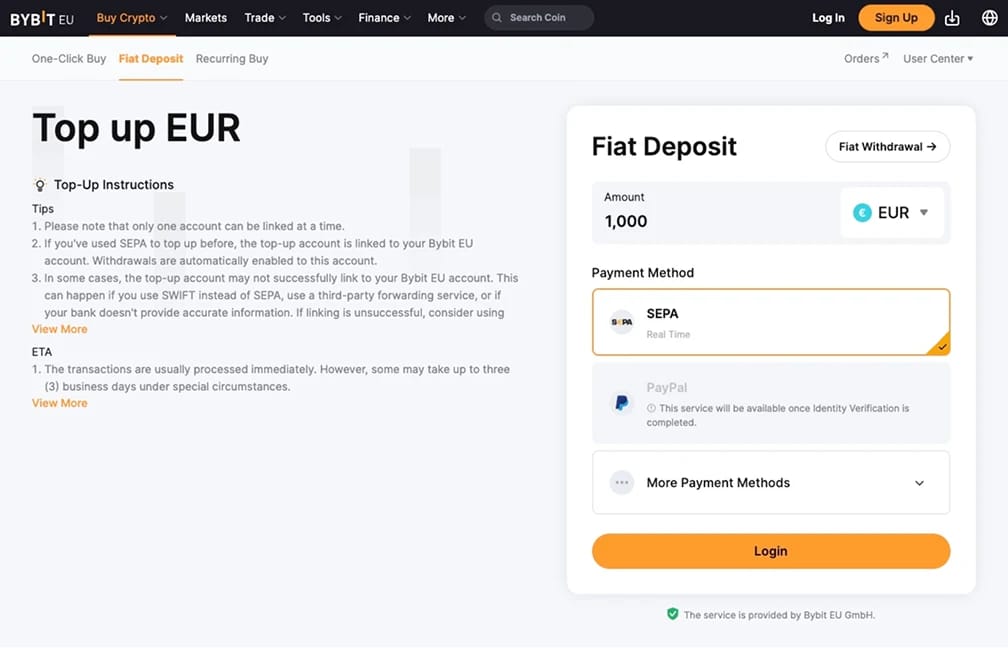
Bybit is the cheapest way to trade actively in France, running a European platform designed for the MiCA era rather than adapted to it. French accounts sit on bybit.eu, operated from Vienna by Bybit EU GmbH under authorization from Austria's FMA, joined in August 2026 by an Austrian e-money license for its payments affiliate. Bybit is the world’s second largest exchange by trading volume.
No rival here beats it on cost. Spot orders cost a flat 0.10% on both sides of the book, SEPA and SEPA Instant deposits are free, and cards, Apple Pay, and Google Pay round out the funding options. Around 600 cryptocurrencies trade on the EEA platform, alongside Earn products, copy trading, grid bots, spot margin, demo trading, Bybit Pay and the Bybit Card.
French usability is a genuine strength. The interface, app, and customer support all work in French, and in our testing, a SEPA Instant transfer was ready to trade within minutes. Perpetual futures remain absent from the EU entity while its investment firm application is pending. Our Bybit review covers the full platform and explains the differences between the global and EU entity.
Pros
- A flat 0.10% spot fee with free SEPA Instant funding makes the euro-to-crypto round trip cheaper than on any rival here.
- Austria's FMA supervises the crypto entity under MiCA and the payments entity under a separate e-money license.
- Full French localization covers the interface, app, and customer support.
Cons
- Derivatives are unavailable on the European platform until the pending investment firm authorization is granted.
- The February 2025 cold wallet theft of $1.4 billion remains the largest exchange hack on record, even though clients were made whole within days.
- The EEA catalog of roughly 600 assets is a fraction of what global Bybit lists, and MiCA keeps USDT pairs off the platform.
3. Bitpanda
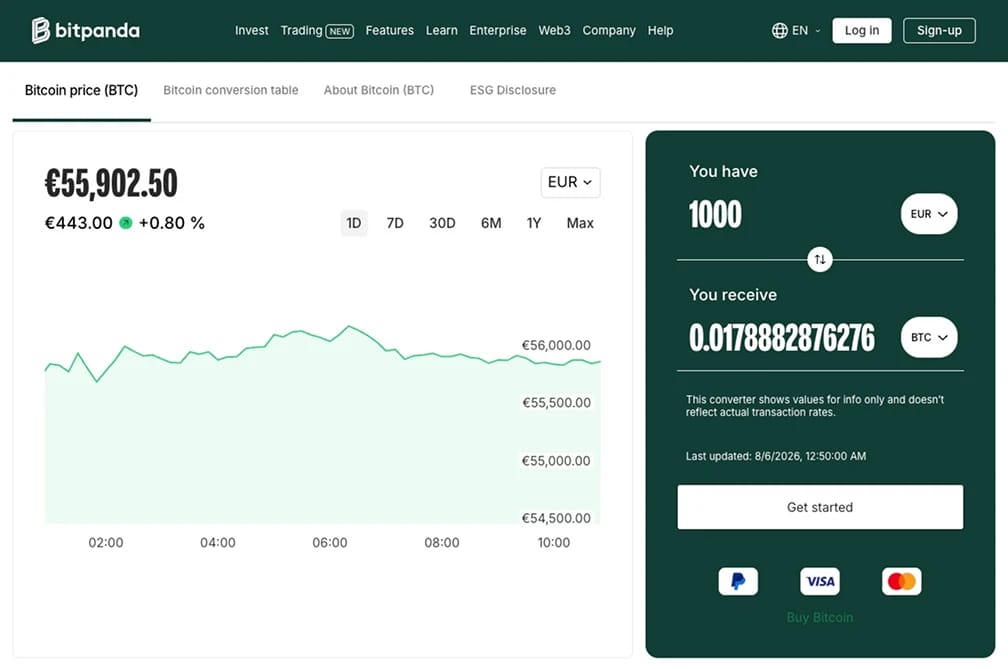
Bitpanda is the pick for French investors who want digital assets sitting beside traditional ones. The Vienna firm holds three MiCA authorizations, from Germany's BaFin, Malta's MFSA, and Austria's FMA, and serves over 7 million Europeans with 600+ cryptocurrencies, fractional stocks, ETFs, commodities, and precious metals. This makes it our top pick for users who want to consolidate all their investments in one app.
Its savings plans are the feature French users benefit from most. A SEPA direct debit pulls a fixed amount from a French account weekly or monthly and invests it automatically, turning euro cost averaging into a background process. The Bitpanda Card then spends any balance at the terminal with automatic conversion. The exchange also offers margin trading with 10x leverage on crypto and up to 20x leverage on stocks & ETFs.
Pricing is the trade-off, with Bitpanda charging some of the highest fees in the industry. Instant purchases add a spread of up to 1.49% built into the quote, several times the cost of a limit order on Bybit or Gate, and the exact charge stays hidden until the quote appears. Active traders should look elsewhere, while hands-off savers may find the convenience worth the premium.
Pros
- Three MiCA authorizations from separate EU regulators give Bitpanda an unusually deep licensing record.
- Crypto, fractional stocks, ETFs, and metals trade from one French-language account with automated savings plans.
- The Bitpanda Card converts any asset to euros at the point of sale, with cashback on spending.
Cons
- All-in purchase costs of up to 1.49% are the highest in this ranking.
- Spread-based quotes are difficult to compare against order book pricing.
- No derivatives and limited depth for serious spot execution.
4. Gate
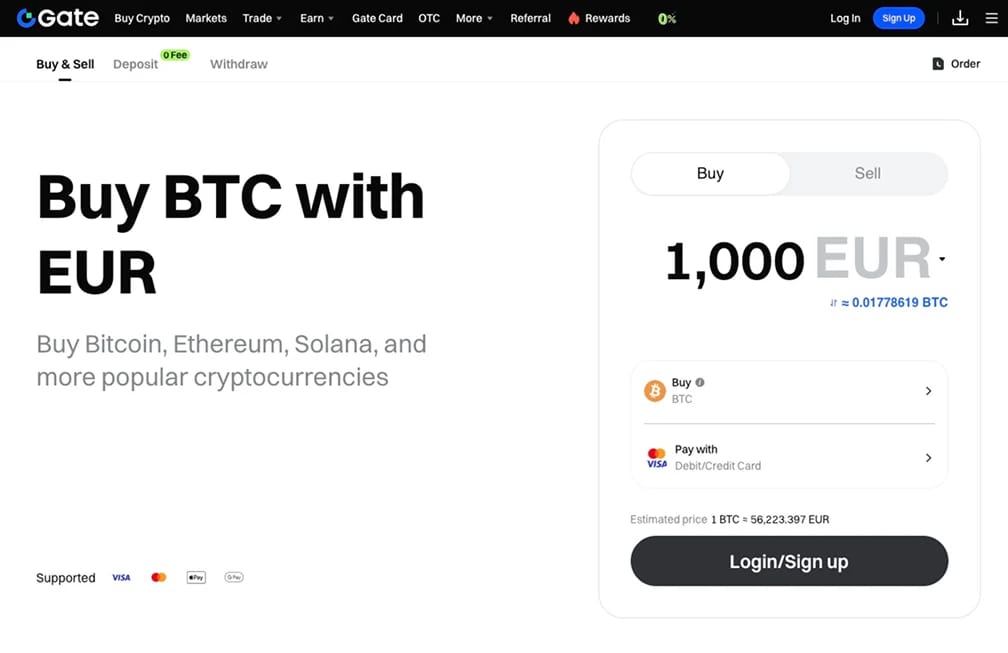
Gate earns its place on reach into the long tail of the market, offering the world’s largest cryptocurrency selection. Malta's MFSA authorized Gate Technology Ltd under MiCA in September 2025, an EU payment license followed in February 2026, and the European platform carries more than 1,000 cryptocurrencies, which is unmatched for a French resident.
Pricing is among the best here, second only to OKX. Spot commissions start at 0.09% maker and 0.10% taker before GT token discounts, and the account bundles a launchpad, trading bots, copy portfolios, and Earn products. For tokens Kraken or Coinhouse will not list for months, if ever, Gate is usually the first regulated exchange to carry them.
The compromises are usability and liquidity. Menus run several layers deep, promotions crowd the screen, and thin pairs sit beside liquid ones with nothing to separate them, so a wide spread can quietly cost more than the low commission saves. This can be overwhelming for beginners. We treat Gate as a secondary account for token access, a judgment our Gate review explains in detail.
Pros
- More than 1,000 listed cryptocurrencies form the broadest regulated selection available in France.
- Entry commissions of 0.09% and 0.10% are the lowest in this ranking, with bots and a launchpad included.
- An MFSA MiCA authorization is paired with a separate EU payment institution license for the same entity.
Cons
- Many long-tail tokens trade thinly, and spreads on small pairs can exceed the fee saving.
- The interface takes longer to learn than any rival listed here.
- Euro funding is limited to SEPA, bank transfer, and cards, with settlement slightly slower than on Bybit in our testing.
5. Coinhouse
Coinhouse is the only platform in this ranking supervised from Paris. Founded in 2014 as La Maison du Bitcoin and the first firm registered as a PSAN in 2020, it completed the circle on 7 May 2026 when the AMF granted it a MiCA CASP authorization under number A2026-013. For an investor who wants the company, the regulator, and the support desk all in France, nothing else compares.
The local anchoring extends to tax, simplifying the taxation process for local investors. Coinhouse issues an integrated IFU report that maps onto the French declaration, support works in French from Paris, and the curated catalog of around 70 vetted assets suits investors who value guidance over breadth. Premium tiers add dedicated advisers for larger portfolios.
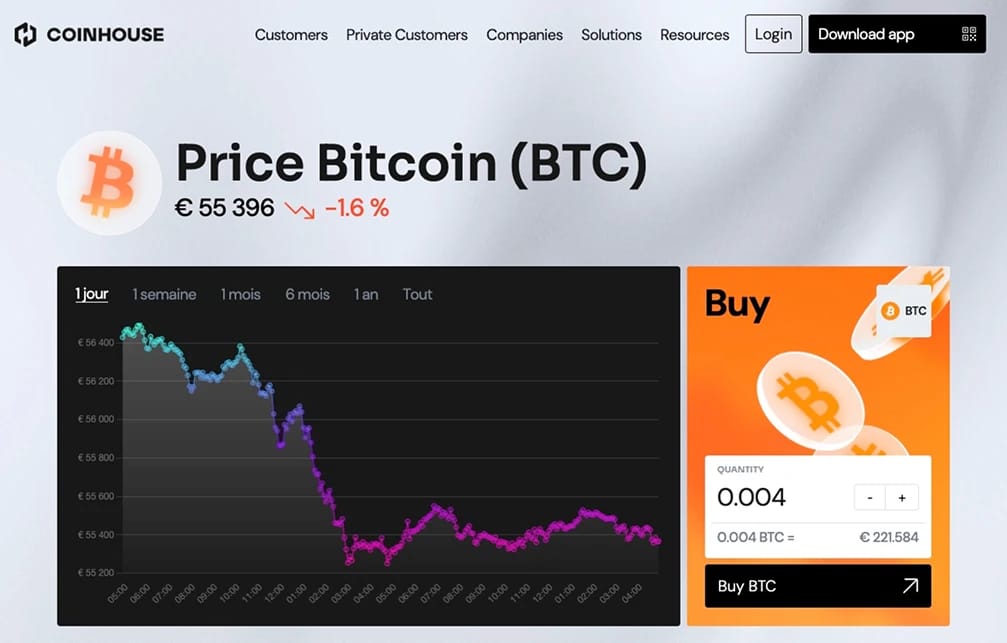
Fees are the cost of that positioning. SEPA-funded purchases run 0.89%, card buys reach 1.79%, and trading costs are 1.29%, with subscriptions trimming rates at volume. There is no order book, no margin, and no route to small caps, so active traders will pair Coinhouse with a cheaper execution venue. We recommend using Coinhouse to fund your exchange, and then using other platforms listed here for trading purposes.
Pros
- The only AMF-issued MiCA authorization in this ranking, held by a Paris company with a French support desk.
- An integrated IFU fiscal report simplifies the annual declaration, covering the data Formulaire 2086 requires.
- A curated list of around 70 vetted assets and premium advisory tiers suit guided, long-term investing.
Cons
- Fees of 0.89% to 2.49% are several times what order book platforms charge.
- Roughly 70 assets rule out lower-cap altcoins and new launches entirely.
- No order book, derivatives, or advanced tooling for active strategies.
6. OKX
OKX rounds out the ranking for traders who want professional tooling and a bridge into Web3. Its Malta entity, OKX Europe Limited, received its MiCA authorization from the MFSA on 27 January 2025, one of the first granted to any global exchange, covering nine of the ten services MiCA defines. A MiFID II license for derivatives followed in March 2025 and an EU payment institution license in February 2026.
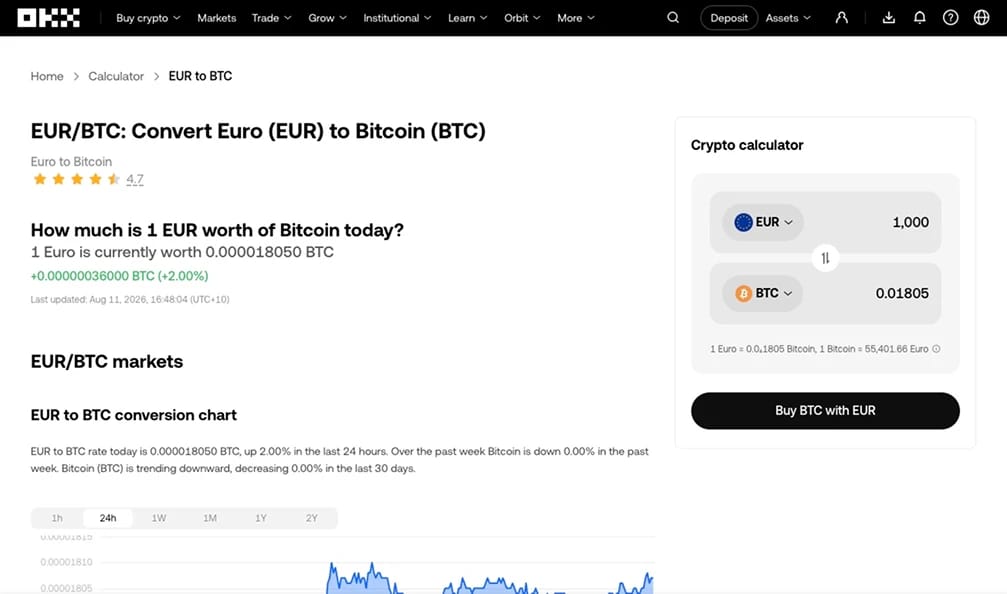
Execution costs rival Gate at the bottom of the market. Spot commissions start at 0.08% maker and 0.10% taker, roughly 300 cryptocurrencies trade on the European platform, and the account bundles grid and DCA bots, copy trading, and Earn products. The built-in OKX Wallet opens DeFi, NFTs, and on-chain trading from the same app, a combination no other platform here offers.
Reserve transparency is a genuine differentiator, with monthly Proof of Reserves published using zk-STARK cryptographic verification. The record is not spotless though, since OKX's global affiliate paid a settlement of around $505 million to US authorities in February 2025 over historical compliance failures. Our OKX review weighs the platform in full.
Pros
- One of the first MiCA authorizations granted, paired with MiFID II and EU payment licenses from Malta's MFSA.
- Entry fees of 0.08% and 0.10% with bots, copy trading, and a built-in Web3 wallet for on-chain access.
- Monthly Proof of Reserves verified with zk-STARK proofs, among the strongest transparency practices available.
Cons
- The 2025 US settlement of roughly $505 million sits on the group's record, even though it predates the European entity's license.
- The dense interface and Web3 features can overwhelm a first-time buyer.
- The EEA catalog of around 300 assets trails Bybit and Gate, and MiCA keeps USDT pairs restricted.
How to Choose a Crypto Exchange in France
Every platform above holds a live MiCA authorization, so the decision turns on supervisor location, bank compatibility, and which fee model fits your trading pattern. Five checks separate a sound choice from an expensive one.
- Confirm the exact licensed entity: Each authorisation names one company, Bybit EU GmbH rather than simply Bybit. Match the name in the terms of service against the AMF white lists or ESMA's register. Our best MiCA-licensed crypto exchanges guide shortlists the platforms that pass.
- Test SEPA Instant with your bank: Transfers from Crédit Agricole, BNP Paribas, Société Générale, BoursoBank, and Revolut settle in minutes on the platforms above. Cards add processor fees plus a wider spread, so treat them as a last resort.
- Finish verification before funding: Enter your details exactly as they appear on your passport or CNI, because name mismatches stall more first deposits than anything else. Platforms also collect tax data under DAC8, live since January 2026.
- Price the full transaction: The posted commission sits beside two quieter costs, the instant buy spread and the withdrawal fee. A limit order on a professional interface routinely beats the express button by 1% or more.
- Rehearse the exit early: Withdraw a small euro amount and a small crypto transfer in week one. A trustworthy platform shows every fee before confirmation and returns euros to your account within one working day.
Crypto and Bitcoin Regulation in France
Buying, holding, and trading crypto is fully legal in France. Since 1 July 2026, the only lawful providers are CASPs authorized under MiCA, licensed directly by the AMF or passported in from another EU member state, with the ACPR overseeing money laundering controls.
The dates below show how France arrived at the current framework:
- May 2019: The PACTE Law created the PSAN regime, making France one of the first EU states to regulate crypto.
- March 2020: Coinhouse became the first registered PSAN, and more than 100 firms eventually joined the AMF white list.
- May 2022: Binance France gained PSAN registration, making France its European base.
- 30 December 2024: MiCA took effect for crypto-asset service providers EU-wide, opening an 18-month French transition.
- 7 May 2026: The AMF granted Coinhouse its CASP authorization, joining home licensees such as Deblock, SwissBorg, Deskoin, and Circle France.
- 24 June 2026: Binance withdrew its Greek MiCA application and told French clients no group entity would be authorised in time.
- 1 July 2026: The transition closed, the PACTE regime was repealed, and the AMF struck remaining PSANs from its register the next day. Binance suspended services for French users, keeping withdrawals open, with margin positions and loans force-closed by 1 October 2026.
Providing crypto services in France without a MiCA authorisation is now a criminal offence. Before depositing anywhere, find the legal entity in the platform's terms and confirm it in the AMF white list or ESMA register.
.webp)
How Does the DGFiP Tax Crypto in France?
The DGFiP treats cryptocurrencies as actifs numériques under Article 150 VH bis of the tax code, and 2026 brought the first rate change in years. Here’s a quick summary of crypto taxation in France:
- A flat tax of 31.4% on gains: The LFSS 2026 raised the CSG on capital income from 9.2% to 10.6%, lifting social contributions to 18.6%. Added to the unchanged 12.8% income tax, the PFU on occasional crypto gains reaches 31.4%, up from 30%, and high earners hit by the CEHR surcharge can face 38.6%.
- Only fiat exits are taxable: Selling crypto for euros or spending it on goods and services triggers tax. Crypto-to-crypto swaps stay outside the scope for private individuals, one of Europe's most generous rules.
- A €305 annual exemption: Total disposals under €305 per year escape tax, though the threshold measures disposal value, not profit, and crossing it makes the whole gain taxable.
- Professional activity is taxed harder: Trading in professional-like conditions, mining, and staking income fall under the BNC regime at progressive rates up to 45%.
- Declarations are non-negotiable: Gains go on Formulaire 2086, and every account with a platform based outside France requires an annual Formulaire 3916-bis, even if empty. Since January 2026, DAC8 has required authorized platforms to report French client transactions to the tax authority, so declarations must match what the DGFiP already receives.
The 2026 budget debates produced a proposal folding crypto into a rebuilt wealth tax on unproductive assets, but the government dropped it from the final law, so crypto holdings remain outside the IFI. File by your département's spring deadline and speak to a French adviser if your activity is frequent or large.
.webp)
Cryptocurrency Adoption in France
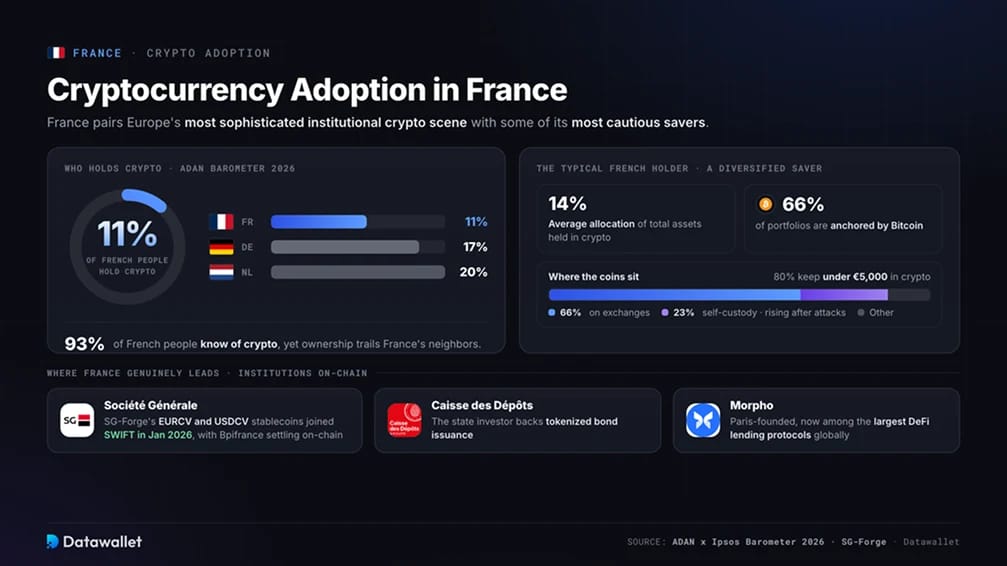
France pairs one of Europe's most sophisticated crypto industries with some of its most cautious savers. The 2026 ADAN Barometer, run with Ipsos across 7,000 Europeans including 2,000 French respondents, found 93% of French people know of crypto while around 11% hold any, trailing Germany at 17% and the Netherlands at 20%.
The typical French holder looks more like a diversified saver than a speculator. Average allocation is 14% of assets, 80% keep under €5,000 in crypto, most transact less than once a month, and Bitcoin anchors 66% of portfolios. Custody is shifting slowly, with 66% still on exchanges and 23% now holding their own keys, a move accelerated by a wave of physical attacks on French crypto holders through 2025 and 2026.
Institutions are where France genuinely leads. Société Générale's SG-Forge issues the euro stablecoin EURCV and dollar counterpart USDCV, connected EURCV to SWIFT in January 2026, and partnered with Bpifrance in May to bring stablecoin settlement into public investment operations. Caisse des Dépôts backs tokenized bond issuance, and Paris-founded Morpho became one of the largest DeFi lending protocols globally.
How to Buy Bitcoin in France
The cheapest reliable route is a SEPA Instant deposit into a MiCA-authorised exchange, then a limit order on the professional BTC/EUR interface.
- Pick an authorized platform: Confirm the operator holds a live MiCA authorization via the AMF or ESMA records. Kraken is our first pick on security and execution, and Coinhouse is the AMF-licensed local alternative.
- Complete identity verification: Upload a passport or CNI, finish the liveness check, and add a justificatif de domicile if asked, since half-finished verification leaves accounts capped and withdrawals frozen.
- Deposit euros by SEPA: Approve the virement in your own banking app and most platforms credit it within minutes via SEPA Instant. Transfers from major French banks and Revolut cleared cleanly in our testing.
- Place a limit order: Open the BTC/EUR pair on the professional view and name your price. The instant buy button hides a markup that usually dwarfs the posted commission.
- Move long-term holdings offline: Store what you intend to keep on a hardware wallet, comparing models with our best crypto wallets shortlist, and verify the address and network before approving.
Export your transaction history a few times a year rather than reconstructing it in April. DAC8 means the DGFiP receives your exchange data anyway, and your 2086 and 3916-bis filings must match it.
Final Thoughts
The question that defined French crypto for years, whether a platform was properly regulated, was settled on 1 July 2026. The PSAN era is over, Binance is out, and every serious option trades under a MiCA license actively supervised by the AMF or a peer regulator.
Kraken leads on the strength of its security record, euro liquidity, and execution. Bybit is the low-cost option with full French support, Bitpanda adds crypto into a broader portfolio, Gate opens the long tail of altcoins, Coinhouse offers the only AMF-licensed home base, and OKX suits advanced traders heading on-chain.
Two habits matter more than the ranking. Fund by SEPA rather than card, use limit orders rather than the express screen, and keep clean records from day one, because the 31.4% flat tax and DAC8 have turned French crypto taxation into a matching exercise.
Our Methodology
Platforms qualified only with a full MiCA authorisation and live availability in France. Scoring rested on six criteria:
- Trust score: A 5-point Datawallet rating weighing supervisor quality, reserve transparency, incident history, and length of clean operating record.
- License verification: We traced each operating entity through the AMF white list and ESMA register and confirmed the services its authorization covers.
- Euro funding from France: We deposited via SEPA and SEPA Instant from French accounts, timed availability to trade, and logged card and mobile options.
- True trading cost: We ran a real BTC/EUR purchase on each platform and combined commission, spread, and withdrawal charges into one round-trip figure.
- EEA asset coverage: We counted the European entity's catalog rather than the global platform's, since compliance delistings decide what a French account can actually trade.
- French relevance: We scored French-language support, behavior with major French banks, tax reporting tools, and local legal footprint.
Testing concluded in August 2026, after the transition deadline passed, and every license was rechecked against the public registers before publication. Our editorial methodology documents the full process.
.webp)