







Can You Add XRP to MetaMask?
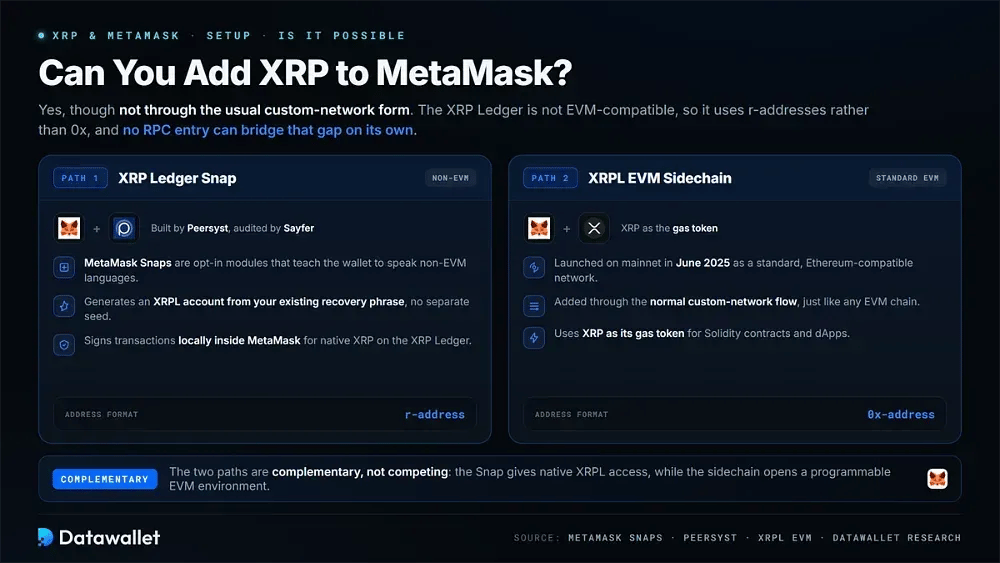
Yes, though not through the usual custom-network form. The XRP Ledger is not EVM-compatible, so it uses r-addresses rather than the 0x format MetaMask expects, and no RPC entry can bridge that gap on its own.
The fix is MetaMask Snaps, opt-in modules that teach the wallet to speak non-EVM languages. The XRP Ledger Snap, built by Peersyst and audited by Sayfer, generates an XRPL account from your existing recovery phrase and signs transactions locally inside MetaMask.
Separately, the XRPL EVM Sidechain launched on mainnet in June 2025 and is a standard EVM network. It gets added through the normal custom network flow, using XRP as its gas token. The two paths are complementary, not competing.
How to Add the XRP Ledger to MetaMask
The Snap is the only route to genuinely native XRP inside MetaMask. Installation runs through the official directory, and the account it creates derives from the same mnemonic already securing your wallet:
- Open the listing: Visit the XRP Ledger Snap page in the official MetaMask Snaps directory and confirm the publisher reads Peersyst before continuing.
- Install and approve: Click "Add to MetaMask," then read the permissions request carefully. The Snap needs to derive keys and sign, but never exports your seed.
- Open the web wallet: Head to wallet.xrplevm.org, the companion interface where balances, trust lines, and transaction history actually display.
- Activate the account: Send at least 1 XRP to your new r-address. Until that lands, the account does not exist on the ledger and cannot transact.
Treat the activation step as mandatory rather than optional. An unfunded XRPL address is not a dormant wallet, it is simply absent from the ledger, which is why a freshly installed Snap shows nothing until XRP arrives.
XRPL EVM Sidechain RPC and Chain ID
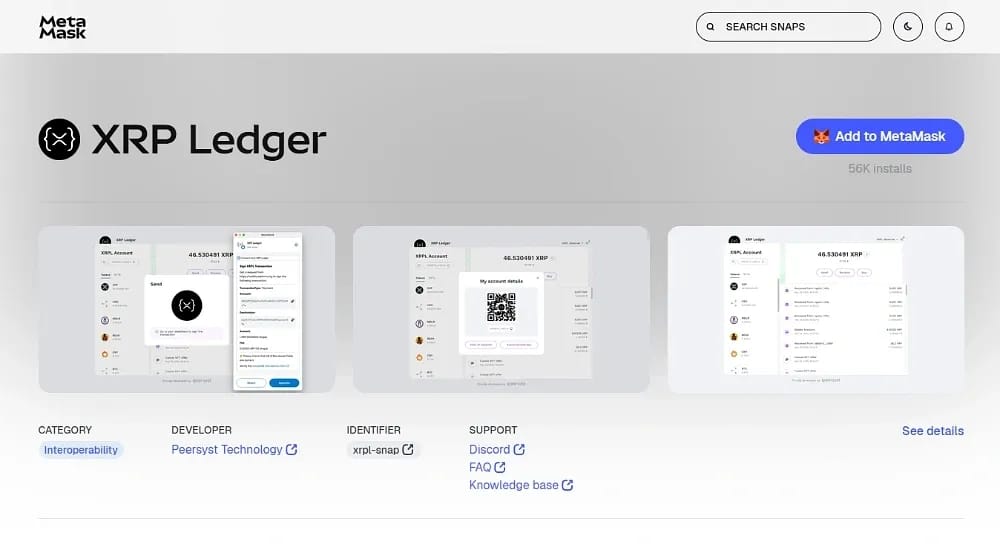
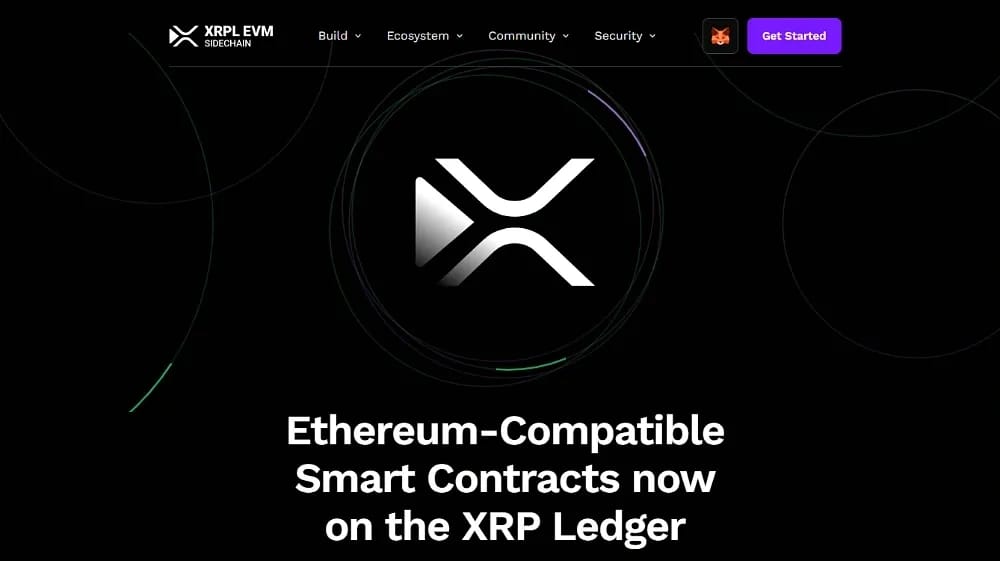
The XRPL EVM Sidechain is a Cosmos SDK chain bridged to the XRP Ledger through Axelar, and it behaves like any EVM network in MetaMask. Open "Add a custom network" and enter the details published in the official documentation:
- Network Name: XRPL EVM
- RPC URL: https://rpc.xrplevm.org
- Chain ID: 1440000
- Currency Symbol: XRP
- Block Explorer URL: https://explorer.xrplevm.org
Gas is paid in XRP bridged over from the main ledger, and there is no account reserve or activation step here, since EVM addresses exist by default. Blocks finalize in roughly three to five seconds under a Proof of Authority validator set.
This is the path for anyone wanting Solidity contracts, lending markets, or DEX activity denominated in XRP. Confirm every field against the docs rather than a copied screenshot, because a swapped RPC can feed a wallet false balances.
How to Get XRP for Gas and Reserves
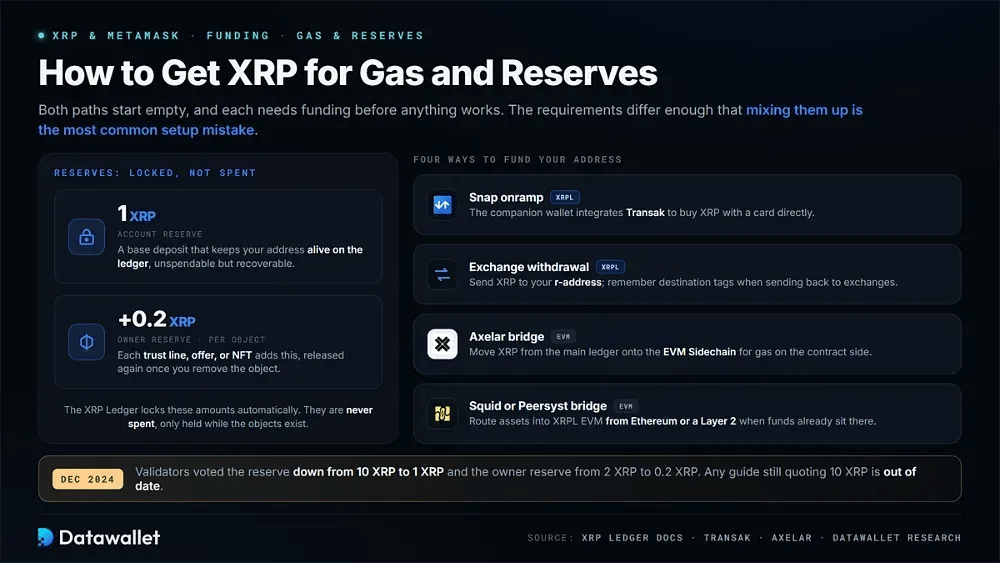
Both paths start empty, and each needs funding before anything works. The requirements differ enough that mixing them up is the most common setup mistake:
- Account reserve: The XRP Ledger locks 1 XRP per account as a base reserve, an unspendable deposit that keeps your address alive on the ledger.
- Owner reserve: Each trust line, offer, or NFT adds 0.2 XRP to that locked amount, released again once you remove the object.
- Snap onramp: The companion wallet integrates Transak, letting you buy XRP with a card directly rather than routing through an exchange first.
- Exchange withdrawal: Send XRP from any exchange to your r-address, remembering that destination tags apply when sending back to exchanges.
- Axelar bridge: Move XRP from the main ledger onto the EVM Sidechain through the Axelar-powered bridge for gas on the smart contract side.
- Squid or Peersyst bridge: Both route assets into XRPL EVM from other chains, useful when your funds already sit on Ethereum or a Layer 2.
Note that the reserve fell in December 2024, when validators voted it down from 10 XRP to 1 XRP and cut the owner reserve from 2 XRP to 0.2 XRP. Any guide still quoting 10 XRP, including some official-looking pages, is out of date.
Native XRP vs Wrapped XRP: Which Do You Need?
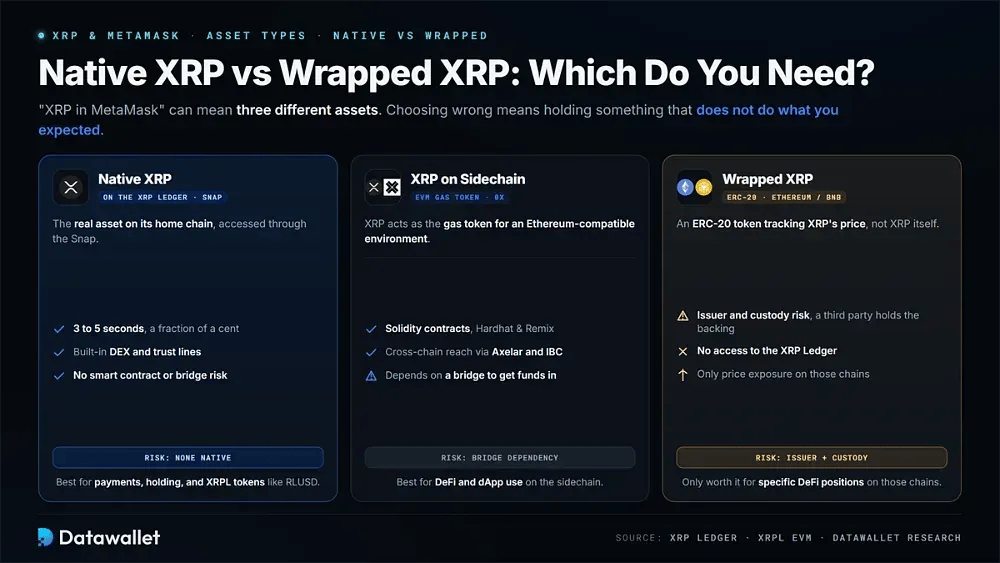
A persistent source of confusion is that "XRP in MetaMask" can mean three different assets. Choosing wrong means holding something that does not do what you expected, so it pays to be precise about the distinction.
Native XRP on the XRP Ledger
This is the real asset on its home chain, accessed through the Snap. It settles in three to five seconds for a fraction of a cent, supports the built-in DEX and trust lines, and carries no smart contract or bridge risk. Best for payments, holding, and XRPL-native tokens like RLUSD.
XRP on the EVM Sidechain
Here XRP acts as the gas token for an Ethereum-compatible environment. You get Solidity contracts, familiar tooling like Hardhat and Remix, and cross-chain reach through Axelar and IBC. Best for DeFi and dApp use, at the cost of bridge dependency.
Wrapped XRP on Ethereum or BNB Chain
Wrapped XRP is an ERC-20 token tracking XRP's price, not XRP itself. It carries issuer and custody risk, since a third party holds the backing, and it gives no access to the XRP Ledger. Only worth using for specific DeFi positions on those chains.
Best Wallet Alternatives for XRP
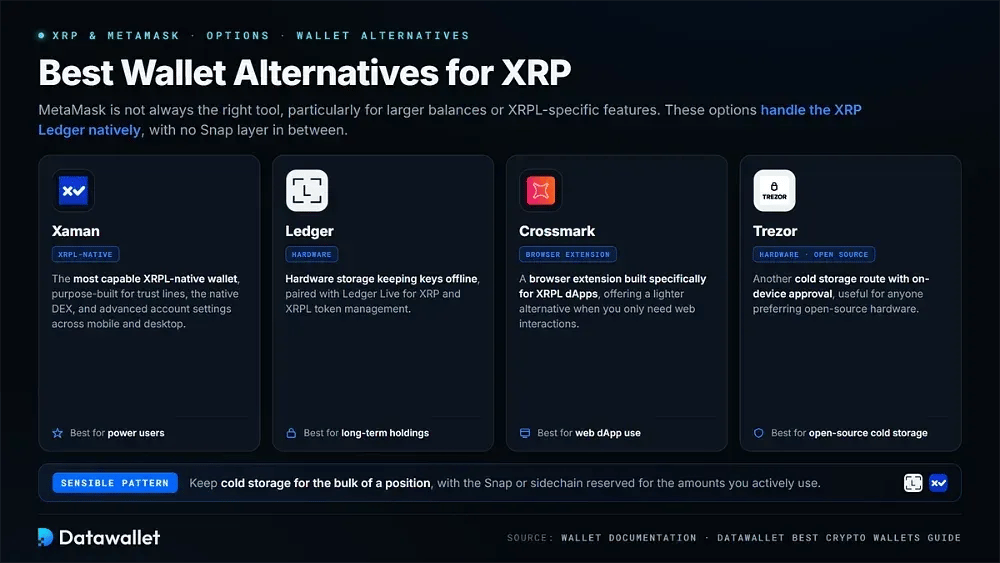
MetaMask is not always the right tool, particularly for larger balances or XRPL-specific features. These options handle the XRP Ledger natively without a Snap layer in between:
- Xaman: The most capable XRPL-native wallet, purpose-built for trust lines, the native DEX, and advanced account settings across mobile and desktop.
- Ledger: Hardware storage keeping private keys offline, paired with Ledger Live for XRP and XRPL token management, and the strongest fit for long-term holdings.
- Crossmark: A browser extension built specifically for XRPL dApps, offering a lighter alternative when you only need web interactions.
- Trezor: Another cold storage route with on-device transaction approval, useful for anyone preferring open-source hardware.
Our best crypto wallets guide compares these on custody, recovery, and security record. A sensible pattern is cold storage for the bulk of a position, with the Snap or sidechain reserved for the amounts you actively use.
What Is XRP and the XRP Ledger?
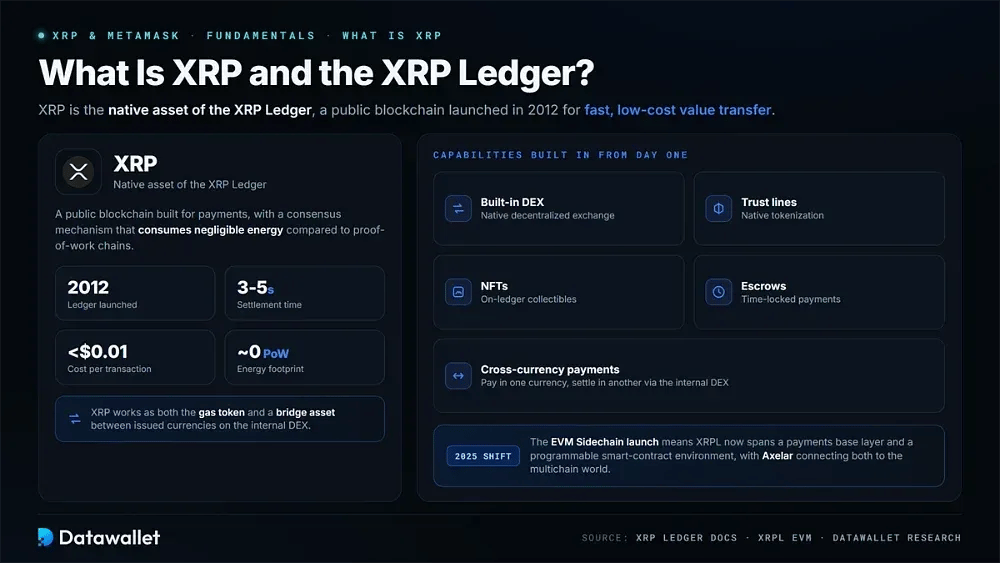
XRP is the native asset of the XRP Ledger, a public blockchain launched in 2012 for fast, low-cost value transfer. Transactions settle in three to five seconds at roughly a fraction of a cent, with a consensus mechanism that consumes negligible energy compared to proof-of-work chains.
The ledger ships with capabilities most chains bolt on later: a built-in decentralized exchange, native tokenization through trust lines, NFTs, escrows, and cross-currency payments. XRP itself functions as both the gas token and a bridge asset between issued currencies on that internal DEX.
The 2025 EVM Sidechain launch marked a genuine shift in scope. XRPL now spans a payments-optimized base layer and a programmable smart contract environment, with Axelar connecting both to the wider multichain ecosystem.
Common XRP Setup Mistakes in MetaMask
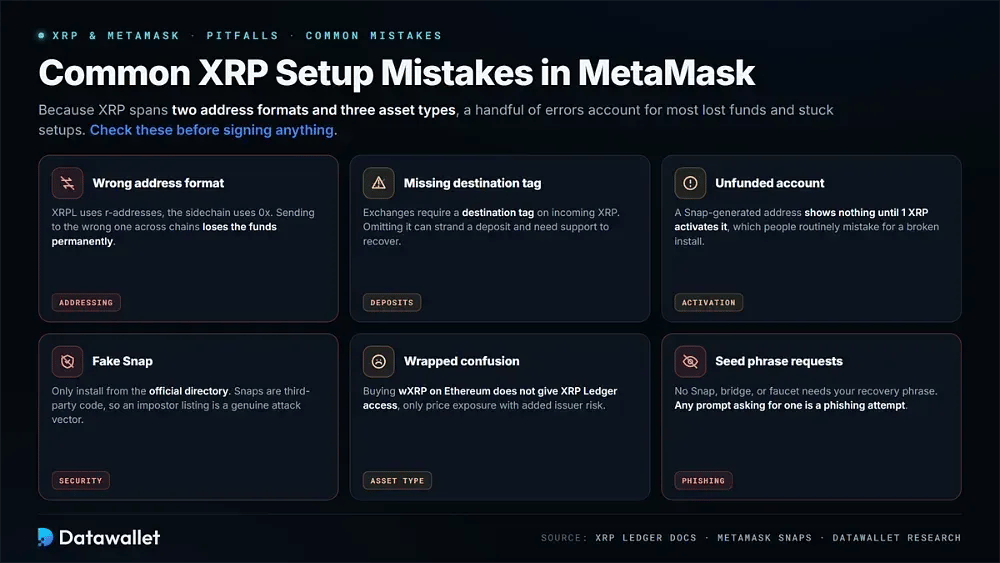
Because XRP spans two address formats and three asset types, a handful of errors account for most lost funds and stuck setups.
Check these before signing anything:
- Wrong address format: XRPL uses r-addresses while the sidechain uses 0x. Sending to the wrong one across chains loses the funds permanently.
- Missing destination tag: Exchanges require a destination tag on incoming XRP. Omitting it can strand a deposit and require support intervention.
- Unfunded account: A Snap-generated address shows nothing until 1 XRP activates it, which people routinely mistake for a broken install.
- Fake Snap: Only install from the official directory. Snaps are third-party code, so an impostor listing is a genuine attack vector.
- Wrapped confusion: Buying wXRP on Ethereum does not give you XRP Ledger access, only price exposure with added issuer risk.
- Seed phrase requests: No Snap, bridge, or faucet needs your recovery phrase. Any prompt asking for one is a phishing attempt.
Final Thoughts
Adding XRP to MetaMask now means choosing a path rather than following a single one. The XRPL Snap delivers native XRP with a 1 XRP activation reserve, while the EVM Sidechain on Chain ID 1440000 slots in as a normal custom network for smart contract work.
Verify each setting against the official XRPL and Peersyst docs, confirm the address format before every send, and treat wrapped XRP as a distinct asset rather than a shortcut. For meaningful balances, a hardware wallet like Ledger or an XRPL-native option like Xaman remains the safer home, with MetaMask handling the amounts you actively put to work.
%20to%20MetaMask%20in%202026.webp)