



Can I Get Cardano Testnet Tokens?
Yes, and the process takes under five minutes. Cardano runs two public test networks, Preview and Preprod, and a single faucet operated through the official Cardano documentation serves both. Test ADA (tADA) carries no market value, so you can deploy smart contracts, mint native tokens, or practise delegation with zero financial risk.
The only preparation needed is a wallet pointed at a test network. Lace, Eternl, and Yoroi Nightly support both networks, Typhon covers Preprod, and every testnet address begins with the prefix addr_test. MetaMask users can follow our guide on adding Cardano to MetaMask, though a native Cardano wallet is the cleaner choice for testnet work.
How to Get Cardano Testnet Tokens
We claimed tADA on both networks while testing this guide, and the official faucet delivered in under two minutes each time. Here is the process:
- Prepare a testnet wallet: Install Lace or Eternl, open the network settings, and switch from Mainnet to Preview or Preprod. Copy your receiving address and check it starts with addr_test.
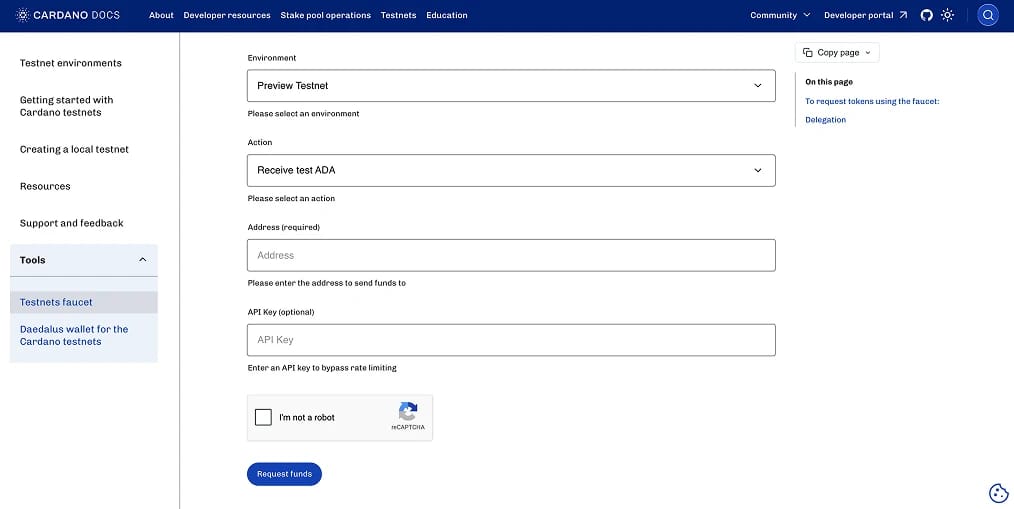
- Open the official faucet: Go to the Cardano testnet faucet on the official documentation site.
- Select your environment: Pick Preview or Preprod from the dropdown and leave the action menu set to receive test ADA. The address type must match the network you chose.
- Paste your address and verify: Enter your testnet address, skip the API key field unless you have been issued one, and complete the captcha.
- Request the funds: Click the request button and 10,000 tADA lands in your wallet within a few minutes.
Cardano Faucet Limit
The official faucet dispenses 10,000 tADA per request and enforces a limit of one claim every 24 hours. That allocation covers most testing comfortably, since a basic Cardano transaction costs well under 1 tADA in fees.
Teams that need more can apply for an API key, which unlocks larger allocations for sustained development work. Stake pool operators can request test ADA delegated to their pool by selecting receive pool delegation in the faucet's action menu.
Send unused tADA back once testing wraps up, since the faucet pool is a shared community resource. The documentation lists a return address for each network.
Choosing Between Preview and Preprod
The network you choose shapes what your tests prove. Preview runs one-day epochs (Cardano's staking and reward periods) and under Intersect's hard fork policy receives protocol upgrades weeks before mainnet, which makes it the place to trial new features. Preprod mirrors mainnet parameters with five-day epochs and hard forks within one epoch of the main network, so it serves as the final rehearsal before mainnet deployment.
The Van Rossem upgrade in 2026 showed this staging in action. Protocol version 11 reached Preview on 8 May, Preprod on 10 June, and mainnet on 18 July, marking the first Cardano hard fork ratified through on-chain governance votes. Developers who held tADA on Preview were testing the upgrade's cheaper smart contract pricing months before mainnet users touched it.
Alternative Cardano Faucets
Cardano's developer documentation points to a single automated faucet for both public networks, and the third-party options have thinned out. Triangle once dripped small amounts of tADA but has since dropped its Cardano support, and the large multi-chain faucets that serve EVM testnets do not cover Cardano. If you test across several networks, our best crypto faucets roundup maps the options on those other chains.
The 10,000 tADA allocation is generous partly because the official faucet carries the entire ecosystem's demand. When the daily limit still slows you down, two workarounds remain:
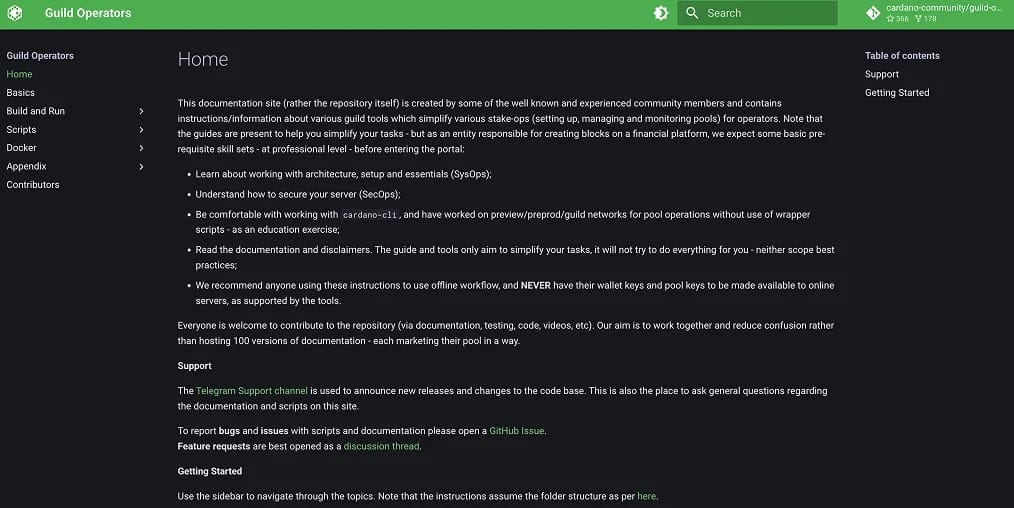
- Guild Network: This community-maintained Cardano testnet runs one-hour epochs, so staking and governance cycles that take days on the public networks finish quickly here. It suits tests that need fast epoch boundaries rather than Preview or Preprod specifically, and funds are requested manually through the Guild Operators support channel.
- Local development networks: Yaci DevKit and the cardano-testnet tool spin up a private Cardano network on your machine, where you configure the starting balances yourself and never queue at a faucet.
Bottom Line
A single daily claim of 10,000 tADA from the official faucet funds nearly any Cardano testing scenario, from minting a first native token to rehearsing a full dApp launch on Preprod.
Match the network to the job before you claim. Preview shows you what is coming to Cardano next, Preprod tells you whether your build survives mainnet conditions, and the faucet treats both identically.