



Can I Buy Bitcoin with BDO?
Not directly inside the BDO app. The bank doesn’t list Bitcoin as an in-app investment product, and you shouldn’t expect a “Buy BTC” button inside BDO Online the way you’d see stocks or funds on a broker platform.
The clean route is to move pesos out of BDO to a regulated Filipino cryptocurrency exchange using a bank transfer method the exchange supports (typically InstaPay or PESONet), then buy Bitcoin after the deposit lands.
We only use a BDO debit/credit card as a fallback. Card deposits come with higher fees, and they’re where we see the most friction - extra verification prompts, merchant blocks, and “try again later” style declines that pop up most often on first-time crypto purchases.
How to Buy Crypto with BDO
We found that the best way to buy crypto with BDO is to fund Bitunix and trade on the exchange. If you’re starting with PHP, use a local bank transfer rail the exchange supports, or use P2P if the direct transfer option isn’t available for your account.
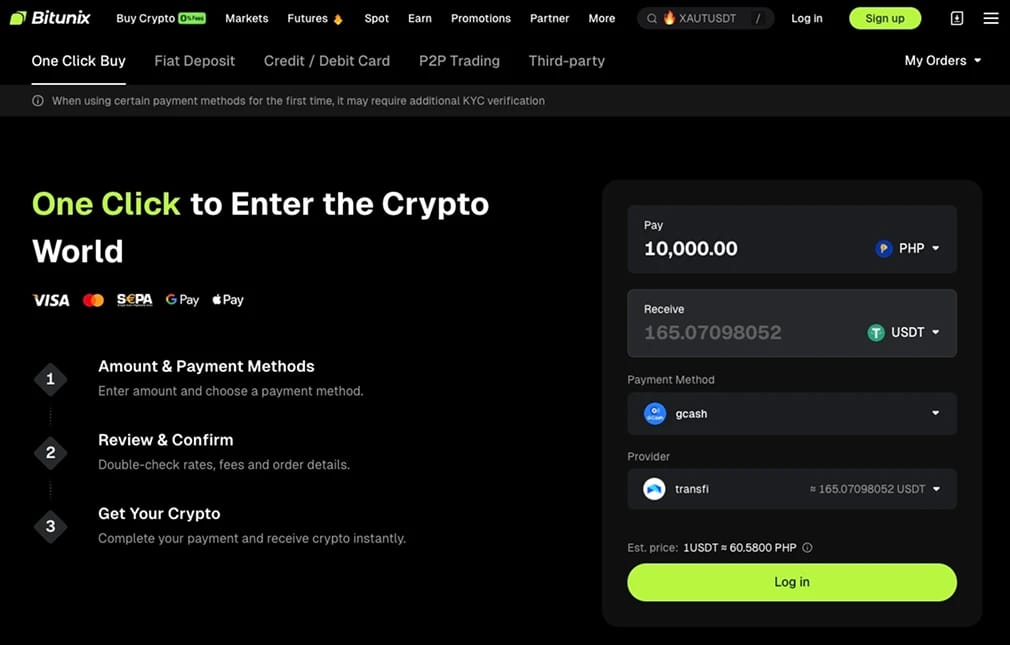
I prefer Bitunix for two key reasons. First, it offers multiple PHP funding options, including credit/debit cards, Apple Pay, Google Pay, and various P2P methods like GCash.
The platform is liquid and broad enough that you can go from PHP to what you actually want (BTC/ETH/SOL) without having to use multiple apps.
Quick guide from BDO to Bitcoin:
- Create your account: Sign up on Bitunix and finish ID checks so deposits and withdrawals don’t get stuck on avoidable holds.
- Grab deposit details in Bitunix: Deposit → PHP → Bank Transfer, then copy the beneficiary details and any reference/remarks exactly as shown.
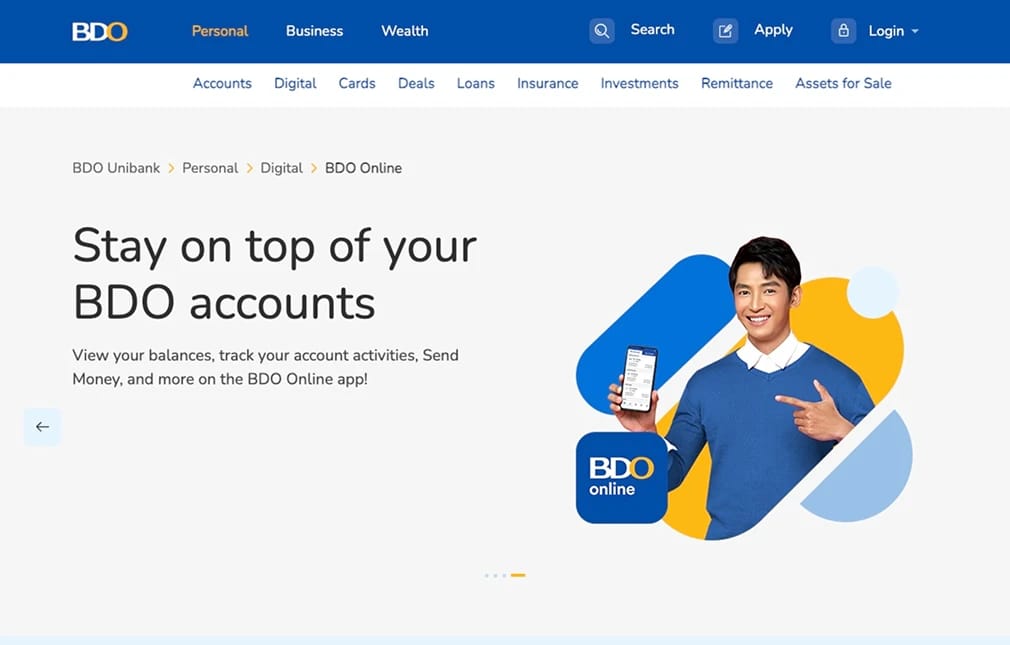
- Send from BDO: In BDO Online, send a transfer using InstaPay or PESONet (depending on what’s available and your limits) and enter the reference exactly so the deposit matches.
- Buy once funds land: Open Spot and place a Market order for speed, or a Limit order if you want a specific entry price. Once your trade is complete, your BTC will be available in your Spot Wallet.
Fees and Deposit Limits for BDO Customers
Before I fund Bitunix from BDO, I check two things: which transfer rail will actually clear today, and whether I’m about to get clipped by a card surcharge.
Trading and withdrawal costs are another consideration to check before choosing an exchange, as they can be as high as 1% depending on your platform.
Deposits and limits
- BDO daily limit: The BDO Online app makes you work within your set transfer limits, and the exact ceiling depends on your account setup and transfer type (InstaPay is ₱50,000 per day and PESONet is ₱500,000 per day).
- Fast PHP funding: Bitunix will credit your account instantly if you choose credit/debit card, Apple Pay, Google Pay, GCash, PayMaya, or GrabPay.
- Bitunix deposit fees: Bitunix displays fiat deposit fees on the deposit/buy screen, based on currency and payment method.
Trading and withdrawals
- Trading fees: Bitunix spot fees use a maker/taker model. At the base tier (VIP 0), spot trading is 0.08% for makers and 0.10% for takers.
- Withdrawals: Bitunix charges a fixed network fee for crypto withdrawals, and you’ll see it at the withdrawal screen before you confirm. I always check the network (e.g., ERC-20 vs cheaper rails) because that choice is usually the real cost driver.
BDO Cryptocurrency Policy
BDO won’t sell you crypto inside BDO Online. What BDO will do is move money. What it won’t do is ignore risk controls. When a payment looks like it’s heading into crypto rails, that’s where we’ve seen the most friction: extra verification steps or payments that don’t clear cleanly on the first try.
So when we use BDO for crypto, we keep it bank-friendly: send funds only to a licensed digital asset exchange, start with a small test transfer, and copy the beneficiary name plus any reference/remarks exactly so the deposit matches without manual review.
That approach also aligns with how the Bangko Sentral ng Pilipinas (BSP) frames crypto risk: transact only with properly registered entities and treat crypto activity as higher risk from a consumer and compliance perspective.
Best Alternative Exchanges for BDO Customers
When we’re not using Bitunix, we stick to BSP-registered VASPs that support local PHP rails because that’s where BDO transfers tend to clear with the least drama.
About BDO Bank
BDO is one of the largest universal banks in the Philippines, offering everyday retail banking (deposits, payments, cards, loans) alongside corporate banking and treasury services for businesses.
It runs a large nationwide branch/ATM network, is part of the SM Investments Corporation group, and its shares trade on the Philippine Stock Exchange, with digital access centered on BDO Online for transfers, bills, and account management.
Final Thoughts
If you’re buying crypto with BDO, treat the bank like a clean funding rail. Start by picking a BSP-registered platform, complete verification before you send money, and do a small test transfer first using InstaPay or PESONet with the exact reference so your deposit matches fast.
Avoid card purchases unless you’re stuck, because they’re where fees and declines cluster, and always check Bitunix’s on-screen deposit cost plus the maker/taker rate before you place your first trade.
Once you buy, move long-term holdings off the exchange to a personal wallet, and keep records of transfers and trades for basic tracking and tax compliance.