How to Buy Crypto with Fidelity
Summary: Fidelity offers direct trading of Bitcoin, Ethereum, and Litecoin with a 1% spread, plus indirect exposure through spot crypto ETPs like FBTC and FETH, thematic ETFs such as FDIG and FMET, and crypto-related stocks.
Investors seeking more assets, staking, or on-chain withdrawals can use regulated exchanges like Kraken or Coinbase, which offer hundreds of cryptocurrencies, secure custody, competitive fees, and multiple USD funding options.

Best Alternative to Fidelity for Crypto - Kraken
Kraken is the top alternative to Fidelity, offering lower fees, access to over 460 cryptocurrencies, and free USD deposits for a broader, cost-effective trading experience.
Licensing & Regulation
FinCEN, the FCA and More
Available Assets
460+ Cryptocurrencies (including Staking)
USD Deposit Methods
ACH Transfers, Cards, Wire & More
Can I Buy Crypto with Fidelity?
Yes, Fidelity allows eligible U.S. customers to trade Bitcoin, Ethereum, and Litecoin directly through Fidelity Crypto, starting at $1 per trade. Orders can be placed as market or limit, with custody managed by Fidelity Digital Assets using secure cold storage.
For indirect exposure, Fidelity offers spot crypto ETPs such as the Fidelity Wise Origin Bitcoin Fund (FBTC) and Fidelity Ethereum Fund (FETH), which track the price of Bitcoin and Ether. These can be held in brokerage or IRA accounts without the need for a private wallet.
Fidelity also provides thematic ETFs like the Fidelity Crypto Industry and Digital Payments ETF (FDIG) and Fidelity Metaverse ETF (FMET), investing in companies involved in blockchain, digital assets, and payments. This gives investors the choice between direct ownership or regulated market exposure.
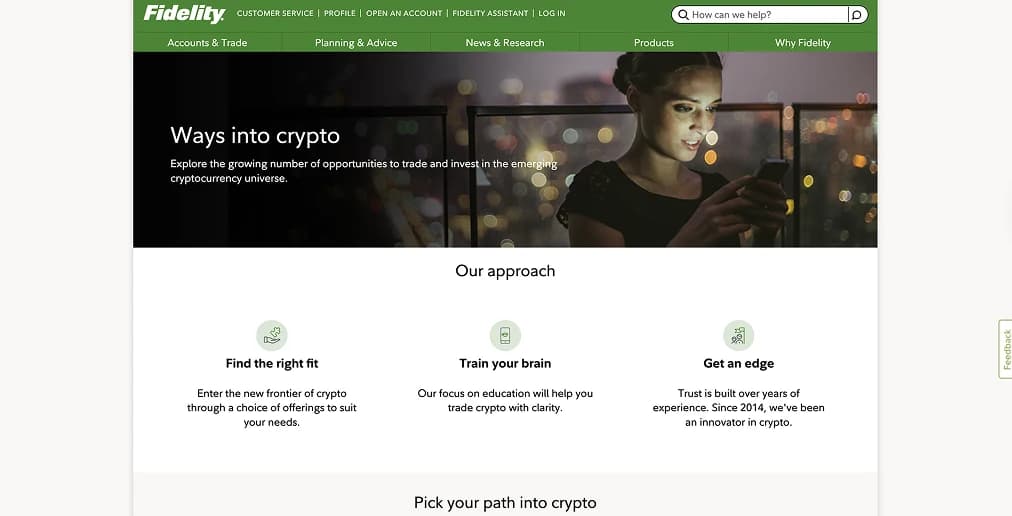
Fidelity Crypto Trading Fees
Fidelity does not charge account opening or maintenance fees for crypto trading. Direct crypto trades include a 1% spread, which is the difference between your execution price and the price at which Fidelity Digital Assets sources the asset.
Here are the main fees to invest in crypto with Fidelity:
- Direct Crypto Trading (Bitcoin, Ethereum, Litecoin): 1% spread per trade, no additional commissions, $1 minimum order.
- Spot Crypto ETPs (FBTC, FETH): $0 commission in brokerage or IRA accounts, standard fund expense ratios apply.
- Crypto Industry and Digital Payments ETF (FDIG) and Metaverse ETF (FMET): $0 commission, invests in companies tied to blockchain, digital assets, and payments.
- Crypto-related Stocks: Companies with crypto exposure, such as Coinbase (COIN) and MicroStrategy (MSTR), trade at $0 commission.
- Fidelity Crypto IRAs: Same 1% spread for trades, with no separate account or custody fees.
Fidelity does not allow direct transfers of crypto to or from external wallets, so blockchain network fees do not apply. All charges are disclosed before you place an order.
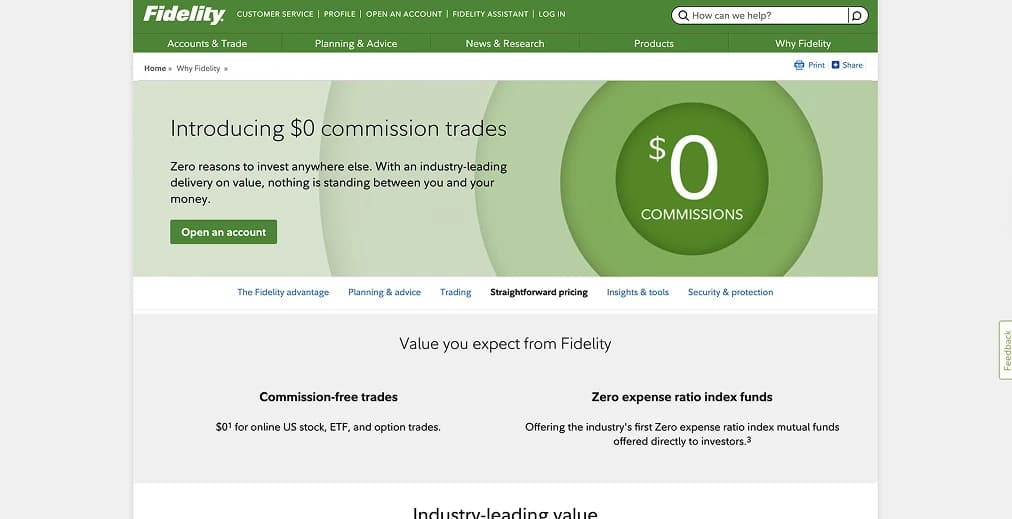
How to Buy Bitcoin and Crypto with Fidelity Alternative
While Fidelity offers direct trading for Bitcoin, Ethereum, and Litecoin, it does not support external wallet withdrawals or features like staking. Investors who want a wider asset selection, on-chain withdrawals, and staking rewards can use a regulated exchange such as Kraken.
Kraken is a U.S. based exchange registered with FinCEN (MSB #31000270997766) that lists over 460 crypto assets. It supports USD deposits via ACH transfers, bank wires, and debit or credit cards. Kraken also offers staking on multiple assets, allowing users to earn rewards directly on the platform.
Follow these steps to buy crypto through Kraken:
- Create a Kraken Account: Sign up and complete identity verification to meet KYC requirements.
- Deposit Funds: Add USD through ACH transfer, bank wire, or debit/credit card.
- Choose Your Asset: Select from options like Bitcoin (BTC), Ethereum (ETH), or other supported coins.
- Place Your Order: Enter the trade amount, review the details, and confirm the purchase.
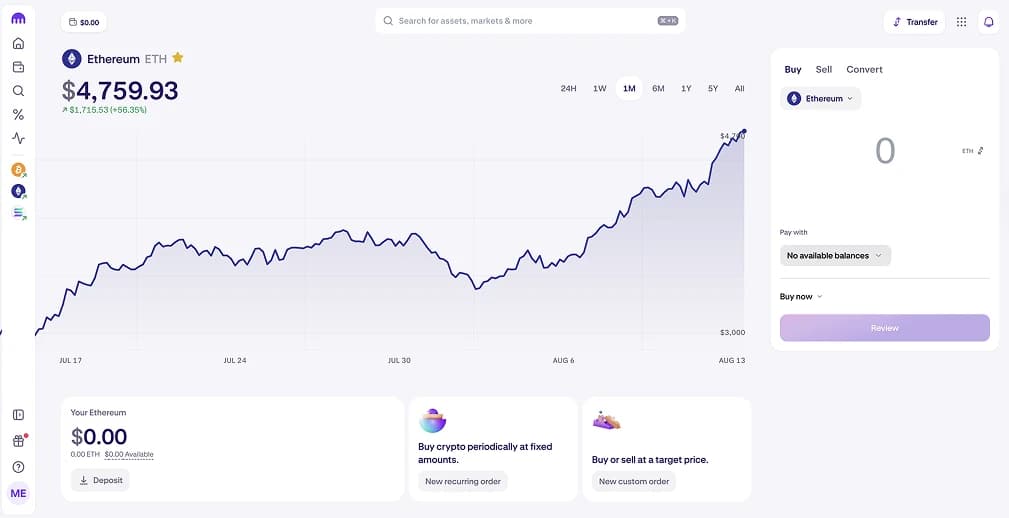
Alternative Crypto Exchanges for Fidelity
Fidelity customers seeking features the platform does not offer, such as a broader asset selection, external wallet transfers, and staking rewards, can consider these regulated U.S. exchanges beyond Kraken:
- Coinbase: FinCEN-registered with trading for over 250 cryptocurrencies, staking on eligible assets, and advanced order types through Coinbase Advanced Trade. Average fees are about 0.6%.
- Gemini: Licensed by the New York State Department of Financial Services, offering 100+ cryptocurrencies with strong compliance, security protocols, and insured custody. Typical trading fees are around 1.49%.
- Robinhood: FINRA- and SIPC-regulated broker providing commission-free trading for 15 cryptocurrencies including BTC, ETH, SOL, DOGE, and XRP. Spreads average about 2%, with funding via ACH, wire, or debit/credit card.
- Crypto.com: A FinCEN-registered exchange supporting more than 250 cryptocurrencies, staking services, a Visa debit card program, and competitive fees starting at 0.5% for traders.
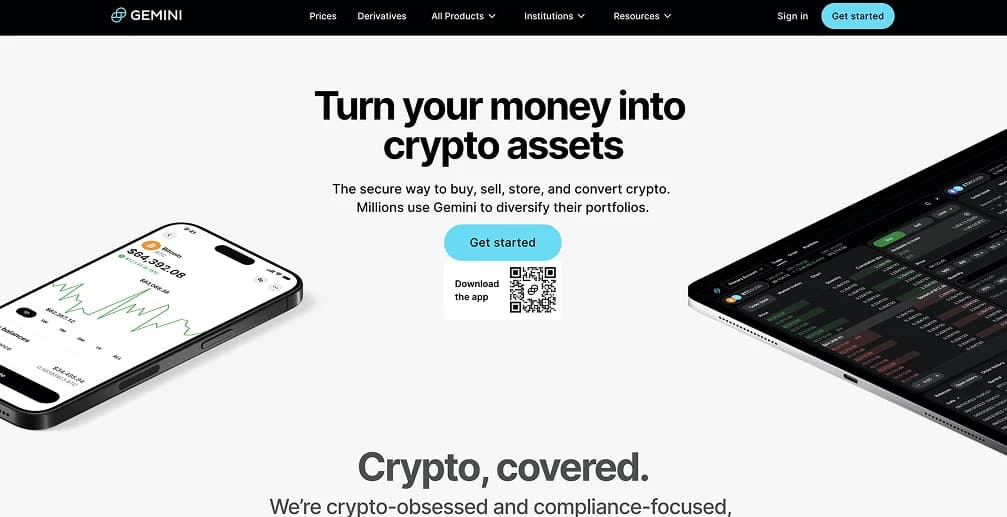
About Fidelity
Fidelity is one of the largest and most established investment firms in the world, founded in 1946 and headquartered in Boston. It serves over 50 million individual investors and manages roughly $5.9 trillion in discretionary assets, with total assets under administration exceeding $15 trillion.
The company’s offerings span mutual funds, ETFs, retirement accounts, brokerage services, and newer products like Fidelity Crypto and spot crypto exchange-traded products. Its scale, product range, and decades-long track record have made it a dominant force in both traditional finance and the growing digital asset market.
Final Thoughts
Fidelity gives investors a secure, regulated way to access Bitcoin, Ethereum, and Litecoin directly, as well as indirect exposure through crypto ETPs, thematic ETFs, and related stocks.
For those who need features like on-chain withdrawals, staking, or a broader asset list, pairing Fidelity with reputable exchanges such as Kraken, Coinbase, Gemini, or Crypto.com can create a more versatile crypto strategy while maintaining regulatory compliance and strong security.
Frequently asked questions

.webp)