How to Buy Bitcoin & Crypto Emirates Islamic Bank
Summary: Emirates Islamic Bank does not provide native cryptocurrency trading. Customers in the UAE who want exposure to Bitcoin or other coins must move AED to regulated digital asset platforms.
Using crypto exchanges and brokers that comply with the Virtual Assets Regulatory Authority (VARA) standards is the safest route to investing in Bitcoin, Ethereum, and other digital currencies.

Top Crypto Platform for Emirates Islamic Bank - Rain
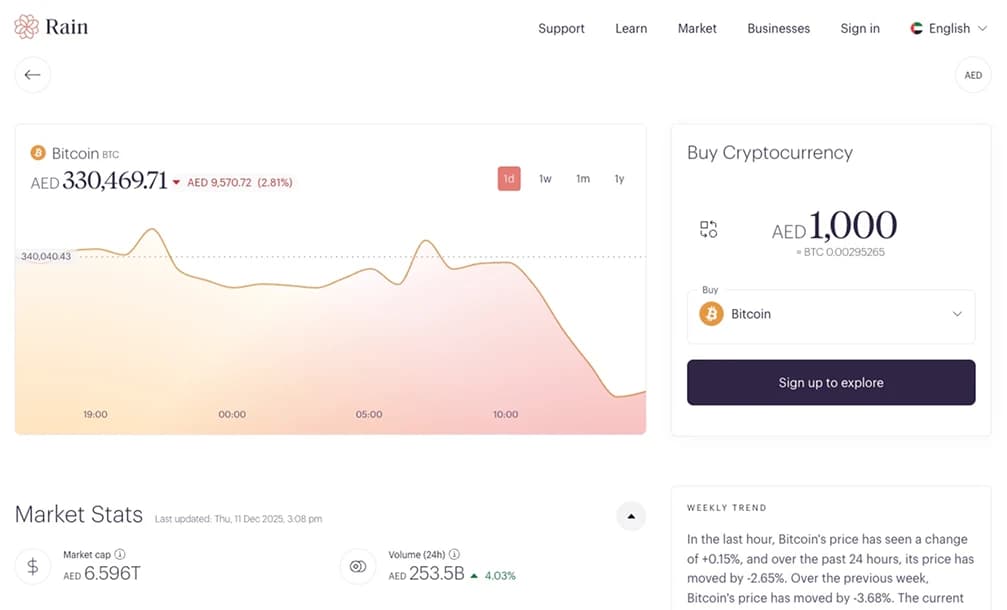
Rain is the best cryptocurrency exchange for Emirates Islamic Bank clients thanks to its ADGM licensing, offering fast zero fee trading with deep liquidity.
AED Deposit Methods
Bank Transfer, Debit Card, Credit Card, Fawri
Supported Assets
70+ Cryptocurrencies
Licensing & Regulation
ADGM's Financial Services Regulatory Authority (FSRA)
Can I Buy Bitcoin with Emirates Islamic Bank?
No. Emirates Islamic Bank does not support direct buying or selling of cryptocurrencies in its online banking or mobile app. EIB clients who want to invest in Bitcoin need to move AED from their bank account to a licensed crypto trading platform in the UAE.
To stay aligned with guidance from the Virtual Assets Regulatory Authority (VARA) and the Financial Services Regulatory Authority (FSRA), investors should only use regulated platforms that apply strict KYC and AML checks. Keeping detailed records of transfers between Emirates Islamic Bank and these licensed exchanges also makes future tax reporting easier.
How to Buy Crypto Emirates Islamic Bank
Emirates Islamic Bank does not include cryptocurrency trading in its mobile or online banking platforms. If you want to buy Bitcoin or other coins, you first need to move AED from your Emirates Islamic Bank account to a regulated exchange that accepts UAE residents.
One example is Rain, a Shariah-compliant platform licensed by the Central Bank of Bahrain and approved by Abu Dhabi Global Market’s Financial Services Regulatory Authority (FSRA), which supports AED funding from local banks.
Step-by-Step Guide to Buying Crypto with Emirates Islamic Bank
- Open an Account: Go to Rain’s website or download the mobile app, create an account, and complete identity verification with your Emirates ID or passport.
- Fund from Emirates Islamic Bank: Head to the deposit section and choose AED as your funding currency. Select a preferred deposit method from your EIB account, then follow the on-screen instructions to initiate the transfer.
- Select Cryptocurrency: Once your AED balance appears in your exchange wallet, open the spot trading or buy/sell section. Pick the coin you want to purchase and match it with the AED trading pair (for example, BTC/AED or ETH/AED).
- Confirm Order: Enter the amount of AED or crypto you want to buy, review the quoted price, trading fees, and total cost, then submit the order.
Fees and Deposit Limits for Emirates Islamic Bank Customers
Before sending money from Emirates Islamic Bank to a crypto exchange, it is important to understand how deposit, withdrawal, and trading costs work. Here is a concise overview of Rain’s fees:
- Deposits: Rain does not charge a fee on AED deposits made by standard bank transfer. Card payments attract a higher charge with Rain indicating around a 4% cost.
- Withdrawals: To move funds back to Emirates Islamic Bank, you first need to sell your crypto. Once the sale settles, you can request a withdrawal in AED to your linked bank account. Rain applies a flat 50 AED withdrawal fee for transfers to UAE bank accounts.
- Limits: Rain publishes very high purchase limits for verified users. Public documentation reference an initial weekly cap quoted at around BHD 3,700,000, which converts to several million US dollars.
- Trading Fees: On Rain’s order-book “Pro” interface, maker orders are typically charged 0.10% and taker orders 0.25%. For customers using the simpler instant-buy “Core” experience, the effective cost is roughly 0.5% or more when spreads are included.
Using Emirates Islamic Bank for funding and a licensed exchange such as Rain for execution gives UAE investors a clear separation between banking and trading, provided they always review the latest fee schedule and transaction limits before initiating each deposit or withdrawal.
Emirates Islamic Bank Cryptocurrency Policy
Emirates Islamic Bank adopts a cautious approach to cryptocurrency, distinguishing between the operational benefits of blockchain technology and the financial risks of digital assets. The bank allows clients to transfer funds to crypto exchanges that meet the standards set by the Securities and Commodities Authority (SCA), and other regulators such as VARA or the FSRA.
Consequently, the bank classifies cryptocurrency purchases made on its credit cards as "quasi-cash" transactions; this categorization means such payments do not earn rewards points and typically incur cash advance fees of 3.15% or 103.95 AED, whichever is higher.
This policy ensures the bank remains compliant with UAE Central Bank regulations and Islamic finance standards while protecting customers from the risks associated with unregulated virtual currencies.
Best Alternative Exchanges for Emirates Islamic Bank Customers
Emirates Islamic Bank customers who want exposure to crypto markets need to connect their AED accounts to regulated third-party platforms. Below are three large exchanges that accept users from the UAE.
- Bybit: Bybit is a global trading platform that supports AED funding and adheres to Shariah principles. It lists more than 2,400 cryptocurrencies with fees starting from 0.1%.
- Binance: Binance allows UAE residents to fund their accounts using card payments and international bank transfers. The platform offers 350 cryptocurrencies with spot fees from 0.1%.
- Kraken: Kraken is a long-established regulated exchange that supports funding from UAE bank accounts. Traders gain access to more than 450 cryptocurrencies with trading fees typically starting around 0.16% for maker orders and 0.26% for taker orders.
Before opening an account, Emirates Islamic Bank customers should carefully compare each platform’s funding methods, trading fees, supported assets, and withdrawal options, and choose a provider that aligns with their regulatory comfort level and investment goals.
.webp)
About Emirates Islamic Bank
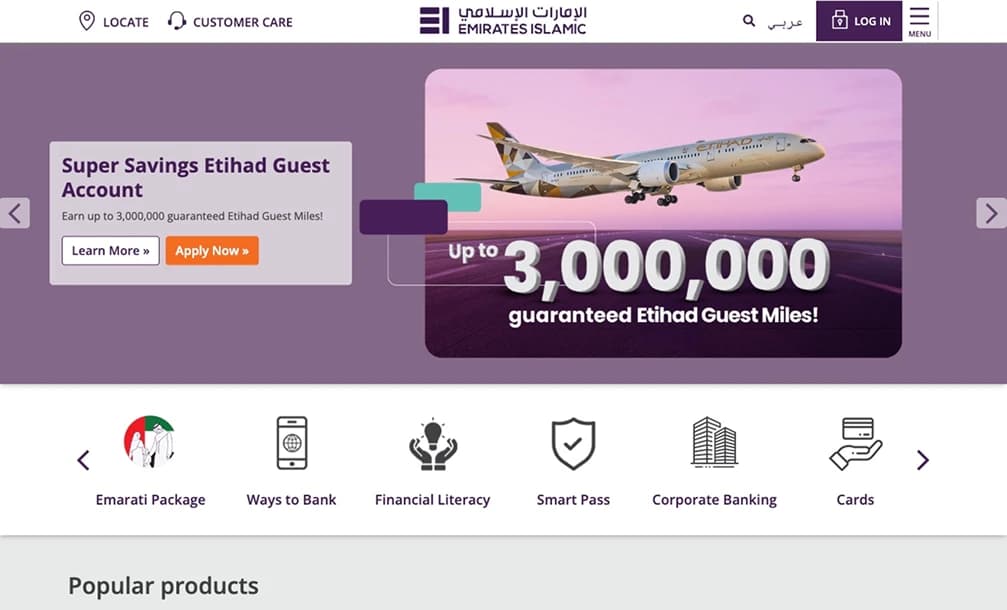
Emirates Islamic Bank, established in 2004 and headquartered in Dubai, stands as a prominent financial institution in the United Arab Emirates dedicated to delivering Shariah-compliant banking solutions. The bank serves a diverse client base ranging from individuals to large corporations.
As the Islamic banking subsidiary of the Emirates NBD Group, it combines the financial strength of a major regional banking group with strict adherence to Islamic finance principles, such as the prohibition of interest (Riba) and the use of ethical investment structures like Murabaha and Ijarah.
Final Thoughts
For Emirates Islamic Bank customers, the smartest way to gain crypto exposure is to choose a regulated, Shariah-aligned exchange that is supervised by VARA, the FSRA, or other UAE regulators.
Before you send your first AED, compare fees, limits, and supported coins, run a small test deposit and withdrawal, and keep clean records of every transfer for tax and compliance purposes. This disciplined approach lets you build a crypto position while staying aligned with local regulation, Islamic finance principles, and your own risk tolerance.


%2520in%2520Saudi%2520Arabia.webp)