
What is Solana Mobile?
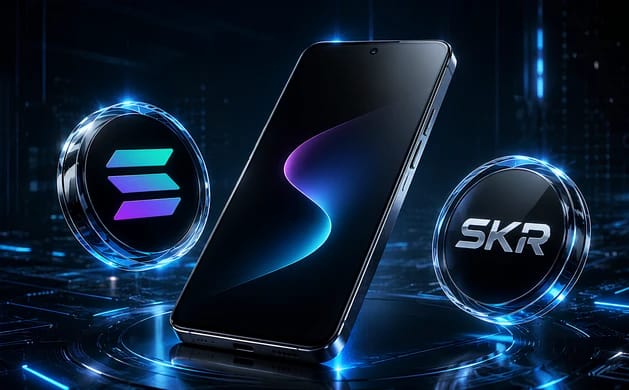
Solana Mobile is a mobile technology initiative from the Solana ecosystem that brings crypto tools directly into Android smartphones. Instead of managing wallets, signatures, and dApps through browser extensions, users get a phone experience designed around onchain activity and mobile-first self-custody.
Its main idea is to make crypto feel closer to normal mobile usage. Through the Solana Mobile Stack, users can connect wallets, sign transactions, access dApps, and manage assets from a device built around the Solana network, similar to how users explore Solana wallet setup.
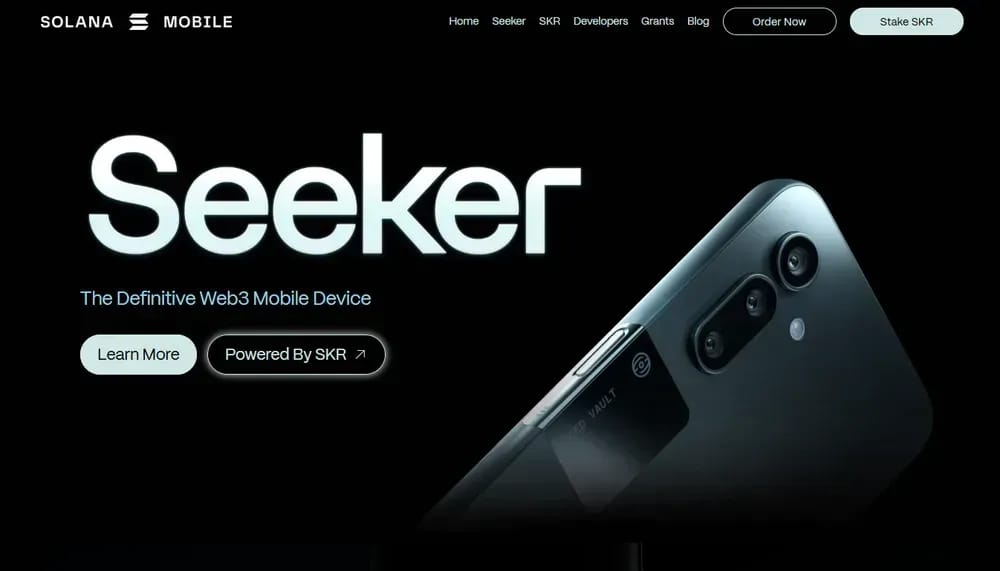
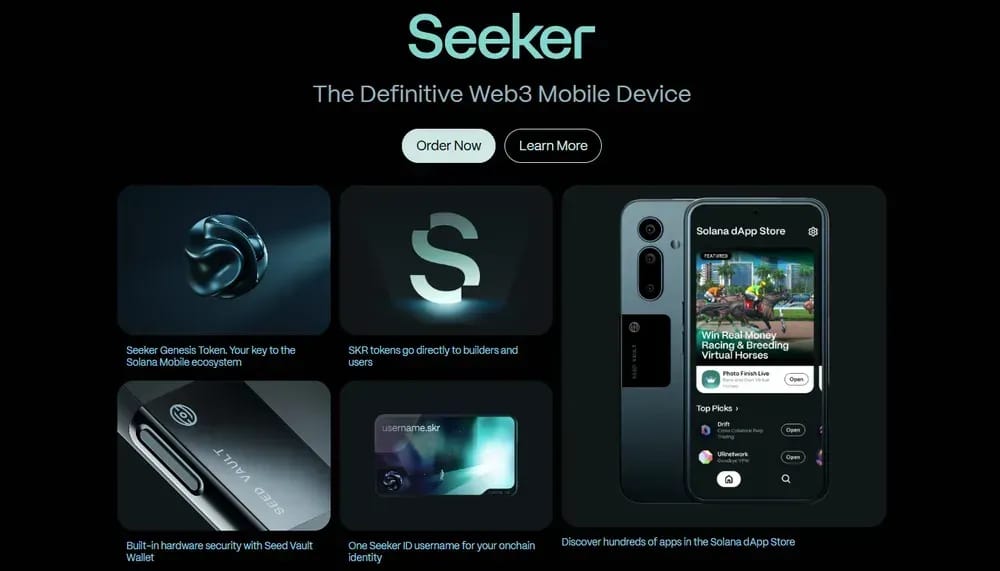
The first Solana phone was Saga, a premium Android device launched with Seed Vault and a Solana dApp Store. The second-generation Seeker focuses on affordability, stronger ecosystem rewards, a native Seed Vault Wallet, Seeker ID, and broader mobile dApp access for Solana-native users.
Solana Mobile is also becoming more than a phone brand. With SKR, Guardians, developers, verified devices, and app review mechanisms, it is evolving into a Web3 mobile ecosystem rather than only a hardware product like the earlier Solana Saga Phone.
Solana Phone Types
There are two main Solana phone types users usually mean: Saga and Seeker. Saga introduced Solana Mobile hardware, while Seeker is the newer, cheaper, ecosystem-focused device built for wider crypto participation.
Solana Saga
Solana Saga was the first official Solana phone. It launched as a flagship Android device with a 6.67-inch OLED display, 12GB RAM, 512GB storage, Snapdragon 8+ Gen 1, Secure Element support, Seed Vault, and access to Solana’s mobile dApp ecosystem.
Saga became famous after token and NFT rewards increased demand, especially among airdrop hunters. However, it was originally a niche product for crypto power users, not a mass-market phone, and later attention shifted toward Seeker as Solana Mobile pursued broader distribution and usage.
Solana Seeker
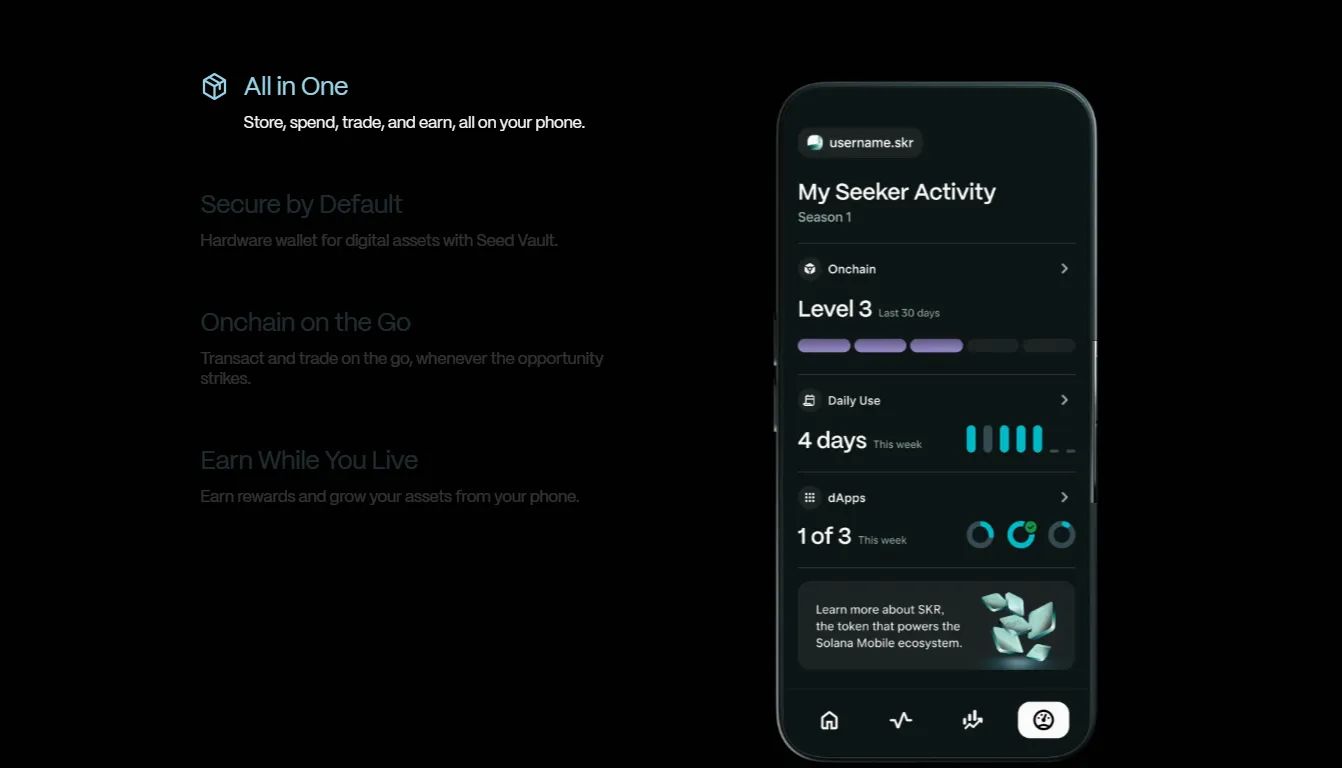
Solana Seeker is Solana Mobile’s second-generation Web3 phone. It includes a MediaTek Dimensity 7300 processor, 8GB RAM, 128GB storage, 6.36-inch AMOLED display, 120Hz refresh rate, 4,500 mAh battery, wireless charging, 5G, Wi-Fi 6, and power-button fingerprint security.
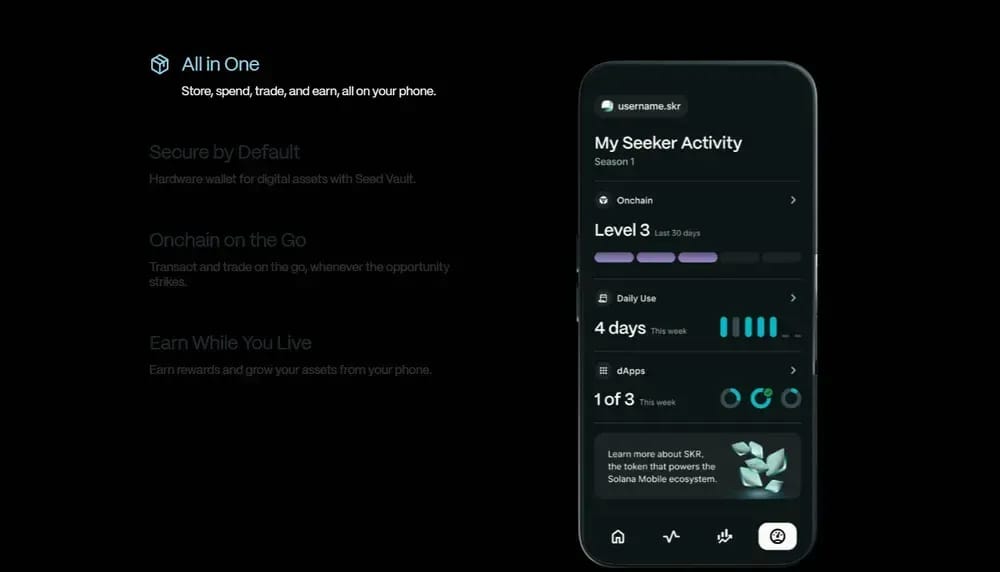
Seeker focuses less on flagship specs and more on onchain utility. It includes Seed Vault Wallet, Seeker ID, a non-transferable Genesis Token, access to hundreds of dApps, SKR ecosystem rewards, and a mobile-native experience for users already exploring Solana wallets.
How Much Does a Solana Phone Cost?
The original Saga launched near the premium-phone category, with Solana’s announcement referencing an anticipated final cost of $1,000. Many secondary-market prices later changed after reward speculation, so current Saga pricing depends on condition, sealed packaging, availability, and buyer interest in historical airdrop eligibility.
The newer Seeker is listed through the official Solana Mobile store at $500, excluding taxes and some variable charges. Final cost can change with shipping region, taxes, promotions, currency conversion, and whether buyers fund wallets through routes such as buying crypto with Apple Pay.
What Can You Do on a Solana Mobile Phone?
A Solana Mobile phone combines everyday Android use with crypto-native actions, including wallet signing, dApps, NFTs, DeFi, rewards, identity, payments, and learning.
Key things users can do include:
- Wallet: Use Seed Vault Wallet to manage crypto keys, approve transactions, and interact with Solana apps more securely than ordinary hot-wallet-only setups.
- dApps: Browse the Solana dApp Store for mobile-ready apps across payments, DeFi, NFTs, AI, DePIN, gaming, and ecosystem rewards.
- Trading: Access mobile DeFi tools, swaps, and trading apps like Raydium, Pump Fun and more.
- NFTs: Mint, hold, view, and use NFTs, including the Seeker Genesis Token that unlocks Solana Mobile ecosystem experiences and reward opportunities.
- Rewards: Participate in campaigns, app activity, SKR-related incentives, and possible partner drops while remembering crypto airdrops are never guaranteed income.
- Identity: Use Seeker ID and a .skr identity to represent yourself across Solana Mobile experiences, dApps, communities, and token-gated opportunities.
- Payments: Use Solana Pay-style mobile flows, wallet transactions, QR interactions, and supported apps while monitoring Solana gas fees.
- Learning: Explore self-custody, wallets, bridges, dApps, DeFi, and Solana transaction fixes from a device designed for onchain behavior.
SKR Tokenomics
SKR is Solana Mobile’s native ecosystem asset, designed to coordinate users, developers, Guardians, and hardware partners. It connects Seeker ownership with governance, staking, app curation, rewards, and mobile-first participation across the Solana Mobile economy.
Token Allocation
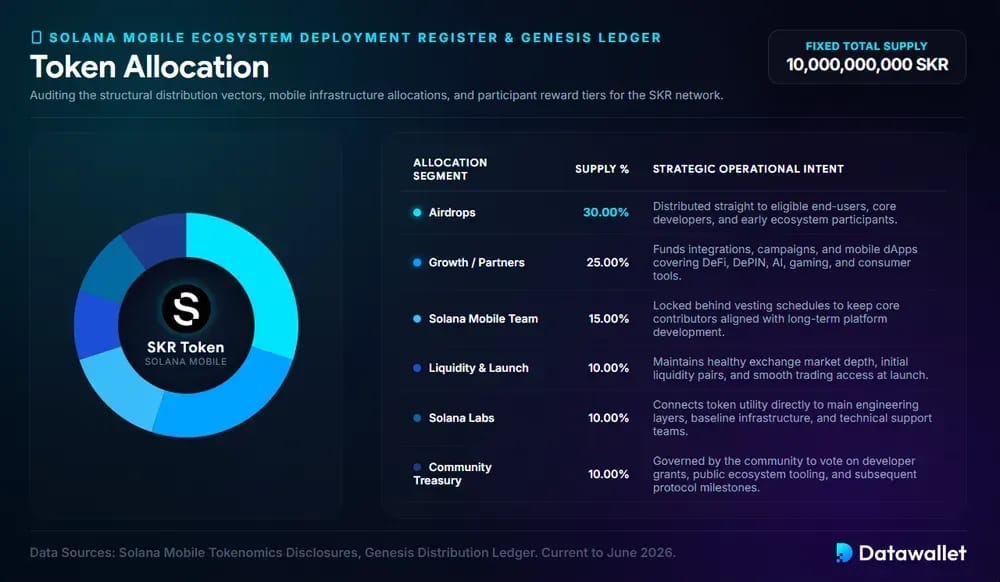
Solana Mobile lists SKR with a 10 billion token supply split across airdrops, growth, team incentives, liquidity, Solana Labs, and community treasury. The allocation rewards early users while funding platform development, partnerships, liquidity, and governance.
Key SKR allocation categories include:
- Airdrops: 30% of SKR supply is allocated to airdrops, giving eligible users, developers, and ecosystem participants direct exposure to Solana Mobile’s growth.
- Growth: 25% goes to growth and partnerships, supporting campaigns, integrations, distribution, and mobile-first apps across DeFi, DePIN, AI, gaming, and consumer crypto.
- Team: 15% is allocated to the Solana Mobile team, with vesting intended to align contributors with long-term ecosystem execution and platform development.
- Liquidity: 10% is reserved for liquidity and launch, helping support market access, early trading availability, and token distribution at launch.
- Solana Labs: 10% goes to Solana Labs, connecting SKR with broader Solana infrastructure, engineering, and ecosystem support.
- Treasury: 10% is allocated to the community treasury, managed through governance for future grants, incentives, tools, and ecosystem decisions.
Utility
SKR is not positioned as a replacement for SOL. Instead, it is a Solana Mobile ecosystem token used to coordinate ownership, curation, staking, rewards, and participation across Seeker devices, supported apps, and mobile infrastructure.
Main SKR utility areas include:
- Governance: SKR holders can help shape app curation, community standards, treasury use, Guardian participation, and long-term Solana Mobile ecosystem priorities.
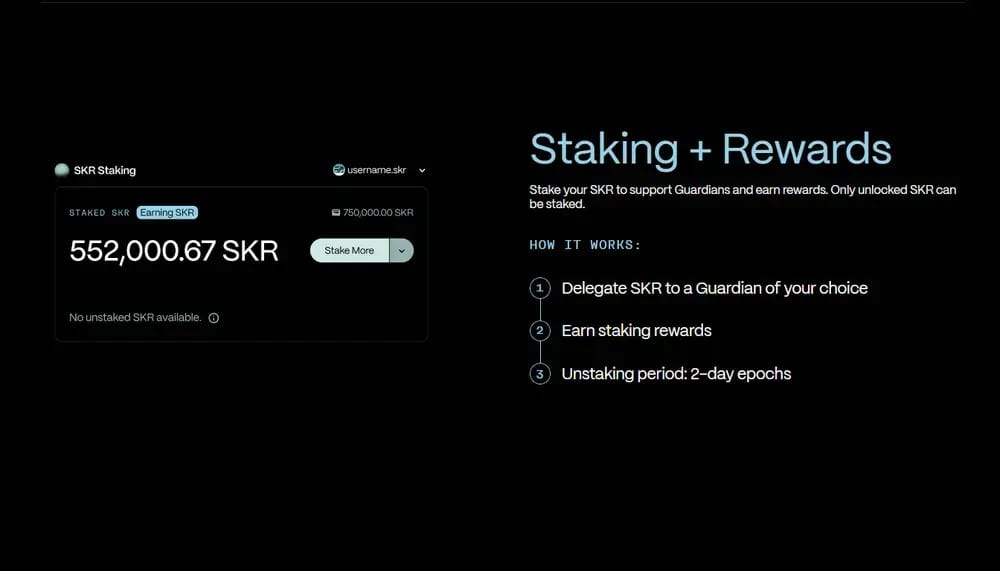
- Staking: Users can stake unlocked SKR to Guardians, supporting platform security, device verification, dApp review, and decentralized mobile infrastructure.
- Rewards: Stakers may earn rewards for delegating SKR, while Seeker users can participate in campaigns linked to device activity and ecosystem engagement.
- Curation: Guardians use delegated stake to review app submissions, enforce community standards, and reduce dependence on centralized app-store gatekeepers.
- Ownership: SKR gives users, developers, and hardware partners a shared stake in value created by the Solana Mobile ecosystem.
- Builders: Developers can benefit from app distribution, grants, lower platform friction, and a Solana-native mobile user base interested in DeFi projects.
- Security: SKR supports the Guardian model, where operators help verify device authenticity, software integrity, and dApp Store submissions.
- Identity: SKR complements Seeker ID and the Seeker Genesis Token, linking mobile identity, access, rewards, and onchain participation.
Solana Mobile Order Limits
Solana Mobile’s store currently presents Seeker with quantity one during checkout, and its Terms of Sale say certain products may have maximum order limits. The company can reject orders that exceed permitted limits or appear to bypass purchase restrictions, including indirect purchases beyond allowed quantities.
Those terms also state devices are generally sold for personal use, not resale, unless the store says otherwise. Orders may take time to fulfill, supported countries can vary, and buyers remain responsible for delivery details, taxes, import rules, pickup requirements, and wallet payment accuracy.
Is Solana Phone Safe?
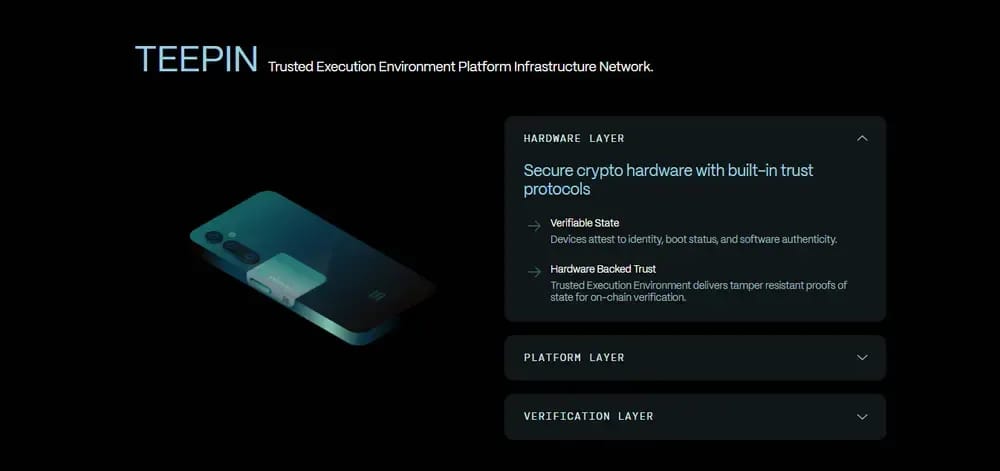
Solana phones are designed to improve mobile crypto safety through Seed Vault. Solana Mobile describes Seed Vault as hardware-backed custody that stores keys, seeds, and secrets away from normal apps, allowing applications to request signatures without directly handling private keys.
That does not make a Solana Phone risk-free. Solana Mobile’s terms warn that wallet use remains the user’s responsibility, while recovery phrases must be stored safely. If a phrase is lost or compromised, assets may be permanently lost like other crypto wallets.
How Solana Mobile Security Works
Solana Mobile security centers on Seed Vault, a hardware-backed custody system built into Saga and Seeker devices. It helps protect wallet keys, seed phrases, and secrets by keeping them separate from normal Android apps and transaction interfaces.
On Seeker, the Seed Vault Wallet communicates with secure phone hardware while apps request signatures without directly handling private keys. This supports DeFi, NFTs, payments, and dApps, but users should still track Solana wallets and confirm every approval.
Seed Vault improves mobile signing, but it does not remove every risk. Users should verify dApp permissions, avoid suspicious claims, protect recovery phrases offline, update software, and consider separate wallets for high-value holdings, staking activity, and regular Solana staking.
Risks of Solana Mobile Phones
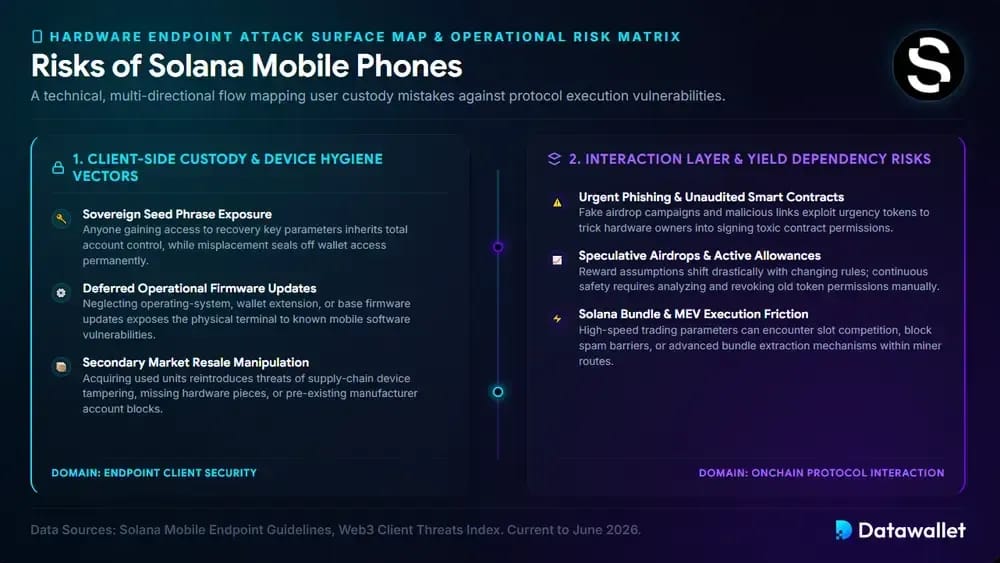
Solana phones reduce some mobile crypto risks, but they do not remove phishing, user error, smart-contract risk, theft, wallet-recovery responsibility, or speculative reward expectations.
Main risks to understand before buying:
- Seed phrase: Anyone who gets your recovery phrase can access assets, while losing it can permanently lock you out of wallets and related funds.
- Phishing: Fake airdrops, cloned dApps, malicious links, and social media scams often target users because reward campaigns create urgency.
- Updates: Skipping operating-system, wallet, or security updates can expose users to avoidable bugs, compatibility problems, and known mobile vulnerabilities.
- dApp risk: Even with safer signing flows, malicious or poorly audited dApps can still trick users into approving harmful transactions.
- Airdrops: Reward expectations can become speculative. Token values change quickly, eligibility rules vary, and no phone purchase guarantees profit.
- Resale: Buying used devices creates risk around tampering, missing recovery materials, unclear warranty status, locked accounts, and misleading reward claims.
- Permissions: Users should review wallet approvals and understand how to revoke token permissions when interacting with unfamiliar apps.
- Bundles: Some Solana trading activity may involve MEV, spam, or bundle-related risks, making guides on Solana bundles useful.
Solana Mobile vs Other Crypto Phones
Solana Mobile differs from older crypto phones because it connects hardware, wallet security, a curated dApp Store, identity, token rewards, and ecosystem coordination around one active blockchain community. Saga tested the concept, while Seeker pushes it toward more affordable, reward-driven adoption.
Other crypto phones often focus on different angles. dGEN1 emphasizes Ethereum-native open protocols, XForge targets DePIN and gaming, JamboPhone targets low-cost emerging-market access, while HTC Exodus pioneered secure-enclave crypto phones before today’s DePIN projects became popular.
Here is a quick comparison of leading crypto-phone approaches:
Final Thoughts
The Solana Phone has evolved from a niche Android experiment into a broader Web3 mobile ecosystem. Saga proved demand could exist, while Seeker tries to make that experience cheaper and more useful.
For everyday users, Seeker’s value depends on how much they use Solana dApps, wallets, DeFi, NFTs, bridges, and rewards. It is not automatically better than a normal flagship phone.
For crypto-native users, Solana Mobile is one of the strongest attempts to make onchain activity mobile-first. Still, buyers should treat recovery phrases, dApp approvals, wallet funding, and bridging to Solana carefully.