



Can I Buy Bitcoin with Revolut?
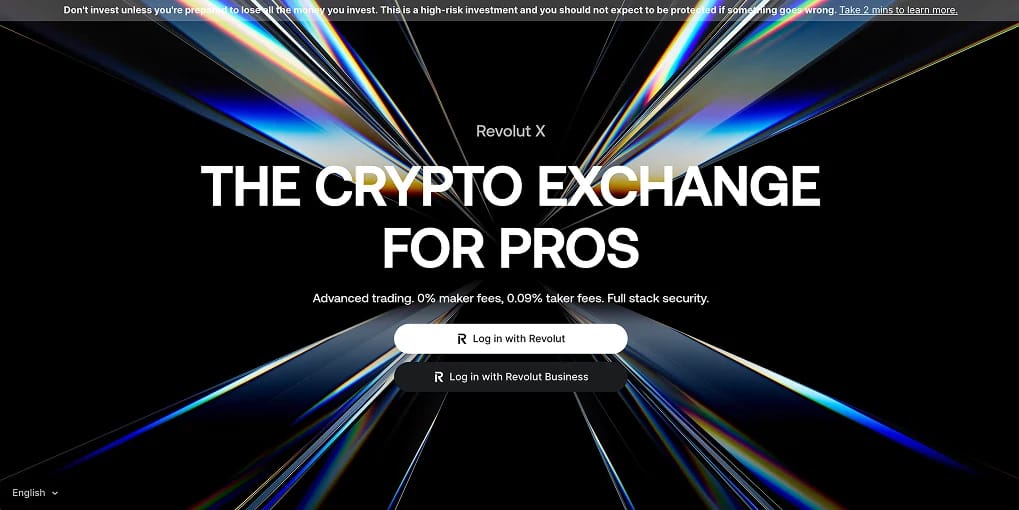
Yes, and in more ways than any other account we cover. UK and EEA customers trade Bitcoin and 300+ tokens in the main app, a separate desktop and mobile exchange called Revolut X offers order book trading at 0% maker and 0.09% taker, and a Revolut balance also funds any regulated external exchange by free bank transfer. US customers have no native option, since Revolut Technologies Inc. withdrew crypto services in October 2023.
The price gap between those options is wide. In-app pricing on a Standard plan opens at 1.49% per trade, and the surrounding charges grow the bill further. A minimum fee applies below £200, currency conversion at weekends carries a 1% markup on Standard and Plus, and any exchange volume beyond the £1,000 monthly fair usage limit picks up another 1%.
We put the same £300 Bitcoin order through the app and Kraken Pro in the same minute. The Revolut purchase cost £4.47 in disclosed fees on a Standard plan, while the Kraken limit order cost 75p after a free Faster Payments deposit that landed before we had finished setting the price.
How to Buy Crypto with Revolut
Sending money from Revolut to Kraken keeps the best of both, since the payment is instant and free and the trade prices on an order book instead of a retail quote.
Steps to buy crypto with Revolut:
- Create and verify a Kraken account: Register at Kraken and pass identity checks with a passport or driving licence. Newly verified UK retail accounts sit through a 24-hour cooling-off period under FCA financial promotion rules, so open the account the day before you plan to trade.
- Copy your deposit details: In Kraken, open Funding, choose GBP and Faster Payments in the UK or EUR and SEPA in the euro area, and note the account details plus the payment reference. The reference is what matches your money to your account, so carry it over exactly.
- Send the transfer from Revolut: Add Kraken as a new payee and pay from a balance in your own name, because a name mismatch is the usual reason a deposit stalls. Faster Payments and SEPA deposits are free from a £1 minimum. Revolut showed us its scam warning screens the first time we paid an exchange, then cleared the payment in under a minute.
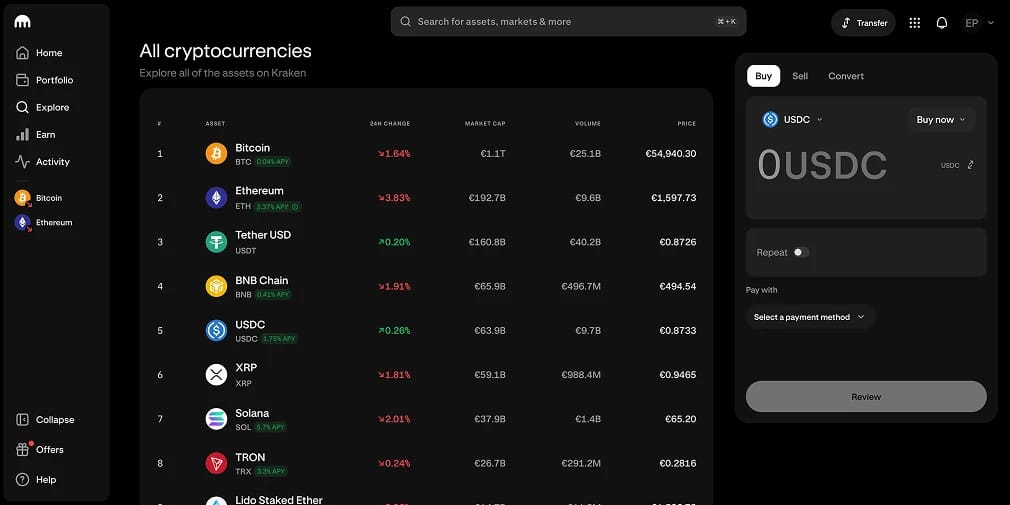
- Place a limit order on Kraken Pro: Pull up BTC/GBP or BTC/EUR and set your price near the live market. Pro charges 0.25% maker and 0.40% taker at the entry tier and falls with volume, while the simple Buy Crypto screen builds a wider spread into its quote.
- Move long-term holdings off the exchange: Withdrawals cost the network fee for the asset, pennies on cheap chains. Our crypto wallet guide compares self-custody options if you plan to hold for years.
Buying Crypto Directly in the Revolut App
The in-app purchase suits moments when speed beats price, and for small amounts nothing is more convenient.
- Activate crypto: Open the Crypto section, complete the appropriateness questionnaire UK rules require, and accept the risk disclosures.
- Pick a token and an amount: Revolut quotes a single all-in price. The tiered fee for your plan and 30-day volume appears on the order confirmation screen before you commit.
- Confirm the trade: The purchase settles instantly into your Revolut crypto balance. Selling back to fiat works the same way, at the same fee.
- Withdraw if you want self-custody: External transfers carry a service fee of £1 or £3 depending on the token, plus the network fee.
Serious traders should look at Revolut X instead, which runs a real order book at 0% maker and 0.09% taker across 300+ tokens and moves money to and from the main app instantly. On headline fees it undercuts most exchanges. The coins still sit in Revolut custody with the same withdrawal service fees, there is no proof of reserves, and stablecoin choice in the EEA excludes USDT, which our Revolut USDT guide covers in detail.
Fees, Tax and Transfer Limits for Revolut Customers
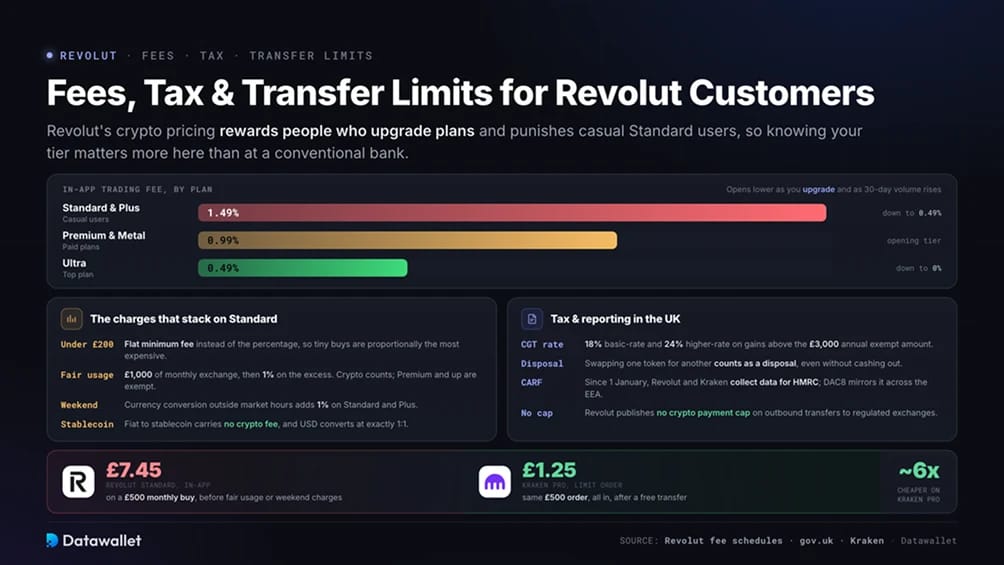
Revolut's crypto pricing rewards people who upgrade plans and punishes casual Standard users, so knowing your tier matters more here than at any conventional bank. Our Revolut crypto fees guide itemises every charge.
Revolut costs and limits
- In-app trading fees: Standard and Plus plans pay 1.49% on the first £10,000 of rolling 30-day volume, stepping down to 0.49% above £250,000. Premium and Metal open at 0.99%, and Ultra runs from 0.49% to 0%.
- Minimum fee: Trades under £200 pay a flat minimum instead of the percentage, which makes very small buys proportionally the most expensive on the platform.
- Fair usage fee: Standard accounts get £1,000 of currency exchange a month, then pay 1% on the excess. Plus gets £3,000 at 0.5%. Crypto trades count towards the limit, and paid plans from Premium up are exempt.
- Weekend markup: Currency conversion outside market hours adds 1% on Standard and Plus, relevant when a crypto buy needs an FX conversion first.
- Stablecoin exception: Exchanges between fiat and stablecoins carry no crypto fee, and USD converts at exactly 1:1.
- Crypto withdrawals: A £1 or £3 service fee per token type, plus the network fee.
- Bank transfers out: Faster Payments and SEPA payments to an exchange are free within plan allowances, and Revolut publishes no crypto payment cap, unlike the fixed allowances at Monzo and NatWest.
- Protection: FSCS cover of up to £120,000 now applies to eligible deposits with Revolut Bank UK Ltd. Crypto balances sit with Revolut Ltd and fall outside it, as do balances on any exchange.
Kraken fees
- Deposits: Faster Payments and SEPA are free. Cards, Apple Pay, and Google Pay cost 3.75% plus £0.25, which we skip.
- Trading: Kraken Pro runs 0.25% maker and 0.40% taker at the entry tier, with stablecoin pairs from 0.20%.
- Withdrawals: GBP by Faster Payments costs £1, and crypto withdrawals cost the network fee for the asset.
Tax on your trades
- UK Capital Gains Tax: Disposals are taxed at 18% for basic-rate and 24% for higher-rate payers on gains above the £3,000 annual exempt amount. Swapping one token for another counts as a disposal.
- Reporting: Since 1 January, UK platforms including Revolut and Kraken have collected user and transaction data for HMRC under the Cryptoasset Reporting Framework, and DAC8 mirrors the same automatic reporting across the EEA.
A £500 monthly buyer on a Standard plan pays £7.45 in-app before any fair usage or weekend charges. The same order on Kraken Pro costs about £1.25 all in, and the difference compounds with every trade.
Best Exchanges for Revolut Customers
Revolut pays regulated exchanges without fuss, so we ranked platforms on the licences behind them, the cost of a funded trade, and how cleanly they accept Revolut transfers in sterling and euros.
Revolut Cryptocurrency Policy
Revolut runs crypto as a core product rather than a tolerated payment category, and the entity behind your account decides what you get.
- United Kingdom: The PRA lifted its remaining licence restrictions in March, so Revolut now operates as a full UK bank with FSCS cover on eligible deposits. Crypto stays outside the bank, held through Revolut Ltd on the FCA cryptoasset register. Parliament passed the Cryptoassets Regulations in February, handing the FCA full oversight of the sector, and firms can apply for authorisation from 30 September, with platforms lacking full permission by October 2027 required to stop serving UK customers. Our best crypto exchanges in the UK guide tracks who clears that bar.
- European Economic Area: Crypto runs through a Cyprus-authorised MiCA licence, which is why the EEA shelf holds USDC and EURC while USDT is absent, since ESMA's guidance under MiCA pushed authorised platforms to drop non-compliant stablecoins. Our MiCA-licensed exchanges guide lists the alternatives that hold the same class of licence.
- United States: No crypto since October 2023, so US customers move dollars to a FinCEN-registered exchange instead.
Revolut also imposes no published blocklist on outbound payments to regulated platforms, a friendlier stance than most UK high-street banks. Where the whole product is available at all is mapped in our Revolut countries guide.
About Revolut
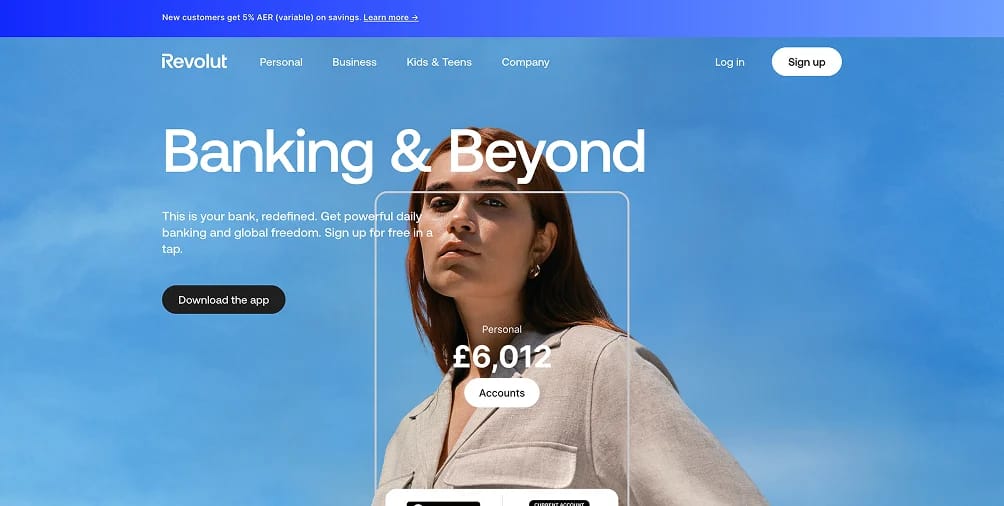
Revolut launched in 2015 from London as a travel card with sharp exchange rates and has grown into the largest fintech in Europe, serving more than 70 million customers across 40 markets. Founders Nikolay Storonsky and Vlad Yatsenko still run the company, which was valued at $75 billion in its late-2025 funding round.
The group's structure explains most of its crypto behaviour. Banking in the EEA sits under Revolut Bank UAB in Lithuania, UK deposits are migrating to the newly licensed Revolut Bank UK Ltd, and crypto lives in dedicated entities on each side. Among app-based peers, Wise blocks crypto transfers outright and N26 offers a narrower in-app product through a partner, which makes Revolut the most crypto-forward of the European challengers.
Bottom Line
Revolut earns a place in a crypto setup as the payment layer, and its scam screens aside, we have never had a transfer to a regulated exchange blocked or questioned. As a trading venue, the maths only works on Revolut X or for small stablecoin conversions, because the retail app's tiered fees, minimums, and fair usage charges stack up faster than most customers notice.
Kraken remains our recommendation for anyone buying with Revolut money. Deposits from the app are free and near-instant in sterling and euros, entry-tier fees of 0.25% undercut the app by a factor of five, and the licensing runs deeper than Revolut's own crypto entities, spanning FCA registration, a MiCA licence from the Central Bank of Ireland, and proof of reserves.
Fund it with one consolidated transfer, trade with limit orders, and keep long-term holdings in a wallet you control.