
BloFin vs Binance: Futures, Fees, Security & More
When we compare exchanges, we look at the parts that actually move your results, such as futures taker costs, order-book depth, liquidation risk controls, and how quickly you can verify reserves when markets get loud.
Binance usually wins the heavyweight rounds with deeper liquidity, broader products, and a more established regulatory footprint (especially across ADGM and Dubai entities).
BloFin makes a strong case as a focused derivatives venue with competitive fees, 150x leverage on select contracts, copy trading, and a visible security stack built around Fireblocks, Chainalysis, and PoR workflows.
We are not scoring this on branding. We are scoring the real trade-offs: futures pricing, execution depth, security posture, compliance visibility, and whether the platform matches your actual routine. If your strategy changes (or your region does), the right answer can change with it.

BloFin vs Binance Winner: Binance 🏆
Binance is better than BloFin for most users due to deeper liquidity, broader product coverage, lower standard futures taker fees, and stronger publicly visible regulatory positioning.
Available Assets
500+ Cryptocurrencies, 1,500+ Pairs, Futures & Earn
Trading Fees
Starting at 0.10% Spot and 0.02% / 0.05% Futures
Security
PoR, SAFU, risk engine, multi-entity custody framework
BloFin vs Binance Overview
BloFin is a derivatives-first crypto exchange brand that traces its company origin to 2020 (per Fireblocks), launched exchange operations in January 2023, and later expanded spot trading in 2024. Public-facing communications highlight CEO "Matt" more than a clearly listed founding team.
Binance launched in 2017, founded by Changpeng Zhao (CZ) and Yi He, and almost instantly became the category benchmark for crypto exchange scale, liquidity, and product breadth. Its most used services span spot, futures, earn, wallet, and payments.
Quick comparison table for the key decision points below:
BloFin vs Binance Products
Product coverage is where this comparison stretches out fast, because BloFin is building a focused trading stack while Binance runs a much broader crypto operating system.
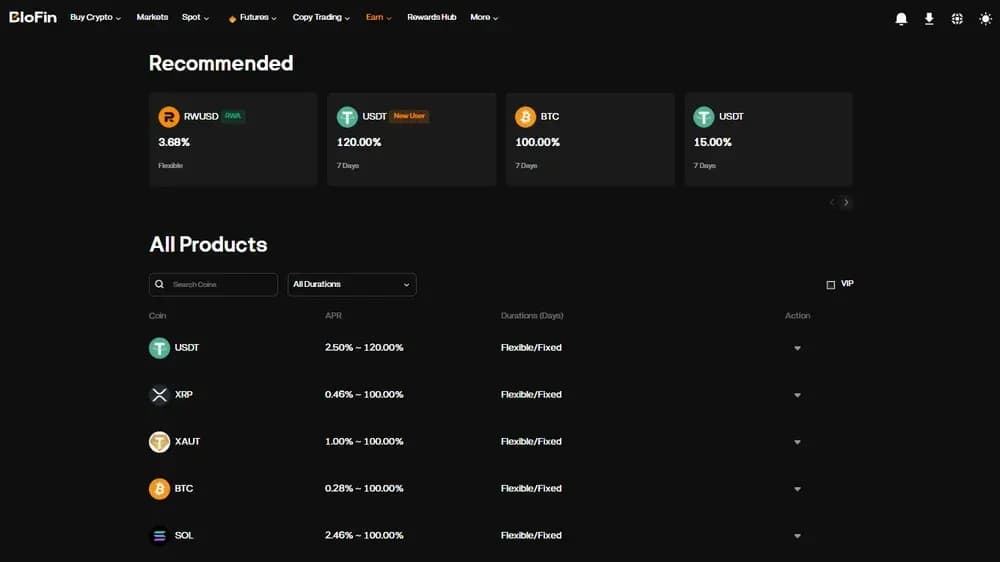
BloFin Products
Core modules built around active trading and account efficiency.
- Perpetual futures trading: BloFin positions itself as a derivatives specialist, with 350+ to 400+ USDT-M markets mentioned across official and app listings, plus up to 150x leverage on select contracts.
- Spot trading: BloFin officially launched spot in 2024 (per company timeline), and CoinGecko spot statistics currently list 420+ coins and 440+ pairs.
- Copy trading (futures and spot): The homepage highlights both futures copy trading and spot copy trading, plus "Elite Traders Recruitment" with up to 20% profit sharing.
- Unified trading account style workflows: BloFin promotes cross-product account efficiency (and third-party coverage also notes UTA rollout), which matters for traders moving between spot and derivatives.
- Earn products: BloFin lists Simple Earn and RWUSD products, signaling yield and treasury-style features beyond pure execution trading.
- Fiat on-ramp and recurring buy: Official navigation shows card purchases, bank transfer top-ups (SEPA/SWIFT), and recurring buy for users who dollar-cost average.
- API access and pro tools: BloFin’s app listing and website positioning mention API access and advanced tools, which is important for bots, execution scripts, and signal routing.
- Rewards and affiliate ecosystem: Rewards Hub, Activity Center, VIP Program, affiliate commissions (up to 50%), and referral tools are all visible in the product menu.
Binance Products
Binance offers a "one venue, many workflows" ecosystem.
- Spot and margin trading: Binance’s core engine supports a very broad asset catalog (500+ assets, 1,500+ pairs per CMC summary) with tiered fees and margin integration.
- Futures and derivatives suite: Binance supports USDⓈ-M and COIN-M futures, plus high leverage on certain contracts and established fee frameworks for regular and VIP users.
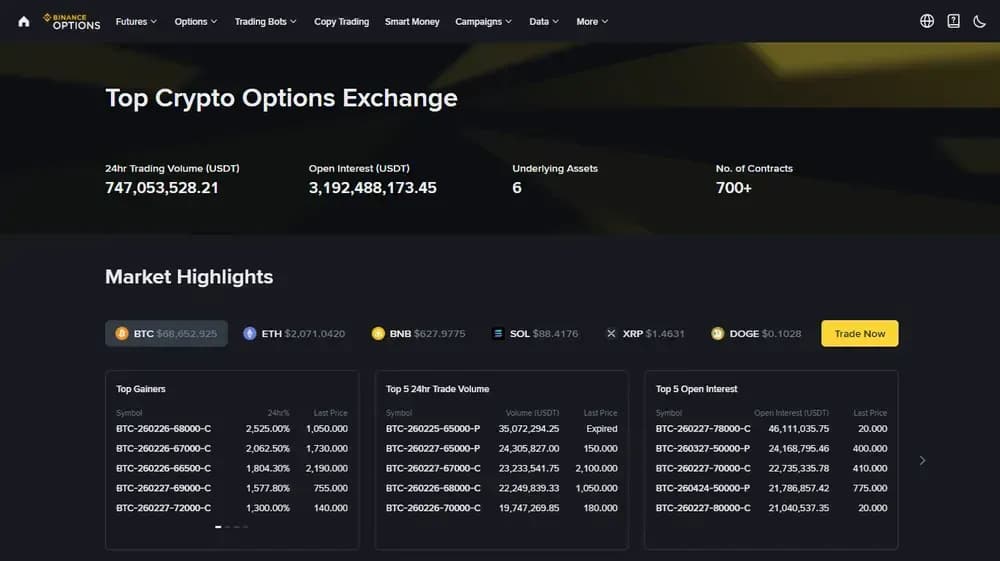
- Options trading: Binance includes options in its fee and product navigation, which matters for traders hedging delta or building volatility strategies.
- Earn and passive products: Binance’s ecosystem summary and platform pages position Earn as a major product pillar for yield, savings, and staking-style participation.
- Wallet and Web3 ecosystem: CMC’s Binance profile lists Binance Wallet as part of the broader stack, useful for users bridging between exchange and self-custody workflows.
- Payments and transfer rails: Binance Pay and broader money-service capabilities are part of the platform ecosystem and regulated entity scope in some jurisdictions.
- Trading bots and copy-related volume inclusion: Binance fee pages explicitly note trading volume can include Copy Trading and Trading Bots for VIP calculations.
- API platform for developers: Binance provides spot, margin, futures, and options API connectivity with official documentation and developer portals.
- Education and research stack: Binance Academy, Research, and Square are not trading tools directly, but they reduce platform switching for users learning and executing in one place.
BloFin vs Binance Security
Crypto security is a lot more than "cold wallets" in 2026. The practical comparison is custody architecture, reserve transparency, incident handling, and how each exchange translates risk controls into user-visible safeguards and operational recovery procedures.
Our team usually treats this section like a stress test checklist: "Can users verify reserves, is there a compensation backstop, and how has the exchange behaved during real incidents?" Binance has the longer incident history. BloFin has the shorter record but a visible security buildout.
BloFin Security Measures & History
- Proof-of-reserves commitment: BloFin’s PoR help article states it maintains a 1:1 reserve of users’ funds for trading and withdrawals.
- Merkle tree verification flow: BloFin’s PoR documentation explains Merkle tree-based verification and an open-source verification tool workflow for users.
- Custody stack and cold wallets: BloFin says it established cold wallet protection via Fireblocks, and Fireblocks’ customer story describes long-running use in its exchange operations.
- Transaction monitoring and compliance tooling: BloFin announced Chainalysis integration for real-time risk monitoring to support AML and financial crime controls.
- Security certifications: BloFin announced ISO 27001 certification in 2025 and PCI DSS certification in 2025 for card-payment data security.
- Public incident history (known): BloFin has a shorter public operating history than Binance, which reduces long-cycle evidence, both positive and negative (an important context point).
Binance Security Measures & History
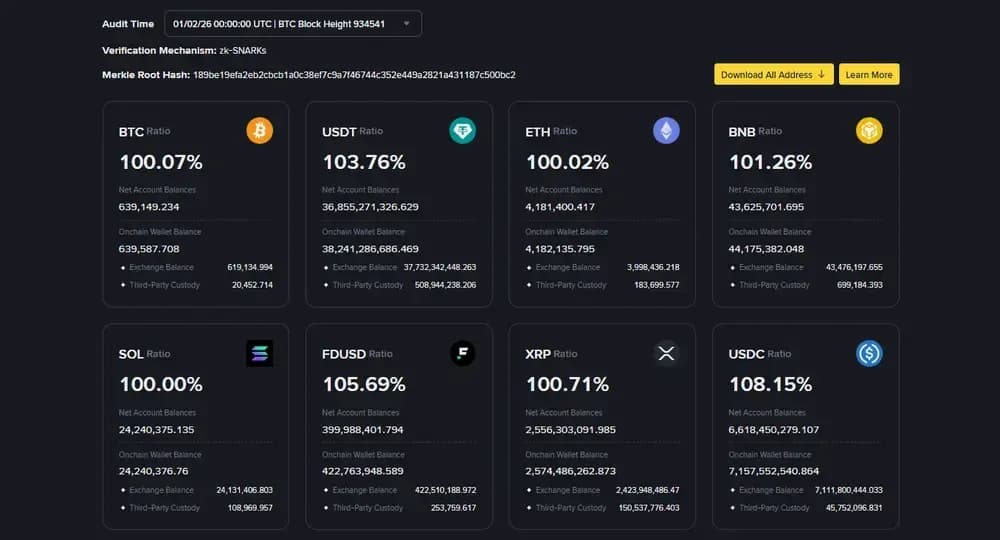
- Proof-of-reserves and backing claims: Binance’s Proof-of-reserves page says user assets are held 1:1 (plus reserves), with downloadable addresses and verification tools.
- Emergency protection fund (SAFU): Binance says SAFU was established in July 2018, and its Academy glossary notes about $1 billion value as of February 2026.
- 2019 hack response precedent: Reuters reported roughly 7,000 BTC were stolen in 2019, and Binance said user funds were covered using SAFU.
- Advanced PoR cryptography references: Binance PoR materials reference Merkle trees and zk-SNARKs mechanisms in its verification approach.
- Operational risk controls for derivatives: Binance’s futures stack includes cross/isolated margin, ADL mechanics, and a robust risk engine (not just execution speed).
- 10/10 liquidation event: Binance later published a detailed report on the "10/10" flash crash, saying the market-wide liquidation cascade was primarily driven by macro shocks and extreme leverage, while acknowledging platform strain incidents and crediting affected users during the event.
BloFin vs Binance Futures Trading
Both platforms are credible futures marketplaces, but they win in different ways: BloFin leans into focused derivatives UX and high leverage marketing, while Binance usually wins on breadth, tooling depth, and benchmark liquidity on majors.
Both are strong futures platforms for different trader profiles.
Available Markets
- BloFin: Futures product pages and support materials center on USDT perpetual contracts, and third-party materials plus app listings reference roughly 350 to 400+ perpetual markets.
- Binance: Binance Futures offers both USDⓈ-M and COIN-M contracts, giving traders more collateral choices and broader contract formats for directional or hedging setups.
Execution and Liquidity
- BloFin: BloFin markets "high liquidity" for derivatives and actively updates leverage and margin tiers on contracts, which suggests ongoing tuning to market depth and risk conditions.
- Binance: Binance generally remains the liquidity benchmark on major futures pairs, supported by large volumes and a mature institutional market-making network across flagship contracts.
Margin and Risk Controls
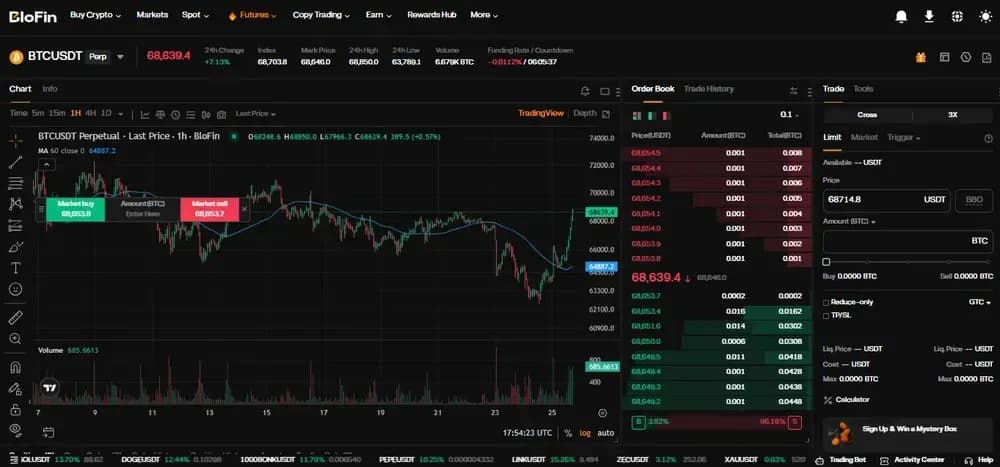
- BloFin: BloFin supports cross and isolated margin, and its futures guides explicitly explain liquidation exposure, leverage selection, and margin usage using BTCUSDT perpetual examples.
- Binance: Binance combines cross/isolated margin with ADL and insurance-fund mechanics, plus leverage tiers that vary by contract and position size (important for larger traders).
Trading Strategy Features
- BloFin: BloFin is appealing for discretionary futures traders who want copy trading, API connectivity (REST/WebSocket), and a derivatives-first interface without much platform clutter.
- Binance: Binance is stronger for advanced futures workflows that need bots, deep API support, multi-collateral contract access, and more institutional-style execution tooling.
Leverage and Practical Takeaway
- BloFin: BloFin help docs explicitly note BTCUSDT perpetual can support up to 150x leverage (on eligible tiers), but available max leverage depends on contract and position tier.
- Binance: Binance Futures supports up to 125x leverage on some pairs, with built-in risk controls and tiered limits that tighten as position size increases.
If your style is high-frequency perp trading on majors, Binance usually wins on depth. If you want a cleaner derivatives-focused experience and headline leverage flexibility, BloFin is very competitive.
BloFin vs Binance Regulations
Regulatory positioning is one of the biggest separators here, especially for users who care about entity structure, country-specific access, and long-term product continuity.
BloFin presents compliance language, KYC requirements, and jurisdiction restrictions, but Binance publishes more visible examples of named licensed entities in major markets.
BloFin Licenses and Regulatory Positioning
- (Marshall Islands / Global profile): CoinGecko’s BloFin spot page lists the exchange as established in 2023 and registered in Marshall Islands.
- (Global terms and restrictions): BloFin ToS emphasizes sanctions screening, AML obligations, identity verification, and product restrictions by jurisdiction without a prominent public multi-license registry page.
- (Compliance milestone - internal controls): BloFin publicly highlighted Chainalysis integration in 2024 and ISO 27001/PCI DSS certifications in 2025, which are compliance-adjacent but not exchange operating licenses.
Binance Licenses and Regulatory Positioning
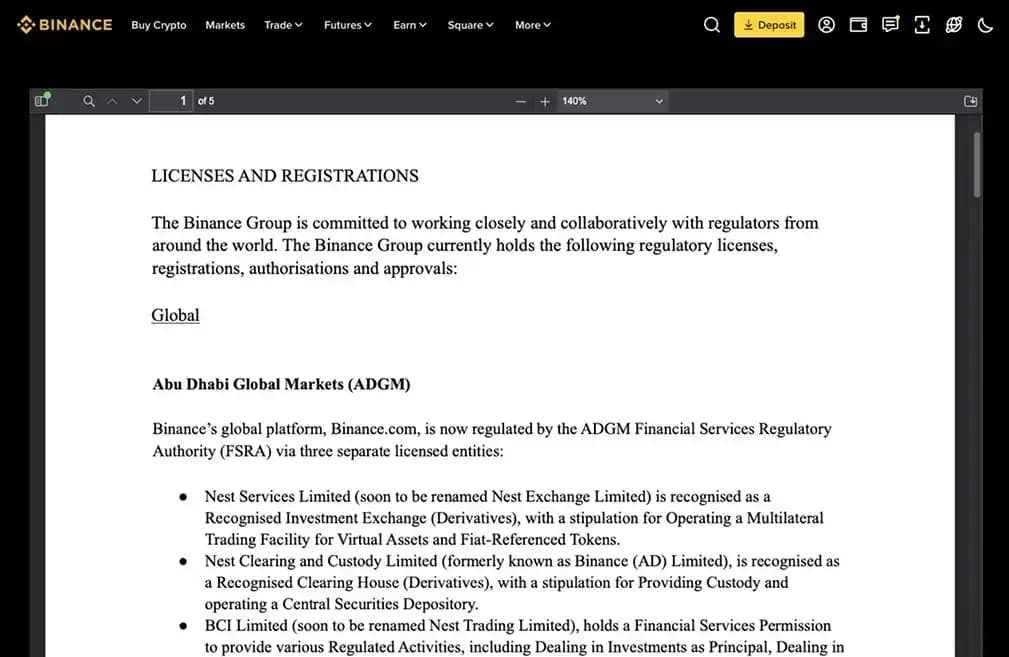
- (Abu Dhabi ADGM): Binance says FSRA ADGM authorized a three-entity structure for exchange, clearing/custody, and broker-dealer functions supporting Binance.com operations.
- (Dubai UAE): Binance FZE states it is licensed by Dubai VARA (VASP reference VL/24/04/001) for exchange, broker-dealer, lending/borrowing, and management services.
- (France): Reuters reported Binance registered with France’s market regulator in 2022, a key milestone in its European regulatory expansion narrative.
- (Bahrain): Reuters reported Binance received a crypto-asset service provider license from Bahrain’s central bank, its first GCC license.
BloFin vs Binance Fees
Fee schedules look similar at the headline level on spot, but Binance is usually cheaper on standard futures taker fees and offers more discount pathways.
Spot Trading Fees
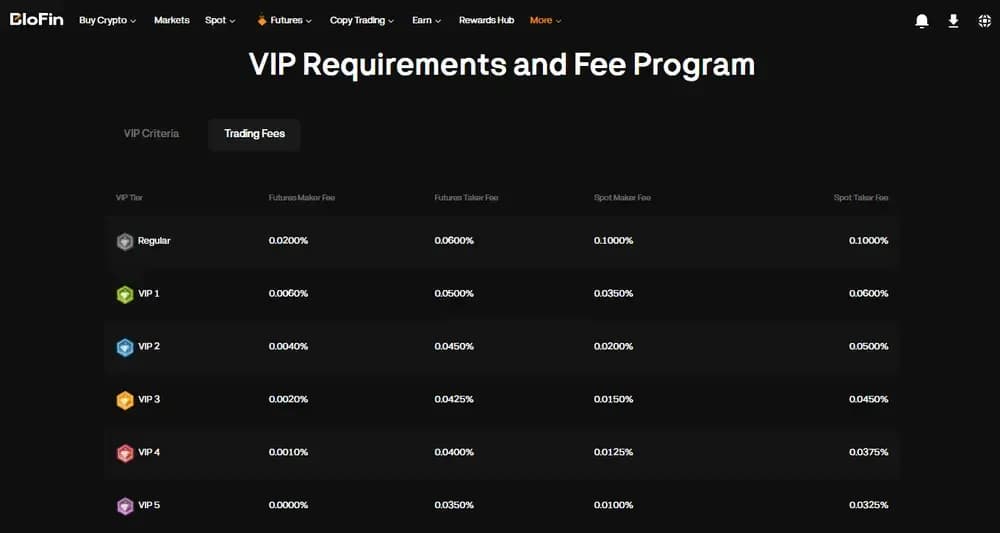
- BloFin: Standard spot trading fee schedule are listed at 0.1000% maker and 0.1000% taker on the BloFin fee schedule.
- Binance: Regular-user spot fees start at 0.100% maker and 0.100% taker, with lower rates via BNB discounts and VIP tiers.
Practical takeaway: For casual spot users, the base rate difference is often zero, so spreads and slippage matter more than fee tables.
Futures Fees
- BloFin: Standard futures fees are listed at 0.0200% maker and 0.0600% taker, which is competitive but slightly higher on taker than Binance’s common baseline.
- Binance: Binance futures examples for regular users show 0.02% maker and 0.05% taker for both COIN-margined and USDⓈ-margined calculations.
- Discounting mechanics: Binance also documents a 10% standard fee discount on USDⓈ-M futures when paying fees with BNB (subject to setup conditions).
Our team’s trading note: If you market in and out frequently, the 0.01% taker difference compounds quickly, especially on leveraged scalping loops.
Final Thoughts
If you want the broadest "all roads lead here" exchange for majors, recurring trading, and multi-product workflows, Binance is still the default first stop in this matchup.
If you mainly trade perps, like a more focused interface, and want copy trading plus aggressive leverage options, BloFin can work well as a specialist venue.
Our team would treat it like a toolkit split: keep Binance as the "main engine room," then use BloFin when its derivatives-first setup fits the trade plan better.
Frequently asked questions

.webp)
%20(1).webp)
.webp)
