




Compare Top HyperEVM Projects
1. Unit
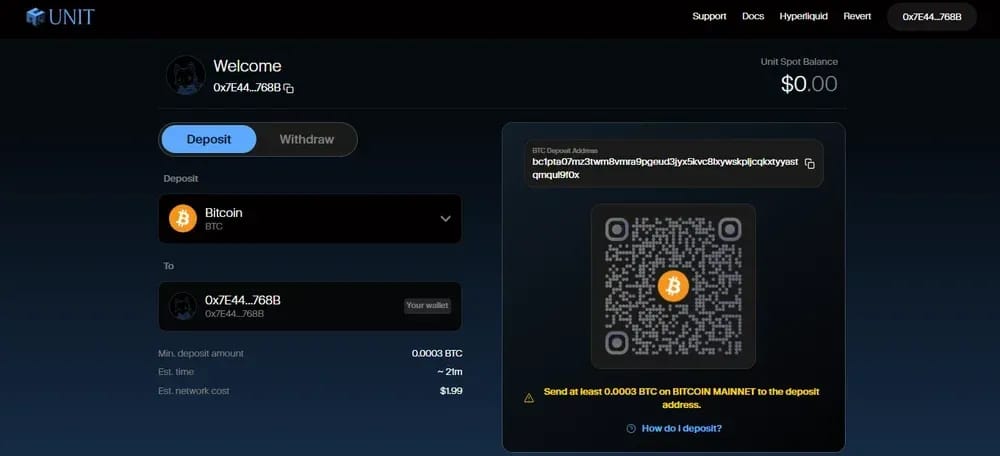
Best overall for asset onboarding, Unit brings native assets onto Hyperliquid through a purpose-built tokenization layer. Official docs highlight deposits and withdrawals for Bitcoin, Ethereum, and Solana, letting users move assets from native chains straight into Hyperliquid spot balances.
That matters because Unit is more than a bridge interface. It routes deposits from personal wallets or exchange accounts, supports direct withdrawals back to native chains, and helps enable spot trading, portfolio margin, basis trades, and treasury management inside Hyperliquid.
From our review of the live documentation, Unit feels compelling for users who want clean capital entry points instead of wrapped detours. Its Guardian architecture, MPC threshold signing, secure enclaves, and rate-limited endpoints give the protocol unusually explicit security framing.
Pros
- Straightforward native asset routing into Hyperliquid spot balances.
- Useful infrastructure angle for protocols, treasuries, and traders.
- Clear technical docs with API access for builders.
Cons
- Narrower product scope than full-service DeFi apps.
- Chain support is selective, not broad multichain coverage.
- Best value depends on active Hyperliquid usage.
2. Kinetiq
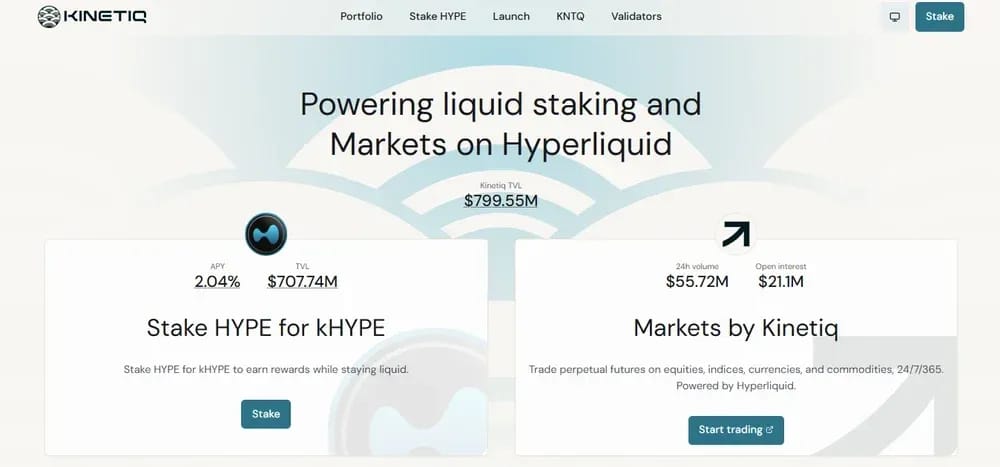
Next on the list, Kinetiq is a standout liquid staking protocol for HYPE holders who want utility beyond passive staking. Users stake HYPE, receive kHYPE, and can keep that position in DeFi while rewards accrue through an improving exchange rate.
Kinetiq also stretches beyond a simple staking wrapper. Official pages show integrations across protocols like Felix, HyperLend, Veda, Pendle, PRJX, HypurrFi, Rysk, and Liminal, while Markets by Kinetiq adds perpetual exposure to equities, indices, currencies, and commodities.
Based on the live docs and product pages, Kinetiq looks strong for ecosystem-native users who want layered utility. StakeHub automates validator selection and rebalancing, and the protocol publicly lists eight audits, a $1 million bug bounty, and weekly kPoints distributions.
Pros
- Strong ecosystem integration around kHYPE utility opportunities.
- Institutional path adds flexibility for regulated allocators.
- Validator design helps simplify delegation decisions.
Cons
- Mostly optimized for users already committed to HYPE.
- Added product layers can complicate first-time onboarding.
- Yield depends on validator performance and ecosystem demand.
3. HyperLend
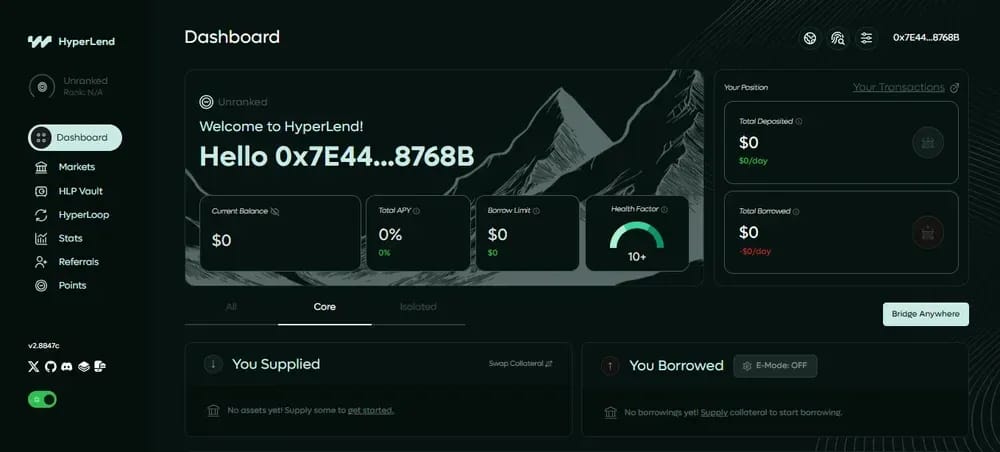
Recommended for lending and borrowing, HyperLend is one of the core money markets to watch on HyperEVM. The protocol lets users supply assets for yield, borrow against collateral, open leveraged positions, access liquid vaults, and work across multiple isolated markets.
What separates HyperLend is the blend of user-facing simplicity and deeper infrastructure. The official docs reference flash loans, dynamic interest rate models, ERC-4626 isolated pairs, public APIs, indexers, and even dedicated RPC endpoints for builders and market participants.
In our assessment of the current dashboard and docs, HyperLend suits active capital managers more than passive depositors. The protocol also discloses audits by Cantina, Ackee Blockchain, and Pashov Audit Group, plus a bug bounty and transparent liquidation mechanics.
Pros
- Good fit for active collateral and leverage management.
- Developer tooling is better than many newer protocols.
- Isolated market structure can localize specific asset risk.
Cons
- Borrowers must actively monitor health factor deterioration.
- Complexity rises quickly across multiple simultaneous pools.
- Variable rates can make planning less predictable.
4. Felix
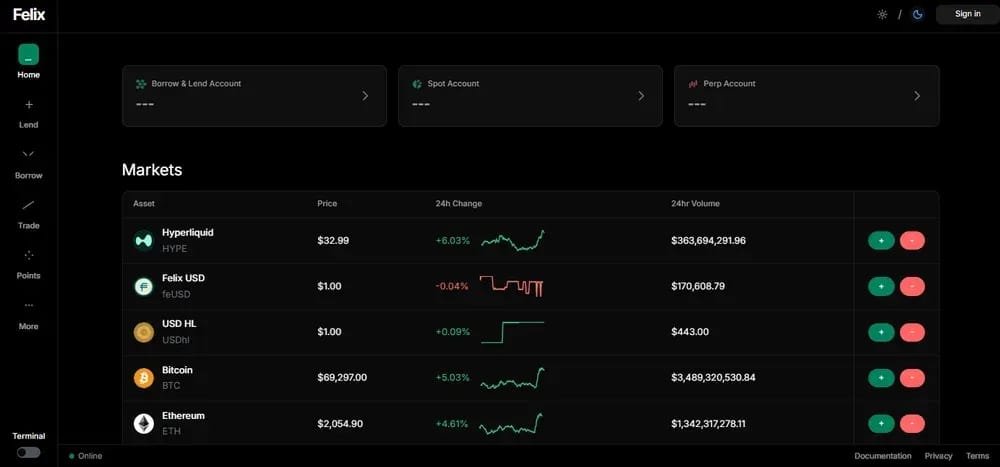
Best for integrated trading and credit, Felix combines tokenized markets with DeFi borrowing inside one venue. Official pages show spot equities, equity perpetuals, commodity perpetuals, a CDP market for feUSD, and variable-rate vanilla lending pools for native assets.
That product mix gives Felix a broader financial-services angle than many single-purpose HyperEVM apps. Users can mint feUSD against crypto collateral for leverage, borrow or lend assets like HYPE, HUSD, and USDC, and monitor positions through public risk dashboards.
From our live review of Felix pages, the protocol feels most useful for traders who want multiple workflows in one interface. The project emphasizes deep liquidity, low-cost access, battle-tested security, and transparent monitoring for troves, liquidations, redemptions, and borrowing activity.
Pros
- Broad product menu without leaving one protocol brand.
- Public monitoring pages improve transparency for users.
- Useful crossover between trading and stablecoin borrowing.
Cons
- Desktop-only trading access limits some user flexibility.
- More niche product mix than plain lending protocols.
- Tokenized market exposure may not suit conservative users.
5. Hyperbeat
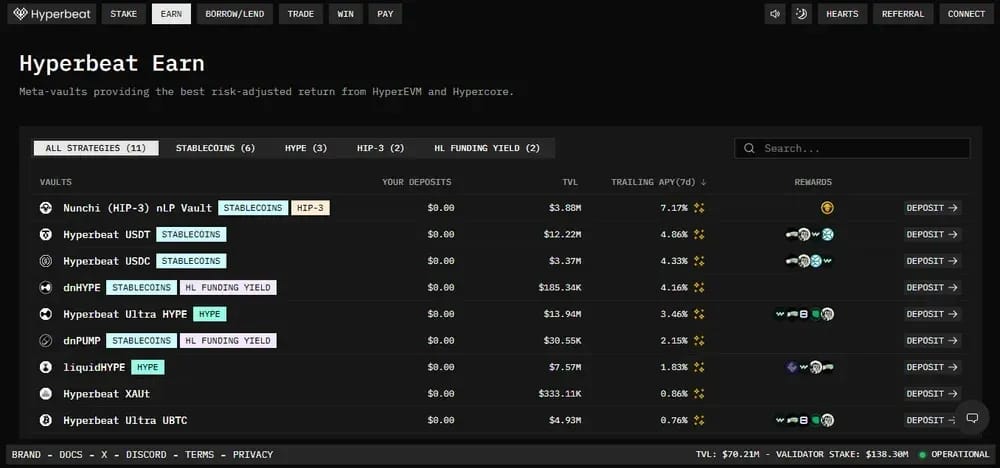
A strong pick for yield stacking, Hyperbeat is building a broad onchain banking layer around Hyperliquid. Official materials highlight beHYPE liquid staking, Hyperbeat Earn vaults, Morphobeat lending, MasterSwap routing, delta-neutral tokens, payment rails, and Beatpot raffles.
Hyperbeat is especially descriptive about where yield comes from. Its vault suite spans HYPE, USDC, UBTC, XAUt, liquid staked HYPE positions, and HIP-3 liquidity strategies for projects like Nunchi and Ventuals, while MasterSwap searches leading HyperEVM aggregators for pricing.
From the current docs, Hyperbeat looks best for users who want one dashboard for several strategies. Hearts powers the points layer, proof-of-solvency is available through Accountable, and audits are listed both at protocol level and across individual vault products.
Pros
- Very broad product surface inside one ecosystem hub.
- Strong transparency angle through solvency tooling.
- Builder codes open distribution opportunities for partners.
Cons
- Product breadth can feel overwhelming for new users.
- Some vault exits involve multi-day withdrawal windows.
- Strategy understanding matters more than simple staking apps.
6. Liminal
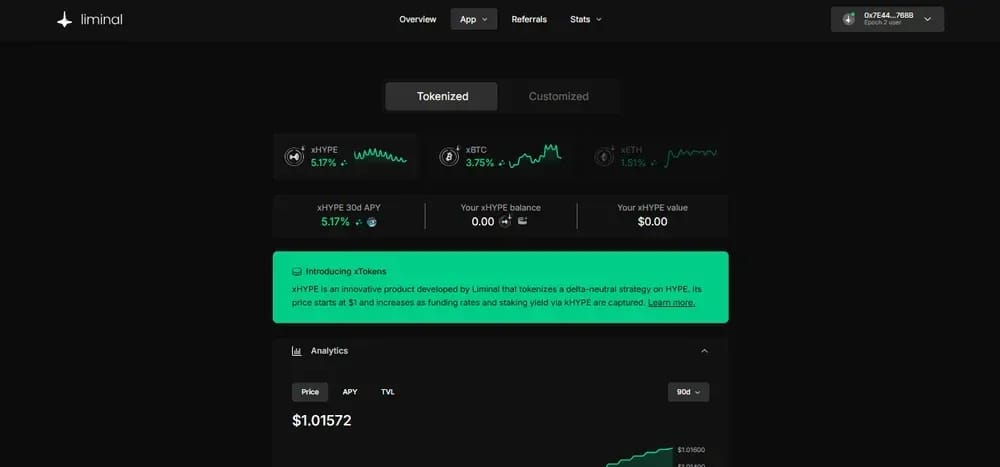
Suitable for delta-neutral yield, Liminal turns Hyperliquid funding rates into market-neutral strategies that are easier to access and hold. The protocol offers Customized accounts for tailored setups and Tokenized xTokens that package strategies into liquid, composable onchain products.
Official docs make Liminal unusually specific about structure. Customized users can choose segregated strategies and even self-custody through Hyperliquid’s native Agent model, while tokenized products like xHYPE support HyperEVM as the hub chain and Ethereum plus Arbitrum as active spokes.
Based on the live docs, Liminal is attractive for users who care about precision and portability. It publishes xToken audits by Spearbit and Pashov, supports OFT design, and runs a referral program paying up to 30% of eligible Customized fees.
Pros
- Distinct self-custody option is appealing for advanced users.
- Good fit for strategy builders needing composable yield tokens.
- Clear product separation between custom and tokenized modes.
Cons
- Delta-neutral products still require strategy literacy.
- Tokenized and customized flows may confuse casual users.
- Referral benefits currently exclude tokenized strategies.
What Are HyperEVM Projects?
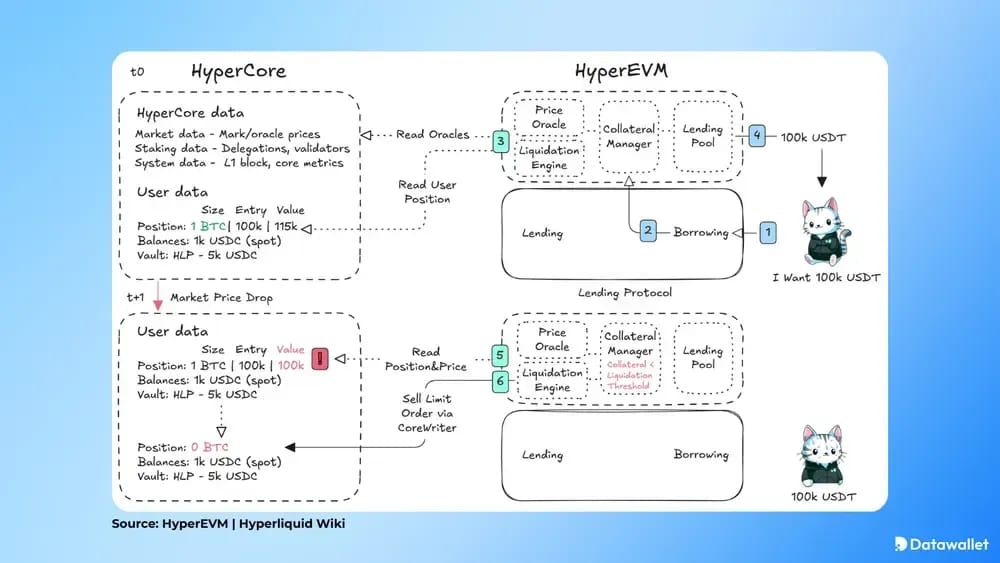
HyperEVM projects are decentralized applications built on Hyperliquid’s EVM environment, covering categories like lending, liquid staking, tokenization, swaps, vaults, launchpads, and structured yield. They plug into Hyperliquid’s liquidity, fast execution, and growing onchain user base today.
Unlike generic multichain apps, many HyperEVM protocols are designed specifically around Hyperliquid primitives, including HYPE staking, HyperCore markets, HIP-3 deployments, and spot assets routed through Unit. That tight fit often creates products that feel more purpose-built than copied.
In practice, HyperEVM projects matter because they turn trading activity into a broader financial stack. Users can bridge assets, borrow against positions, stake HYPE, automate yield, mint stablecoins, and access tokenized exposure without leaving the wider Hyperliquid ecosystem.
How to Find HyperEVM Projects
Finding solid HyperEVM projects gets easier when you combine ecosystem discovery tools with official docs, live dashboards, audits, and onchain activity checks.
Step 1: Visit HyperEVM Ecosystem Aggregator
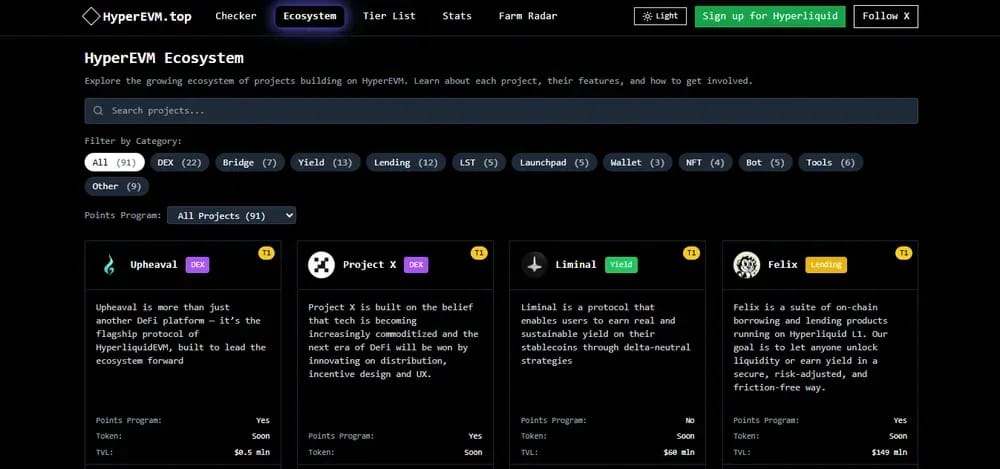
Start with the HyperEVM Ecosystem Aggregator at hyperevm.top/ecosystem. Its ecosystem page describes a growing directory of projects and search snippets currently show 91 listed entries, which makes it a practical first filter before deeper due diligence.
Step 2: Open the Official Site and Docs
Next, open the official site and docs for any project that looks promising. You want to confirm the category, supported assets or chains, withdrawal mechanics, fee design, and whether the product is actually live rather than just teased.
Step 3: Check Security and Contract Transparency
After that, check security pages before chasing yield. Look for named audit firms, bug bounties, proof-of-solvency tools, risk dashboards, oracle disclosures, and clear explanations of liquidation or custody design, especially if a protocol handles leverage or strategy automation.
Step 4: Monitor Social Media Sentiment
Follow the official X accounts and join the Discord servers to gauge the activity of the community. Active developers who respond to technical questions and provide regular updates are usually a positive sign of a healthy, long term project.
Pay close attention to how the team handles criticism or technical issues during "Ask Me Anything" sessions. A professional and prompt response from the core developers can help build confidence in the project's ability to handle future challenges.
Step 5: Test Small and Monitor Updates
Finally, test with a small amount and track activity over time. Current dashboards, referral pages, points pages, and public documentation updates can reveal whether a HyperEVM project is still shipping, attracting liquidity, and communicating risk responsibly.
Are HyperEVM Projects Safe?
HyperEVM projects can be reasonably safe, but safety varies sharply by design, team discipline, and transparency. The best protocols publish audits, bug bounties, proof-of-solvency tools, risk disclosures, contract addresses, and clear explanations for custody, liquidations, and withdrawals.
What matters most is whether a protocol matches its complexity with visible controls. A simple swap router, liquid staking token, lending market, or delta-neutral vault can all carry very different risks depending on upgrade permissions, oracle quality, and execution architecture.
Risks of HyperEVM Ecosystem
Even well-built HyperEVM projects carry ecosystem and product-level risks, especially when cross-chain flows, leverage, automated vaults, and new token models interact together.
Key risks worth checking before you deposit:
- Smart contract risk: Audits help, but smart contract bugs, upgrade mistakes, and integration failures can still cause losses, frozen funds, or unexpected behavior.
- Oracle and pricing risk: Lending markets, CDPs, and structured products depend on reliable pricing, so weak oracle design can trigger bad liquidations or distort NAV.
- Liquidity risk: Tokenized positions and vault shares may be redeemable in theory, yet exits can slow or slip badly during volatile markets.
- Cross-chain risk: Protocols moving assets across chains inherit extra complexity around messaging, settlement finality, bridge assumptions, and destinationchain execution flows.
- Liquidation risk: Borrowers using leverage or collateralized debt can be liquidated quickly when collateral falls, debt grows, or health factors deteriorate.
- Strategy risk: Delta-neutral and yield vaults reduce directional exposure, but funding flips, execution costs, or rebalancing errors can still hurt returns.
- Governance and admin risk: If multisigs, pausers, or privileged roles are too concentrated, users face non-market risk from human decisions or compromise.
Final Thoughts
The growth of the HyperEVM ecosystem in 2026 demonstrates the massive demand for high-performance decentralized finance solutions that rival centralized platforms.
Unit, Kinetiq, HyperLend, Felix, Hyperbeat, and Liminal each cover different jobs inside HyperEVM, which is exactly why this list works well for 2026.
Staying informed and utilizing the right tools will be the key to maximizing your success within this rapidly expanding financial environment.