Best Crypto Gambling Sites in 2025
Summary: Crypto gambling spans casinos, sportsbooks, and prediction markets, giving players faster settlement, broader access, and cryptographic fairness across thousands of supported games.
The sector mixes decentralized markets with licensed offshore casinos and regulated event exchanges, each with different fees, limits, and KYC rules. Below are the top six platforms for 2025:

Best Crypto Gambling Site - Rollbit
Rollbit is the best crypto gambling platform in 2025, offering a leading combination of casino gaming, high leverage derivatives, sports betting, and crypto trading features.
Available Games
Casino Games, Sports Betting, Futures Trading & more
Funding Options
BTC, ETH, USDC, USDT, SOL, and other major cryptocurrencies
Licensing and Regulation
Licensed by the Government of Curacao (License No. 365/JAZ)
Top-Ranked Crypto Gambling Platforms in 2025
We personally tested each crypto gambling platform, evaluating casino libraries, sportsbook depth, fees, payout speed, and user protections. Our scoring emphasized liquidity, house edges, betting limits, KYC complexity, supported assets, bonuses, and withdrawal reliability across multiple sessions.
Polymarket and Kalshi represent the event-trading segment, while Rollbit, Shuffle, Stake, and Cloudbet cover casinos and sportsbooks. We included both decentralized platforms and regulated centralized options that accept cryptocurrencies or stablecoins for deposits.
We highlight the most important factors in the table below:
1. Rollbit
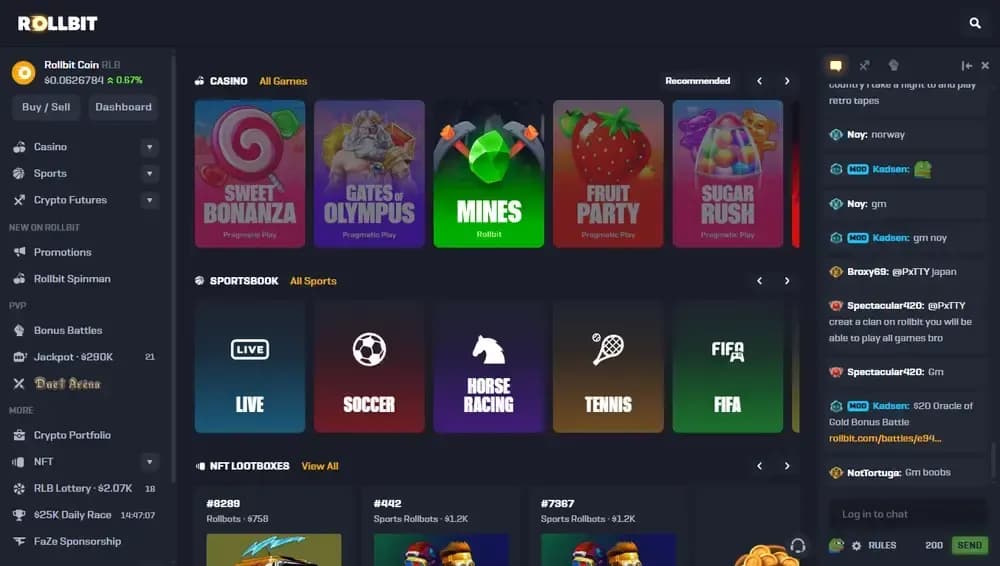
Rollbit is our top pick for crypto gambling, combining a casino, sportsbook, and leveraged trading features within one integrated platform. Its catalog includes over 5,000 slots, 200 live tables, and unique Rollbit Originals, alongside daily tournaments and multimillion-dollar prize pools.
Onboarding is quick through email or wallet, with instant-play balances across BTC, ETH, USDT, and other major coins. Withdrawals average under five minutes, and tiered KYC (Know Your Customer) unlocks higher limits, cashback boosts, and private VIP host support for heavy players.
Sports bettors enjoy odds covering 30+ sports, esports, and crypto markets with live betting and player props available 24/7. Gamified quests, loot boxes, and a rolling rakeback ladder keep engagement high while improving long-term expected returns for frequent users.
Rollbit Highlights:
- Chain: Bitcoin, Ethereum, major EVM networks supported.
- Deposit Methods: BTC, ETH, USDT, USDC, card ramps.
- Fees: No deposit fees; network fees only.
- Markets: Casino, live casino, sportsbook, crypto games.
- Liquidity: High volumes across slots and top sports.
- Collateral: Multi-coin balances, stablecoin denominated play.
- Unique: Original games, quests, frequent prize events.
2. Polymarket
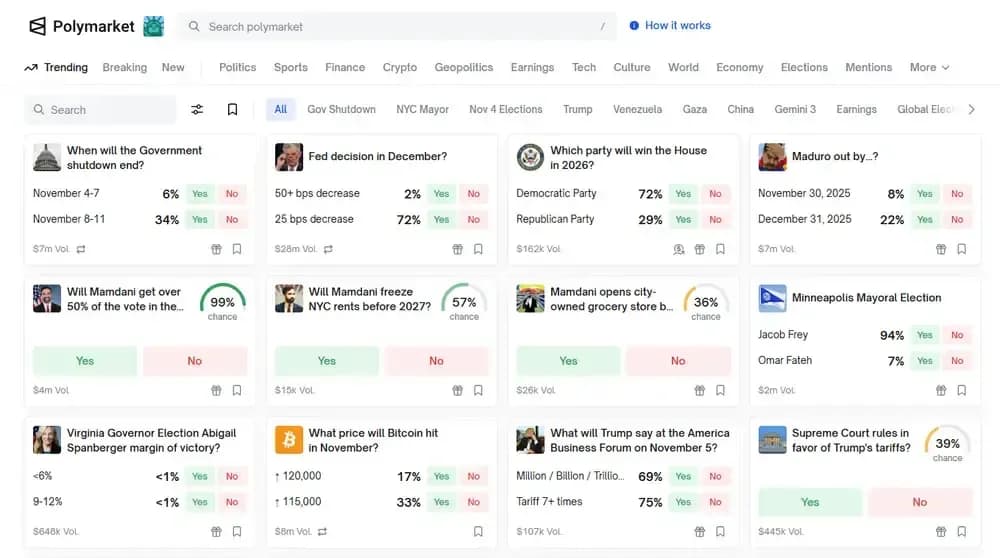
Polymarket, the largest prediction market, ranks second in our list of crypto gambling sites. Players can use USDC to trade yes or no shares on event questions with prices ranging from $0.01 to $0.99. Prices reflect probability, with winning shares redeeming for exactly $1 and losing shares settling at $0 upon resolution.
It operates non-custodially on Polygon, with order books enabling entry and exit before resolution to manage risk dynamically. Deposits and withdrawals occur in USDC, and users can pursue intraday trading strategies without paying platform trading fees, unlike centralized prediciton markets.
Market breadth covers politics, economics, sports, and culture, with community demand and liquidity shaping spreads and execution quality. Resolution relies on referenced sources, with settlement occurring once outcomes are unambiguous according to predefined criteria.
Polymarket Highlights:
- Chain: Polygon settlement with USDC stablecoin.
- Deposit Methods: Wallet USDC, exchange transfer to Polygon.
- Fees: Platform trading fees 0%; network gas applies.
- Markets: Politics, macro, sports, culture, crypto themes.
- Liquidity: Deep in headline events, thinner in long-tail.
- Collateral: Fully collateralized USDC pairs per market.
- Unique: Onchain order book pricing and settlement.
3. Shuffle
Shuffle is a crypto-first casino and sportsbook offering thousands of games, live dealers, and broad sports coverage across major and niche leagues. Its bonus program features deposit matches, rakeback, weekly races, and seasonal quests, materially improving net expected value for active players.
Registration is streamlined, deposits support multiple cryptocurrencies, and withdrawals are prompt after routine compliance checks. The VIP ladder unlocks higher cashback, personal hosts, and tailored offers, rewarding sustained action and larger average wager sizes.
Sports bettors will find live betting, player props, parlay builders, and esports markets with competitive pricing and frequent promos. Original provably fair titles complement provider catalogs, with simple verification screens showing seeds and hashes for transparent outcomes.
Shuffle Highlights:
- Chain: Bitcoin, Ethereum, and major supported networks.
- Deposit Methods: BTC, ETH, USDT, USDC, on-ramps.
- Fees: No house deposit fees; network costs only.
- Markets: Slots, tables, live casino, full sportsbook.
- Liquidity: Strong in peak sports and popular slots.
- Collateral: Multi-asset balances and stablecoin support.
- Unique: Large bonuses, weekly races, deep VIP tiers.

4. Kalshi
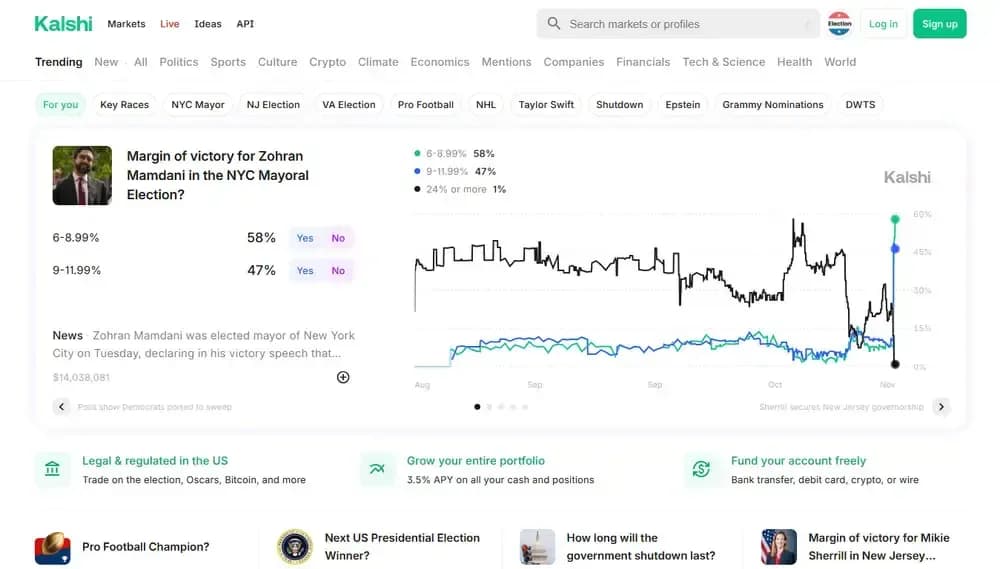
Kalshi is a regulated event exchange, similar to Polymarker where users trade event contracts that pay one dollar if the specified outcome occurs. Contracts trade between one and ninety-nine cents, and positions can be entered or exited anytime before resolution for realized gains.
Accounts require KYC identity verification, with funding via bank transfers and supported payment methods, including crypto conversions where available. The fee model applies a small charge on expected value and offers maker fee rebates to improve order book depth.
Markets span macroeconomic releases, policy decisions, sports milestones, and seasonal themes, with contract specifications published for transparency. Position limits, listing rules, and resolution sources are codified, aligning incentives and protecting market integrity for participants.
Kalshi Highlights:
- Chain: Centralized exchange; USD-denominated settlement.
- Deposit Methods: Bank ACH, card, supported crypto rails.
- Fees: Low per-contract EV fee; maker rebates possible.
- Markets: Economics, policy, sports, seasonality themes.
- Liquidity: Tight spreads in flagship, scheduled markets.
- Collateral: Fully collateralized USD margin per contract.
- Unique: CFTC-regulated event exchange with rulebooks.
5. Stake
Stake offers a massive casino library and a comprehensive sportsbook, supported by polished UX, live chats, and frequent global promotions. Its “originals” catalog includes provably fair titles, while live dealer tables come from top providers with professional streams.
Deposits support many cryptocurrencies, with instant crediting and quick withdrawals subject to standard risk controls. Stake’s VIP system provides growing rakeback and reloads, with higher tiers receiving personalized offers and faster service, which makes it ideal for higher volume betters.
Sports markets cover major and niche events, with live in-play betting, player props, and accumulator boosts appearing during peak calendars. The platform emphasizes responsible gambling tools, including limits and timeouts, surfaced clearly within account settings.
Stake Highlights:
- Chain: Bitcoin, Ethereum, and multi-asset support.
- Deposit Methods: BTC, ETH, LTC, DOGE, stablecoins, ramps.
- Fees: House fees embedded in odds and RTP.
- Markets: Slots, live tables, sportsbook, originals.
- Liquidity: Very high across top leagues and games.
- Collateral: Multi-coin balances and stablecoin denominations.
- Unique: Extensive promos, live features, global communities.

6. Betpanda
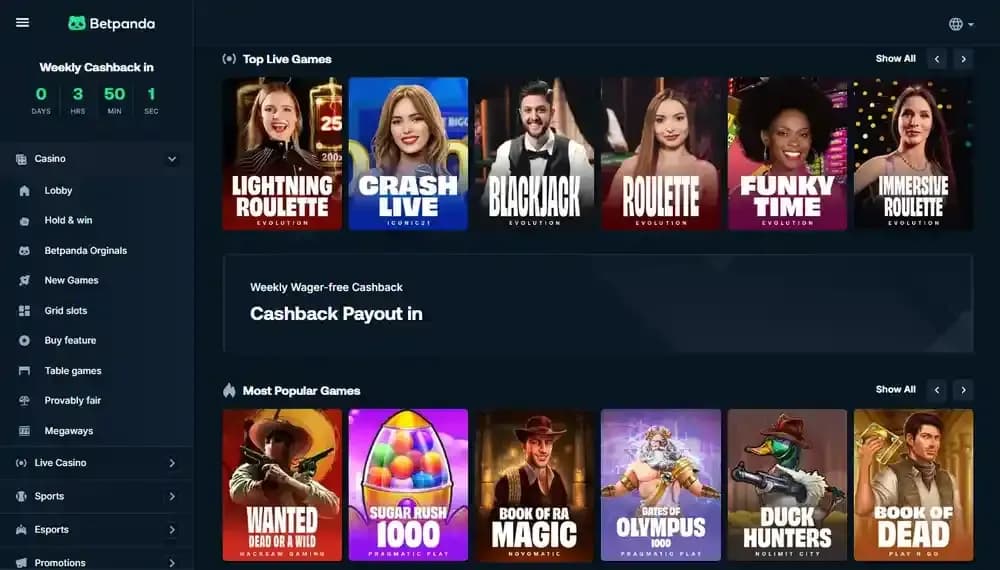
Betpanda is a no-KYC crypto-only casino and sportsbook launched in 2023, offering thousands of games, live dealers, and broad sports coverage. Its interface emphasizes simplicity and instant crypto settlement, letting users deposit, play, and withdraw directly in over a dozen supported digital assets.
Players can access 6,000+ slots, table games, crash titles, and a sportsbook with competitive odds across 25+ sports and esports markets. Provably fair systems back all in-house games, while licensed providers supply live tables audited for randomness and payout integrity.
Bonuses are notably aggressive, starting with a 100% match up to 1 BTC and weekly 10% cashback on net losses. Regular tournaments, rakeback missions, and level-up rewards increase engagement, while daily crypto drops create constant activity among loyal players.
Betpanda Highlights:
- Chain: Multi-chain casino infrastructure supporting top networks.
- Deposit Methods: BTC, ETH, USDT, DOGE, SOL, SHIB, others.
- Fees: No deposit fees; network transaction costs only.
- Markets: Slots, tables, live casino, sportsbook, crash titles.
- Liquidity: High volume in slots and core sports events.
- Collateral: Crypto balances fully funded; no fiat onboarding.
- Unique: 100% up to 1 BTC bonus, 10% weekly cashback.
What Is Crypto Gambling?
Crypto gambling uses digital currencies like Bitcoin, Ethereum, or stablecoins to place wagers on online casino games, sports bets, and event-based markets. Players deposit crypto, play or trade outcomes, and receive payouts in cryptocurrency or converted stablecoins without traditional banking intermediaries.
The sector has expanded rapidly, processing more than $26 billion in crypto wagers during the first quarter of 2025. Market researchers expect online gambling revenue to exceed $150 billion by 2030, with crypto betting accounting for a rising percentage of total activity.
Beyond casinos and sportsbooks, crypto gambling includes prediction markets where outcomes settle transparently through blockchain technology. It blends crypto’s transaction speed, verified fairness, and global access to create new ways for users to play and manage risk.
How Do Crypto Gambling Platforms Work?
Crypto gambling platforms mirror perceived probabilities through prices or odds, while settlement follows predefined rules for either fixed-payout events or house-edge games. Event contracts typically settle to one dollar or zero, while casino games follow return-to-player targets and provably fair verification.
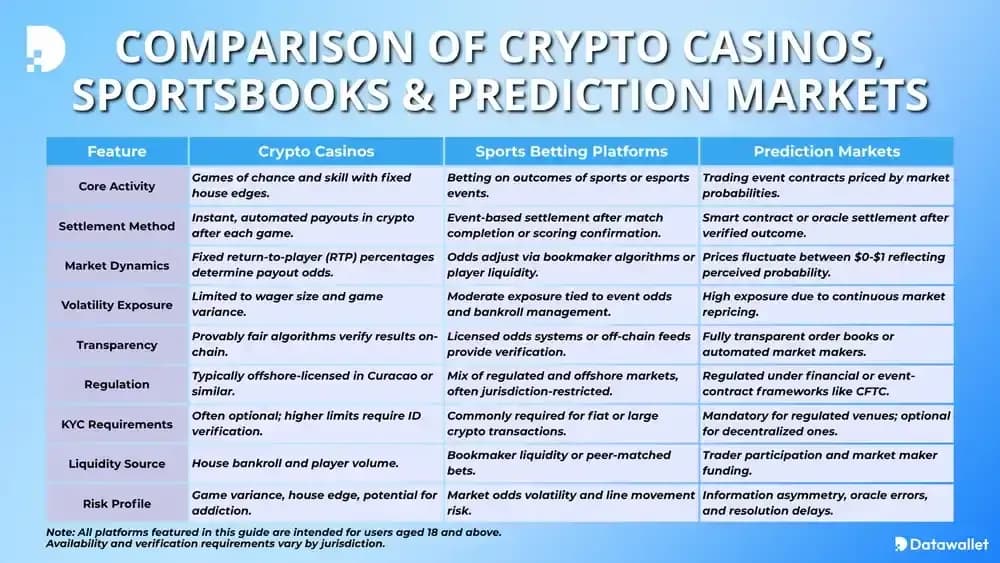
Casino and Sportsbooks
Crypto casinos centrally manage game catalogs, odds, market making, and payouts under published terms, certified RNGs, and responsible gambling policies. Here are the main components:
- Game integration: Vendors supply certified RNG and live streams, while the casino enforces RTP (Return to Player), table limits, and jurisdictional access controls.
- Bankroll and odds: House edges vary by game type; sportsbooks embed margins within moneylines, totals, and props across pre-match and live markets.
- Bonuses: Deposit matches, rakeback, reloads, and quests improve expected value, subject to wagering requirements and maximum cashout constraints.
- Payouts: Withdrawals are processed after risk checks, with crypto payments subject to network fees and occasional compliance-driven verification steps.
- Fairness: Provably fair games expose seeds and hashes, allowing players to independently verify outcomes without relying solely on vendor certifications.
Prediction Market Platforms
Decentralized prediction markets use yes or no contracts for event outcomes, with prices set by order books or automated liquidity, and transparent settlement sources. In more detail they rely on these things:
- Smart contracts: Onchain markets hold collateral, issue outcome tokens, and settle positions programmatically upon verifiable resolution criteria.
- Oracles: Data providers publish outcomes from referenced sources, enabling deterministic settlement while minimizing ambiguity and discretionary interpretation.
- Liquidity: Order books or pools concentrate depth in popular events, with spreads narrowing as participants and market makers compete for flow.
- Token/rewards: Points, rebates, and maker incentives deepen books, reduce effective costs, and attract recurring trading rather than passive buy-and-hold.
- Governance: Listing policies, dispute rules, and parameter changes are documented; decentralized venues may allow tokenholder input on risk controls.
Is Crypto Gambling Legal?
The legality of crypto gambling varies worldwide depending on national licensing, taxation rules, and enforcement of online wagering laws. Some jurisdictions explicitly permit licensed crypto casinos, while others ban or restrict them under traditional gaming or financial statutes.
In the United States, only CFTC-regulated platforms such as Kalshi and Crypto.com Derivatives North America can legally offer event contracts. Most crypto casinos remain inaccessible due to state-level gambling prohibitions, although offshore sites often accept US users through VPNs or geo-workarounds.
Europe maintains a patchwork approach where Malta, Gibraltar, and Isle of Man issue recognized crypto gambling licenses. The EU’s MiCA and AMLD frameworks require strict KYC, while unlicensed operators may face domain blocking or financial penalties for non-compliance.
Importantly, most licensed crypto gambling platforms restrict access to users aged 18 or older, aligning with standard international gaming laws. Regulated venues may impose stricter age verification or require national ID checks before deposits or withdrawals
Risks of Crypto Gambling
Crypto gambling can be entertaining and informative, but it carries material financial and operational risks requiring prudent limits and tool usage. Below are common risks to evaluate before depositing funds:
- Market and liquidity risk: Thin books or low-traffic games produce worse fills, larger slippage, and difficulty exiting positions during volatility spikes.
- Oracle and resolution risk: Ambiguous sources or disputed outcomes delay settlement, affecting capital availability and realized profitability for traders.
- Regulatory and tax uncertainty: Changing rules can force service restrictions, KYC upgrades, or tax treatments that materially impact net returns.
- Counterparty and exchange risk: Centralized sites hold custody temporarily, creating exposure to operational failures, freezes, or adverse compliance actions.
- Smart contract risk: Onchain venues may contain exploitable smart contract bugs, upgrade hazards, or dependency risks on external token bridges and oracles.
- Slippage and spreads: Wider spreads and price jumps around news or kickoff times increase effective costs relative to displayed mid-market pricing.
- Behavioral biases: Gambler’s fallacy, tilt, and overconfidence degrade bankroll management, amplifying drawdowns and variance beyond intended risk.
- Data source ambiguity: Poorly specified rules or multiple authorities can create settlement uncertainty and unexpected final determinations.
- Position limits: Caps on per-market exposure constrain strategies and complicate hedging, particularly near resolution or headline events.
- Custody and operational errors: Mis-sent funds, unsupported networks, or lost seed phrases create irreversible losses without platform recourse.
Final Thoughts
Crypto gambling continues to mature globally, with steady participation across gaming, macro, and sports cycles as regulation and adoption converge in 2026.
Currently, Rollbit remains the leader among crypto gambling platforms, merging casino gaming, sports betting, and leveraged trading into one ecosystem.
Polymarket, Shuffle, Stake, and Kalshi broadened participation through decentralized liquidity, transparent pricing, and regulated access spanning diverse global jurisdictions.
Frequently asked questions


.webp)