




Compare Top Hyperliquid (HYPE) Wallets
1. Phantom
Phantom ranks first because it brings Hyperliquid-powered perpetual futures directly into a wallet millions already use. Traders can go long or short with up to 40x leverage, access 200+ markets, and manage positions from mobile or web without leaving Phantom’s interface. We rank it best overall for mainstream Hyperliquid access.
Its biggest advantage is speed. Phantom lets users fund perps with Solana tokens, open positions within seconds, and adjust order settings like market, limit, leverage, stop loss, and take profit. We like that it turns Hyperliquid into a cleaner trading experience instead of forcing users through a more technical dApp flow.
Phantom also gives traders practical position controls after entry. Users can increase size, partially close trades, add or remove collateral, and adjust SL/TP levels without disrupting the position. The trade-off is jurisdiction limits and leverage risk, but for usability, Phantom now offers the smoothest Hyperliquid wallet experience.
Pros
- Excellent user experience for beginners moving between Solana and EVM assets.
- Self-custody design with scam detection and optional Ledger hardware support.
- Strong mobile and desktop interface for portfolio tracking, swaps, and transfers.
Cons
- Less HyperEVM-native than Rabby, MetaMask, or Okto Wallet for specialists.
- Some workflows may require bridging, WalletConnect, or manual network checks.
- Power traders may find the interface less granular for transactions.

2. MetaMask
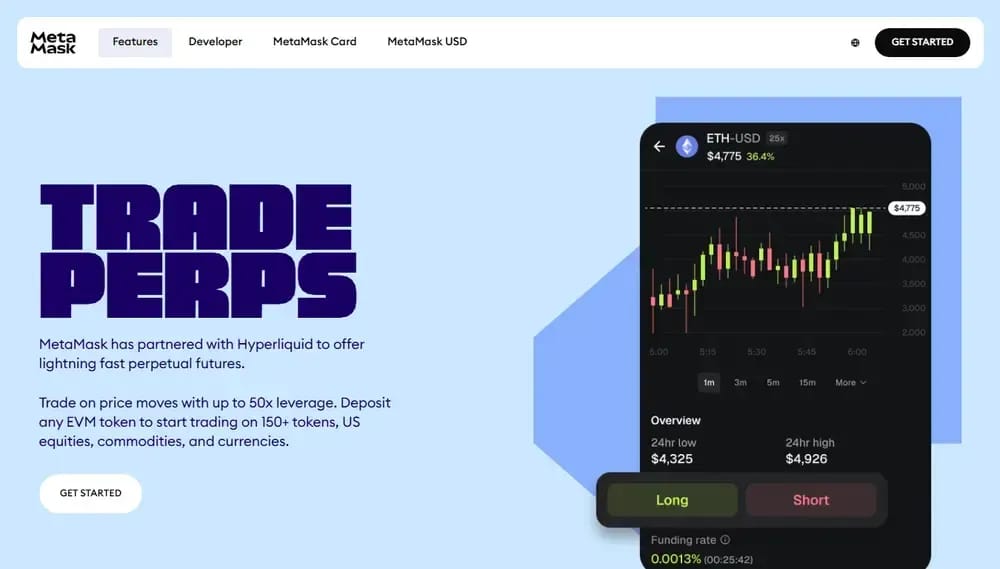
MetaMask remains the default choice for many Hyperliquid users because it is deeply embedded across Ethereum and EVM dApps. Its support for Ethereum, Arbitrum, Base, Optimism, Polygon, and other EVM networks fits Hyperliquid’s deposit and HyperEVM workflows well. We rank it second for users who prioritize compatibility over design simplicity.
A major 2026 advantage is MetaMask’s direct perps push through Hyperliquid, which lets users fund and trade perpetual markets from inside the wallet experience. That makes MetaMask more than a connector; it becomes a trading gateway. We like this native direction, especially for users already managing EVM liquidity in MetaMask.
The drawback is reliability friction. Hyperliquid’s own support materials note that some users can face MetaMask-specific issues on HyperEVM, with Rabby suggested as a more compatible alternative when problems persist. MetaMask is still a dependable pick, but active traders should keep a backup wallet ready before important deposits or withdrawals.
Pros
- Broad EVM compatibility makes Hyperliquid deposits and dApp access easier.
- Integrated perps experience creates a direct Hyperliquid trading route inside MetaMask.
- Works well with Ledger for stronger signing and higher-value custody.
Cons
- HyperEVM connection issues can affect some MetaMask users during trading.
- Interface feels crowded for beginners managing only Hyperliquid activity daily.
- Frequent wallet popups can slow fast-moving trading sessions under pressure.
3. Rabby Wallet
Rabby Wallet earns third place because it is built specifically for Ethereum and EVM chains. For Hyperliquid traders exploring HyperEVM apps, token approvals, and onchain routes, that specialization matters. We rank Rabby as the best power-user wallet because its transaction previews and chain handling feel sharper than general-purpose browser wallets.
Its biggest edge is risk visibility. Rabby is known for pre-transaction simulation, address checks, and clearer signing screens, which help users avoid blind approvals. On Hyperliquid, where traders may move collateral, claim rewards, or interact with new HyperEVM protocols, we like Rabby’s extra context before a signature leaves the wallet.
Rabby is less beginner-friendly than Phantom and less universally recognized than MetaMask, so onboarding can feel more technical at first. However, Hyperliquid support guidance explicitly points users toward Rabby when MetaMask has persistent HyperEVM issues. That makes Rabby a practical second wallet even for traders who still keep MetaMask installed.
Pros
- EVM-first design suits HyperEVM apps, approvals, and custom network workflows.
- Transaction previews help traders understand signatures before confirming risky actions.
- Useful fallback when MetaMask struggles with Hyperliquid compatibility issues repeatedly.
Cons
- Less familiar brand for casual crypto users and beginners today.
- Mainly serves EVM users, not broad multichain portfolio management needs.
- Advanced security prompts can feel overwhelming during quick trades often.
4. Base App
Base App (formerly Coinbase Wallet) is our fourth pick because it gives Hyperliquid users a familiar self-custody option tied to a widely known crypto brand. Unlike the Coinbase exchange account, Coinbase Wallet lets users control keys and connect to dApps. It is recommended for traders who value onboarding, funding convenience, and a recognizable interface.
The wallet supports preconfigured EVM networks such as Arbitrum, Base, Optimism, Polygon, and Avalanche, while also allowing users to add other EVM-compatible networks manually when required. That matters because Hyperliquid users often fund accounts from EVM environments and may need custom-network flexibility. We like Coinbase Wallet most for cautious beginners.
There is one important caveat: Hyperliquid support materials report that Coinbase Wallet users on mobile may face connection problems and may need the Chrome extension instead. For that reason, we rank it below Rabby and MetaMask. It remains useful, but serious traders should test connections before moving meaningful balances into Hyperliquid.
Pros
- Familiar self-custody wallet for users already trusting Coinbase products today.
- Supports major EVM networks and manual custom-network additions when needed.
- Good fit for beginners prioritizing recognizable design and onboarding guidance.
Cons
- Mobile connection issues may affect some Hyperliquid users today frequently.
- Less advanced transaction detail than Rabby for complex HyperEVM activity.
- Coinbase branding can confuse exchange accounts with self-custody wallets easily.

5. Ledger Nano S Plus
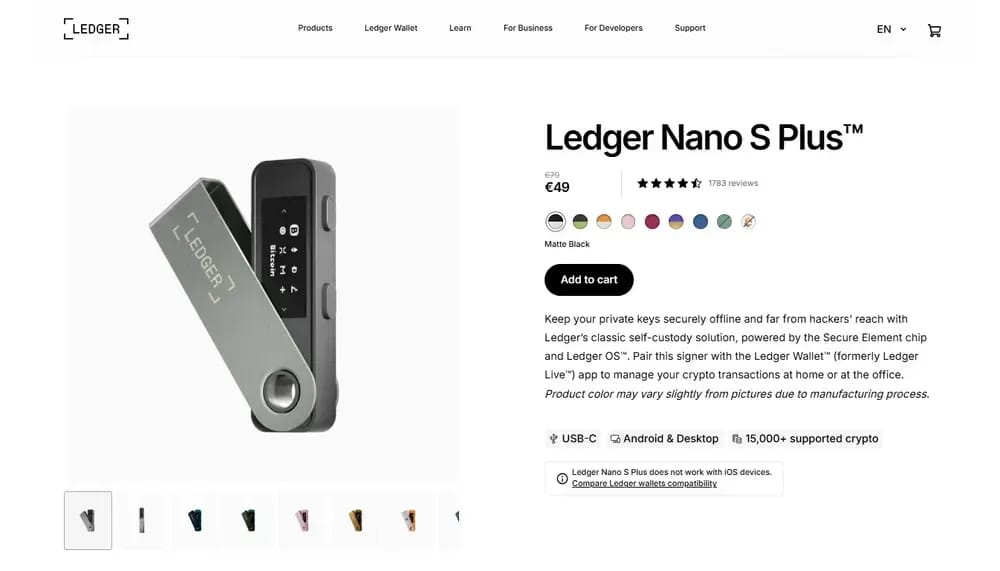
Ledger Nano S Plus is the security-first choice for Hyperliquid users holding larger balances, long-term HYPE exposure, or collateral they cannot afford to lose. It is not a standalone trading interface like Phantom or MetaMask. Instead, Ledger protects private keys offline while connecting through compatible wallets for signing and dApp access across EVM environments.
Ledger’s official support now includes managing Hyperliquid HYPE through Ledger Live, and Ledger devices can also connect to MetaMask or Rabby for EVM-style dApp workflows. We rank Ledger fifth because it is essential for security-conscious users, but slower for rapid order management than hot wallets during volatile market sessions overall.
The main compromise is speed. Hardware confirmation adds friction, which can be frustrating when markets move quickly or when Hyperliquid requires multiple signatures. We like Ledger for custody, withdrawals, and larger balances, but we would not use it as the only wallet for high-frequency trading or experimental HyperEVM apps alone.
Pros
- Offline key storage reduces exposure to browser malware and phishing.
- Compatible with MetaMask and Rabby for HyperEVM wallet workflows today.
- Strong option for larger balances, HYPE holdings, and withdrawals management.
Cons
- Slower signing process can frustrate active Hyperliquid traders today quickly.
- Requires another wallet interface for most dApp interactions and approvals.
- Firmware, app, or connection issues can interrupt time-sensitive actions unexpectedly.
6. Okto Wallet
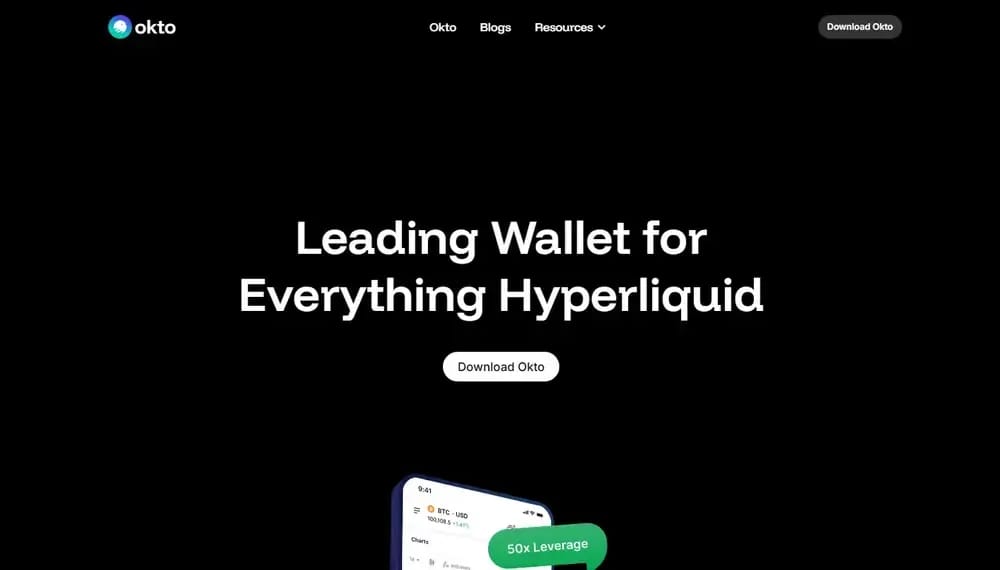
Okto Wallet closes the ranking as the most Hyperliquid-specific mobile option. Its app-store listings describe native Hyperliquid integration, futures trading, spot access, HyperEVM apps, and one-click deposits from multiple chains. We rank it sixth not because it lacks focus, but because it is newer and more specialized than general wallets.
For mobile traders, Okto’s numbers are compelling: its listings claim more than $3 billion in Hyperliquid volume and over 10,000 active traders. The wallet also emphasizes MPC security, seedless setup, biometric authentication, and gas abstraction. We like Okto for users who want Hyperliquid without browser extensions or manual bridging.
The limitation is ecosystem breadth. Okto may be excellent for Hyperliquid-first trading, but it is less proven as a universal wallet than Phantom, MetaMask, or Coinbase Wallet across crypto. Traders who want one app for every chain may prefer those alternatives, while Hyperliquid-native mobile users should still test Okto carefully.
Pros
- Native Hyperliquid mobile experience for futures, spot, and HyperEVM apps.
- One-click deposits and gas abstraction simplify mobile trading workflows significantly.
- Strong fit for users avoiding desktop extensions and complex bridging.
Cons
- Newer, more specialized wallet than MetaMask, Phantom, or Ledger overall.
- Less suitable for traders wanting one universal crypto wallet everywhere.
- Mobile-first design may not satisfy desktop power users today fully.
What is a Hyperliquid Wallet?
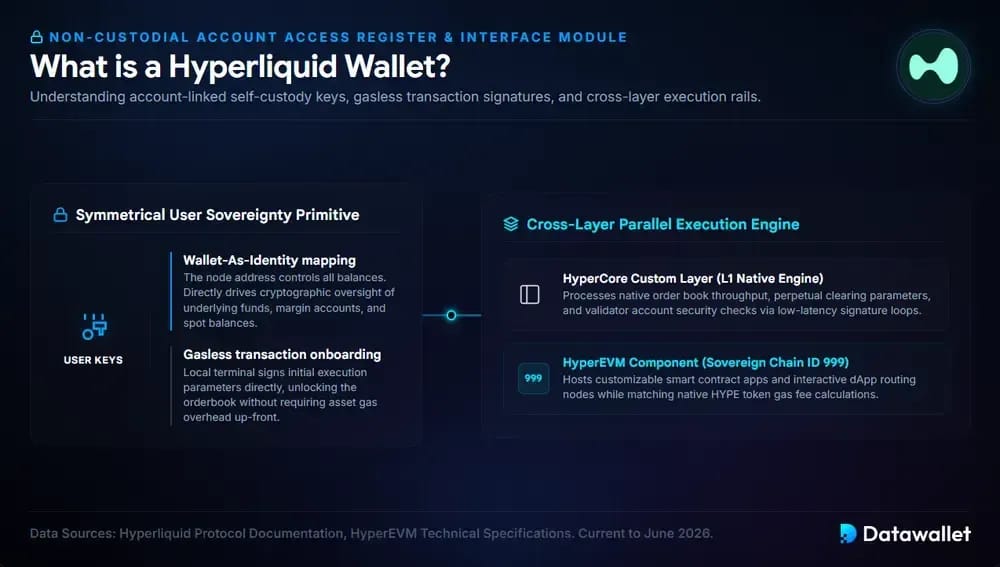
A Hyperliquid wallet is a self-custody crypto wallet used to connect with Hyperliquid, enable trading, deposit assets, and sign account actions. According to Hyperliquid’s onboarding docs, users can connect a DeFi wallet, sign a gasless transaction, and deposit supported assets.
Unlike an exchange login, the wallet controls the address behind your Hyperliquid account. That makes wallet choice important for security, deposits, withdrawals, and dApp access. Traders comparing options should first understand broader crypto wallet basics before choosing a Hyperliquid setup properly.
Hyperliquid wallets also matter because Hyperliquid now includes both HyperCore and HyperEVM activity. The HyperEVM guide explains how users can add Chain ID 999, use HYPE for gas, and move assets between spot balances and the EVM layer.
In practice, the best Hyperliquid wallet is not always the most famous wallet. It is the wallet that connects reliably, supports your trading style, and keeps signing risk manageable.
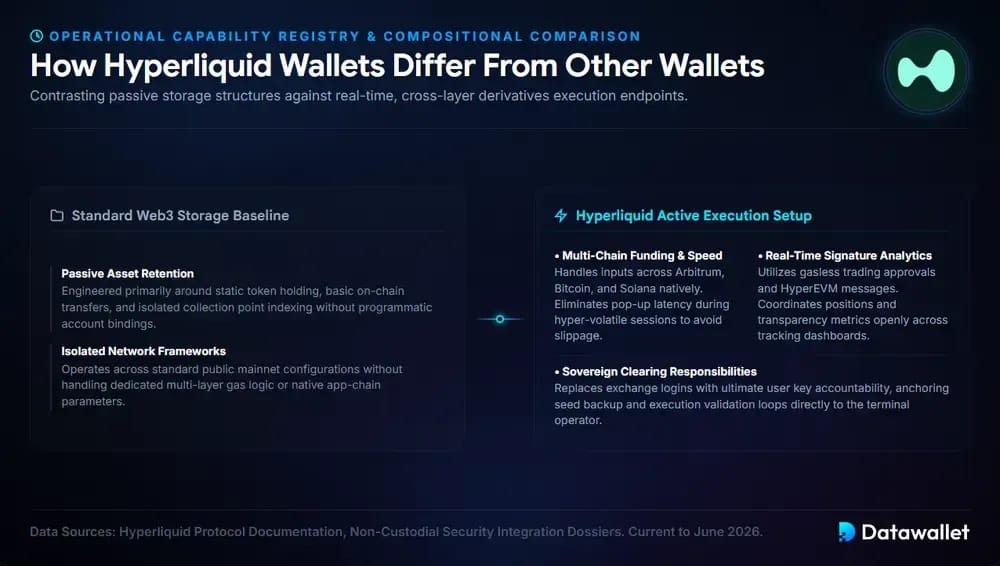
How Hyperliquid Wallets Differ From Other Wallets
Hyperliquid wallets look familiar, but they operate around trading permissions, collateral movement, HyperEVM access, real-time signing, and public wallet analytics more than simple token storage.
Key differences show up across access, security, execution, visibility, custody, and routing decisions:
- Access: Standard wallets store tokens, while Hyperliquid wallets must connect, enable trading, and support deposits into an active decentralized perpetuals exchange account before execution.
- Signing: Hyperliquid use often involves gasless trading authorization, deposit confirmations, withdrawals, transfers, and HyperEVM messages, so unclear signature screens create higher operational risk for users.
- Networks: Wallets need practical support for Arbitrum USDC deposits, HyperEVM custom RPC, HYPE gas, and multichain funding paths from Bitcoin, Ethereum, Solana, or Monad.
- Speed: A good Hyperliquid wallet reduces friction during volatile sessions, because delayed popups, failed approvals, or slow mobile connections can affect execution timing materially.
- Security: The wallet must protect private keys while making phishing, approval risk, malicious RPCs, and fake trading interfaces easier for users to detect early.
- Compatibility: Some wallets work better with HyperEVM than others, so traders often keep a primary hot wallet and a backup connector ready for interruptions.
- Transparency: Wallet addresses can be tracked publicly, meaning positions, PnL, funding, liquidations, deposits, withdrawals, timing, and bias may be visible through public analytics dashboards.
- Custody: Unlike centralized exchange accounts, Hyperliquid wallets keep users responsible for seed phrases, device security, transaction review, irreversible transfer mistakes, recovery, and wallet backups.
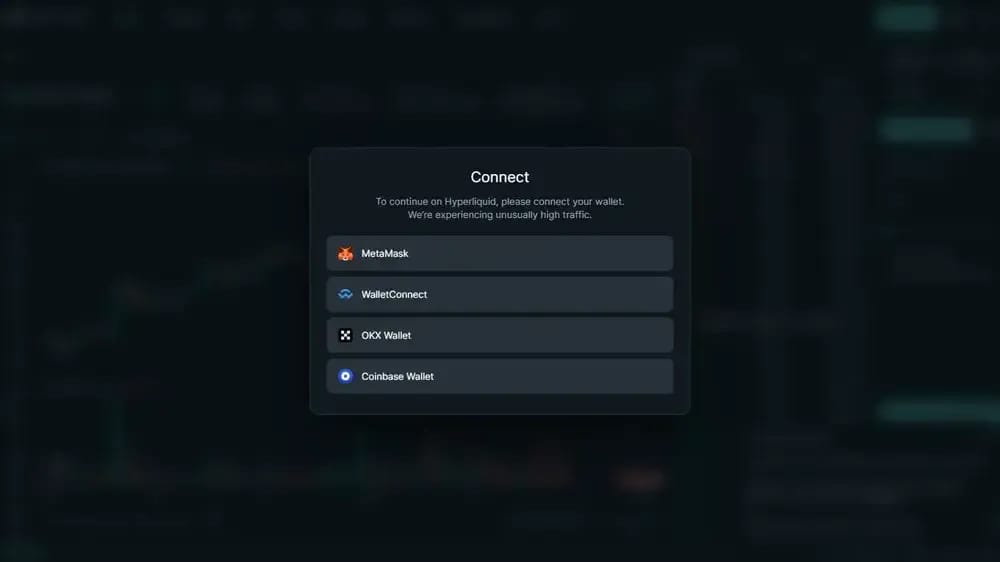
How to Use a Hyperliquid Wallet
A Hyperliquid wallet is useful only when it is set up for the right trading path. Most users need connection, funding, and approval review routines before trading. Funding guides like bridge to Hyperliquid help reduce routing mistakes.
How to Connect a Hyperliquid Wallet
Connecting is simple, but the correct flow matters because failed wallet sessions can block deposits, trading authorization, or HyperEVM interactions during active market conditions.
Use this checklist before moving meaningful funds into any Hyperliquid wallet account:
- Choose: Select a wallet that supports your preferred device, network needs, security level, and backup method before creating or importing any trading address.
- Install: Download the wallet only from the official website or verified app store, then avoid sponsored clones, browser popups, and copied extension links.
- Secure: Back up the seed phrase offline, enable device security, and test wallet access before sending funds or signing Hyperliquid permissions for trading.
- Connect: Open the official Hyperliquid app, press Connect, choose the wallet, and approve the connection request after checking the site address carefully first.
- Authorize: Click Enable Trading, review the gasless message, confirm the wallet address, and sign only if the request matches your intended trading account.
- Network: Add HyperEVM only from trusted parameters, confirming Chain ID 999, HYPE gas, and the official RPC. For MetaMask users, our HyperEVM setup guide is useful.
- Verify: Check that the displayed address matches your wallet, then review account status, balances, and available deposit routes before trading live there first.
- Backup: Keep a second compatible wallet ready, because browser extensions, firmware, mobile connections, or RPC issues can interrupt access unexpectedly during high volatility.
How to Fund and Manage a Hyperliquid Wallet
Funding and maintenance require more care than the first connection, because wrong networks, unsupported assets, rushed withdrawals, or blind approvals can create permanent losses.
Follow these steps when deposits, transfers, withdrawals, collateral, and records are involved:
- Select: Choose the supported deposit asset and network shown inside Hyperliquid, rather than assuming every wallet balance can be sent directly into trading.
- Test: Send a small transaction first when using a new chain, wallet, bridge, or address, especially before larger collateral deposits into Hyperliquid first.
- Confirm: Review the destination address, token, chain, and amount inside both Hyperliquid and the wallet popup before approving any transfer or deposit request.
- Monitor: Wait for the deposit to credit before trading, then check available balance, collateral allocation, and open order requirements before placing orders live.
- Convert: Sell deposited spot assets into the required quote asset when needed, since some deposits do not arrive as trading collateral for perps.
- Transfer: Move assets between HyperCore and HyperEVM only through the official transfer flow, and use a route-specific guide like Solana to Hyperliquid when needed.
- Withdraw: Confirm the withdrawal route, destination wallet, and minimum amount, then leave time for validator processing and external network finality before reusing funds.
- Record: Export trade history, deposits, withdrawals, funding, and realized PnL regularly so taxes, accounting, and performance reviews stay accurate across tax seasons later.
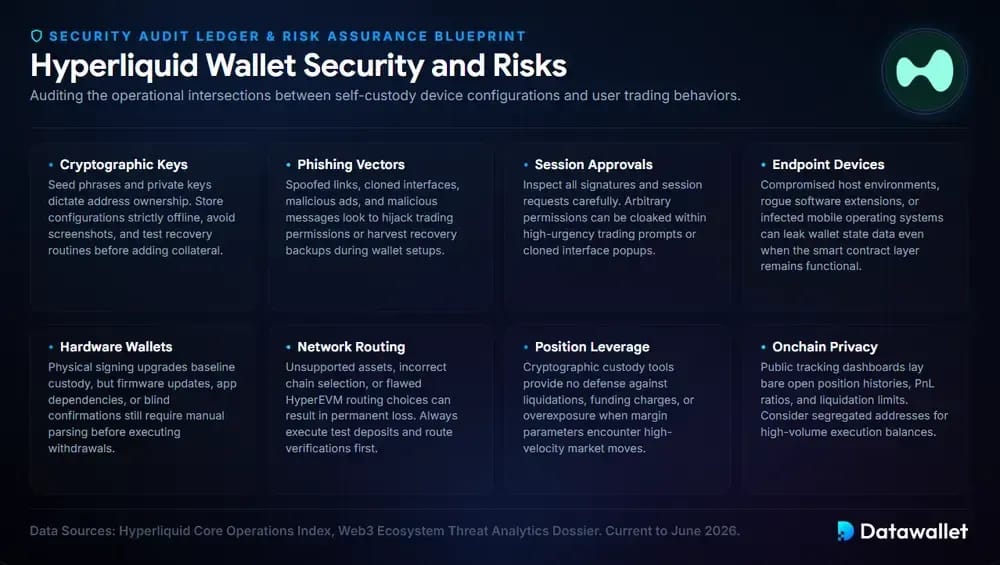
Hyperliquid Wallet Security and Risks
Hyperliquid wallet security depends on both wallet design and trader behavior. Most losses come from bad links, weak custody habits, rushed signatures, or leverage mistakes.
Review these risks before funding, trading, withdrawing, or signing from any wallet:
- Keys: Seed phrases and private keys control the address, so store them offline, never screenshot them, and test recovery before adding serious funds or collateral.
- Phishing: Fake Hyperliquid links, cloned wallet pages, malicious ads, and Discord messages can trick users into signing approvals or revealing recovery phrases during setup.
- Approvals: Review every signature, token approval, and session request because scammers can hide dangerous permissions behind urgent trading prompts, copied interfaces, or wallet popups.
- Devices: A compromised browser, phone, extension, or operating system can expose wallet activity even when the blockchain account itself remains functional for trading safely.
- Hardware: Ledger-style signing improves custody, but firmware, app updates, connection failures, and blind confirmations still require careful review before approval during withdrawals too often.
- Networks: Wrong chain deposits, unsupported assets, or mistaken HyperEVM transfers can cause permanent losses, especially when users skip test transactions or route checks first.
- Leverage: Wallet security cannot protect traders from liquidation, overexposure, funding costs, or poor risk controls once collateral enters the trading account during volatility spikes.
- Privacy: Public wallet trackers can expose balances, trades, PnL, liquidations, and behavior patterns, so consider address separation for sensitive activity or larger balances publicly.
For approval hygiene, MetaMask users can also review our guide on how to revoke token permissions after testing new dApps.
How to Use a Hyperliquid Wallet Tracker
A Hyperliquid wallet tracker is an analytics tool that turns public trading data into readable dashboards for active market monitoring and research. Instead of checking raw addresses, traders can monitor positions, PnL, leverage, funding, liquidations, deposits, withdrawals, and leaderboard performance across tracked wallets in real time.
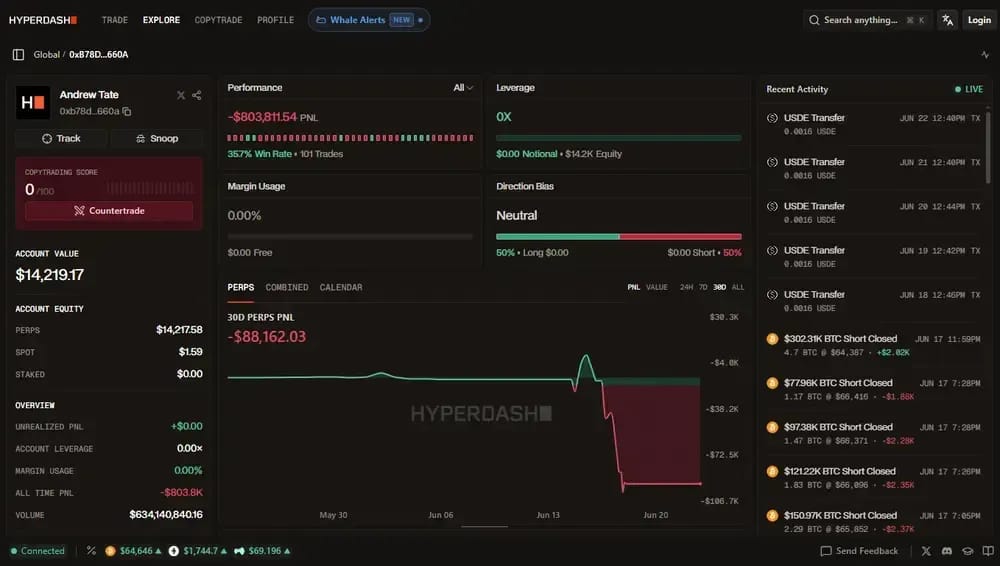
The most useful trackers include HyperTracker for wallet dashboards and cohort data, HypurrScan for explorer-style address history, and HyperDash for top-trader discovery. These tools help users follow profitable wallets, large whales, vaults, labeled traders, recent fills, and directional positioning without connecting private keys or deposits.
Popular examples include public figures such as Andrew Tate, whose Hyperliquid losses and liquidations became widely tracked, and anonymous whales opening large BTC, ETH, or HYPE positions. Use trackers for context, not copy trading; our Hyperliquid statistics page is better for market-wide context.
Final Thoughts
Hyperliquid wallets are not just storage tools. They shape how quickly users connect, fund, trade, withdraw, and protect capital across HyperCore, HyperEVM, and external chains during real market conditions daily.
Phantom is our best overall pick, while MetaMask and Rabby suit EVM-heavy users. Coinbase Wallet, Ledger, and Okto cover familiar onboarding, cold storage, and mobile-native trading for different trader profiles.
The right choice depends on your risk level, device habits, and trading frequency. Test connections, keep backups, review signatures, and never let wallet convenience replace risk management or position sizing.
Our Methodology
We assessed each Hyperliquid wallet by repeating the steps an active trader takes in practice: installing the wallet, connecting to Hyperliquid, enabling trading, reviewing signatures, funding an account, testing HyperEVM access, and checking withdrawal readiness.
Six criteria shaped the final list:
- Hyperliquid Access: We checked connection reliability, trading authorization, WalletConnect behavior, mobile support, and whether the wallet works smoothly with app.hyperliquid.xyz and HyperEVM workflows.
- Security Model: We compared self-custody controls, hardware wallet support, scam warnings, transaction previews, recovery options, and how clearly each wallet presents signing risk.
- Network Coverage: We reviewed support for Arbitrum deposits, Ethereum activity, Solana funding paths, HyperEVM custom RPC, HYPE gas, and broader multichain portfolio management.
- Trading Speed: We considered how fast users can connect, approve, deposit, switch networks, and recover from failed signatures during high-volatility trading sessions.
- User Experience: We tested interface clarity across desktop and mobile, including onboarding steps, transaction prompts, portfolio visibility, account switching, and extension reliability.
- Advanced Utility: We gave extra weight to wallets that support power-user needs such as transaction simulation, Ledger pairing, custom networks, wallet tracking, and safer dApp exploration.
Wallet support, network behavior, and HyperEVM tooling can change quickly as Hyperliquid expands. Testing and review updates ran from March to June 2026, with ratings based on documented support, live workflow checks, and our team’s Hyperliquid trading experience since 2024.