How to Bridge to MegaETH (Fees & Best Platforms)
Summary: MegaETH officially went live on mainnet in early 2026, offering a high-performance execution layer that users can access via fast and highly reliable bridge protocols.
You can bridge your digital assets using the deBridge protocol in roughly 2 minutes with fees near $2, unlocking sub-millisecond transaction speeds for decentralized apps.
%201.svg)
Best MegaETH Bridge - deBridge
deBridge provides the fastest access to MegaETH by using intent-based solvers to settle transactions in roughly 2 minutes for a 0.04% fee across various chains.
Supported Assets
WETH, USDC, USDT & other major ecosystem assets
Estimated Fees
Roughly $2 per swap (flat fee + 0.04% variable
Security Record
Multiple independent security audits from Halborn, Zokyo & Immunefi
Can I Bridge to MegaETH?
Yes, you can bridge assets to MegaETH using third-party gateways or MegaETH’s official canonical bridge, depending on your starting chain, wallet, token, and specific goals.
Bridging lets you access MegaETH-native DeFi, games, and native apps quickly, while keeping secure self-custody of digital assets and avoiding slow, manual centralized exchange withdrawals.
It also helps you move liquidity where high yields and incentives appear, test new dApps early, and consolidate balances without ever selling to fiat currency.
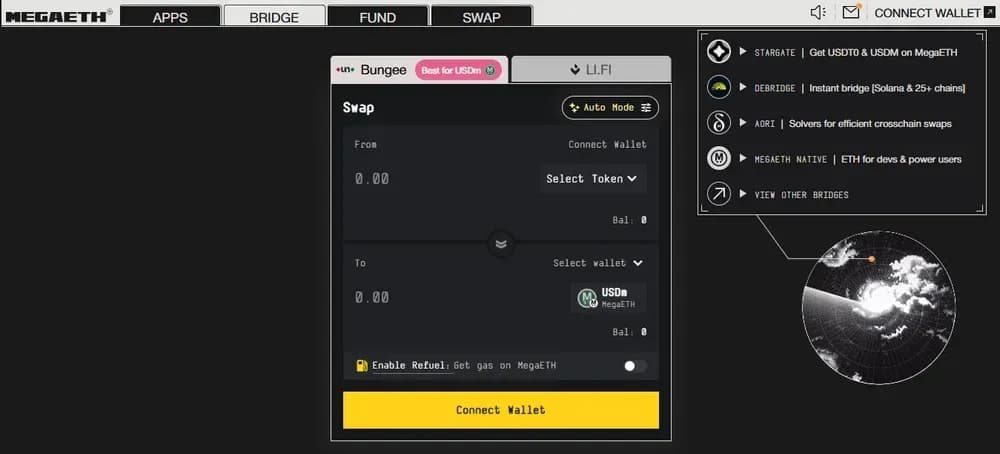
How to Bridge to MegaETH (Any Chain)
The most practical way to bridge to MegaETH from any major chain is by using deBridge, which offers lightning-fast transfers ranging from 1 second to 2 minutes.
Follow these simple steps to move your assets using deBridge:
- Connect Wallet: Link your compatible browser wallet to the deBridge application to begin the process of moving your digital assets securely.
- Select Networks: Choose your current source chain and set MegaETH as the destination network to initiate the cross-chain transfer of funds.
- Choose Asset: Pick the specific token you wish to bridge and enter the total amount while reviewing the real-time exchange rate provided.
- Confirm Quote: Review the transaction details, including the minimal gas costs, then click the confirm button to authorize the bridge request immediately.
- Approve Transaction: Sign the request within your wallet interface to allow the protocol to interact with your funds for the bridging process.
- Wait for Finality: Monitor the progress bar as the decentralized network validators verify your swap.
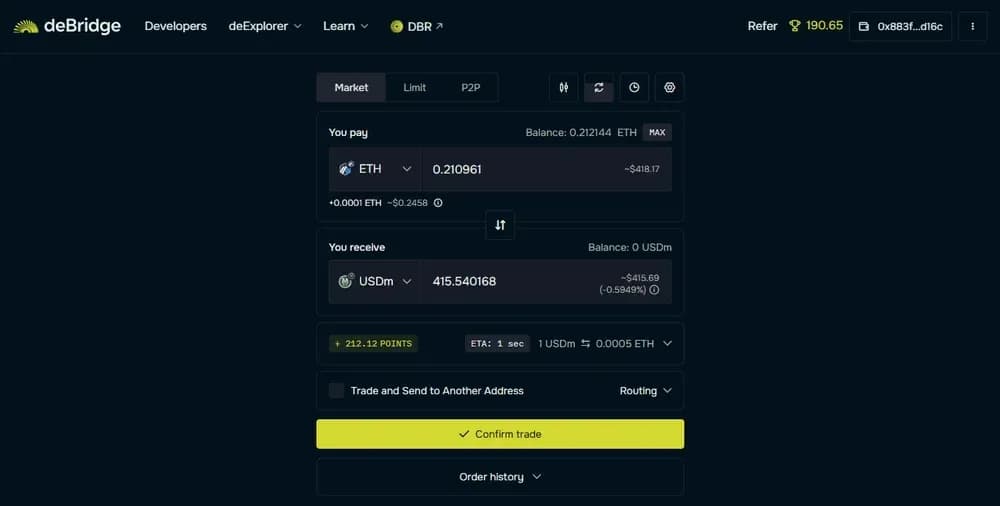
What Are the MegaETH Bridging Fees?
deBridge fees vary by route, but in practice most MegaETH transfers typically cost about $2 total and complete in roughly two minutes. The protocol charges a small flat fee in your source chain’s gas token plus a 0.04% variable fee taken from the input amount.
On top of that, you pay normal network gas, and larger transfers pay more due to basis-points fees; the quote shows both clearly. The speed is equally impressive, with most transfers settling in roughly 2 minutes, ensuring your capital is ready for use almost instantly.
Best MegaETH Bridges Compared
Finding the right crypto bridge for MegaETH is vital for ensuring your assets move safely and quickly between different blockchains without encountering any technical delays.
Here is a comparison of the top bridging options:
Note: Across fees are route-based; many transfers are advertised as “under $1,” which is often <0.10% on four-figure transfers.
MegaETH Bridge Risks
While bridging technology is highly advanced, users should remain aware of specific technical risks inherent to moving assets across different blockchain networks.
Keep these safety considerations in mind before you bridge:
- Smart Contract Risk: Vulnerabilities in the bridge smart contract code could potentially lead to a loss of funds if the protocol suffers a malicious exploit.
- Wrong Metwork/Token Mistakes: Sending to the wrong chain, using unsupported tokens, or mixing wrapped versions can strand assets.
- Slippage Impact: Large orders might experience price differences between the start and end of the bridge process, affecting the final amount received.
- Validator Reliability: Dependence on a specific set of nodes means that network downtime could temporarily delay the arrival of your bridged assets.
- Finality Delays: Congestion on the source chain might slow down the initial transaction, preventing the bridge from triggering the release on MegaETH.
- Wallet Security: Interacting with malicious bridge clones can result in drained wallets, so always verify you are using the official protocol URL.
About MegaETH
MegaETH is a high-throughput, low-latency Ethereum execution layer marketed as “real-time Ethereum,” targeting 100,000+ TPS and sub-10ms blocks for responsive dApps while settling to Ethereum for security. Its public mainnet officially went live February 9, 2026.
For onboarding, MegaETH documents a canonical ETH bridge from Ethereum that uses OP Stack Standard Bridge contracts; you can send ETH directly or call depositETH for more control. Ecosystem hubs like Rabbithole help users discover apps and onramps.

Final Thoughts
Having learned how to bridge to MegaETH, you can start exploring a world of high-speed decentralized finance and innovative consumer applications.
The process is straightforward when using the right tools, allowing you to move capital efficiently without worrying about high costs or long waits.
Take the leap today and experience the future of onchain performance by connecting your wallet to the growing MegaETH ecosystem via trusted bridges.
Frequently asked questions

.webp)