




Compare Top Tajikistani Crypto Exchanges
1. Bybit
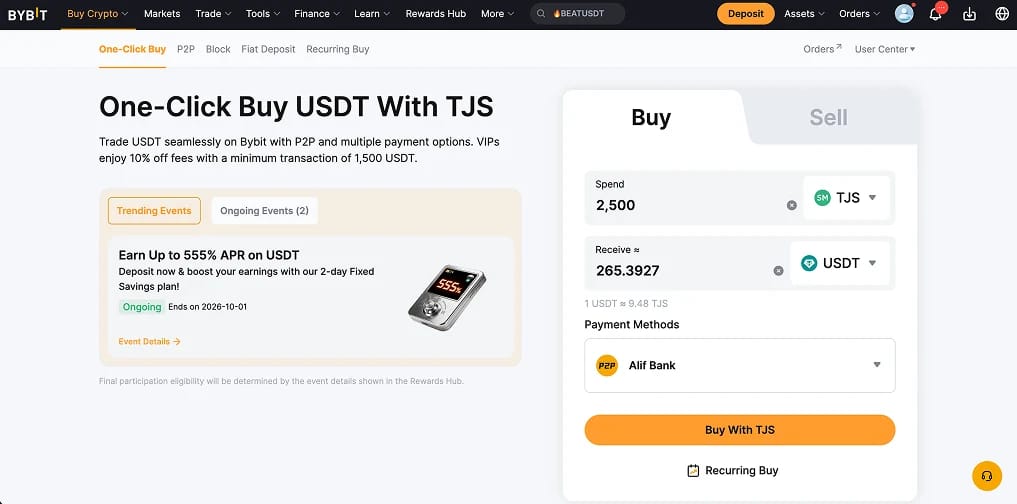
Bybit leads our Tajikistan ranking because it pairs a working somoni on-ramp with the deepest product stack a Tajik user can reach. The P2P desk lists TJS against USDT with merchants accepting Korti Milli card transfers, Alif, DC Wallet, Bank Eskhata, and Spitamen Bank, and P2P trades carry no platform fee.
The Russian-language interface matters more here than fee tables suggest. Russian remains the working second language across Dushanbe and Khujand, and Bybit's app, support chat, and P2P dispute process all run in it without the half-translated menus that trip up rivals. When I funded a test order through a Korti Milli transfer during Dushanbe evening hours, escrow released in under ten minutes at a spread inside 2% of mid-market USDT.
Past the on-ramp, Bybit covers spot across 2,000+ assets at 0.1%, perpetual futures with deep liquidity, copy trading, and Earn products on idle stablecoins. Our crypto futures exchange guide covers how its derivatives stack compares. To be clear: like every platform here, Bybit holds no Tajik licence, because the NBT confirms no exchange is registered in the country. That risk is structural to the market, not specific to Bybit.
Pros
- Live TJS P2P with Korti Milli, Alif, DC Wallet, Eskhata, and Spitamen at zero P2P fees.
- Full Russian-language product, including support and dispute resolution.
- Deep trading stack spanning futures, copy trading, and Earn on 2,000+ assets.
Cons
- No Tajik licence, though no foreign exchange holds one either.
- TJS merchant pool thins after midnight Dushanbe time.
- Feature density takes adjusting for someone who only wants to hold USDT.
2. Binance
Binance runs the deepest TJS merchant pool we tested, and in a thin market that depth is the argument. The desk covers Korti Milli, Alif, Amonatbonk, International Bank of Tajikistan, and Orienbank transfers, with merchant histories stretching back years. On orders above roughly TJS 10,000, Binance consistently produced the tightest quotes because more merchants compete on the same ad book.
Central Asia learned P2P on Binance, and spillover from the much larger Russian and Kazakh desks keeps Tajik liquidity healthier than the country's size alone would justify. Many of the most active TJS merchants quote on Binance first and mirror their ads elsewhere, so price discovery happens here even when you execute on another venue.
The caveats are platform-level. Binance's 2023 US settlement remains the heaviest compliance baggage in the industry, and the exchange has a record of suspending P2P ad categories in smaller markets under regulator pressure, sometimes without warning. Nothing of that kind has hit the TJS desk, but it shapes how much to rely on one venue in a market with no fallback.
Pros
- Largest TJS merchant pool, with the tightest spreads on orders above TJS 10,000.
- Payment coverage spans Korti Milli, Alif, Amonatbonk, IBT, and Orienbank.
- Deepest global spot liquidity, so conversions and withdrawals rarely stall.
Cons
- Global compliance record carries more baggage than any rival here.
- History of pulling P2P ad categories in smaller markets without notice.
- The app buries the P2P desk behind several menus on first use.
3. OKX
OKX has run a somoni desk longer than anyone, having added TJS to its P2P marketplace in July 2023 with USDT, BTC, ETH, and USDC pairs. That head start shows in merchant quality: verified traders on the TJS book tend to have long completion histories, even if raw merchant count trails Bybit and Binance.
The second draw is the Web3 wallet built into the main app. For Tajik users who want to move past holding USDT into DeFi, DEX swaps, or tokens that never reach centralised listings, it removes the need for a separate wallet on what is often a mid-range Android short on storage. Spot fees start at 0.08% maker, the lowest of the large venues here, and the exchange publishes monthly proof-of-reserves attestations with one of the cleaner disclosure records in the industry.
The weakness is small-order pricing. On sub-TJS 2,000 trades, spreads widened outside Central Asian business hours in our testing, so treat OKX as a trading venue first and size P2P orders accordingly.
Pros
- Longest-running TJS P2P desk, live since July 2023, with seasoned merchants.
- 0.08% maker spot fees and a built-in Web3 wallet for DeFi access.
- Monthly proof-of-reserves with a consistent publication history.
Cons
- Merchant count on the TJS book trails Bybit and Binance.
- Spreads widen on small orders outside Central Asian hours.
- Web3 features add complexity a pure stablecoin saver will never use.
4. MEXC
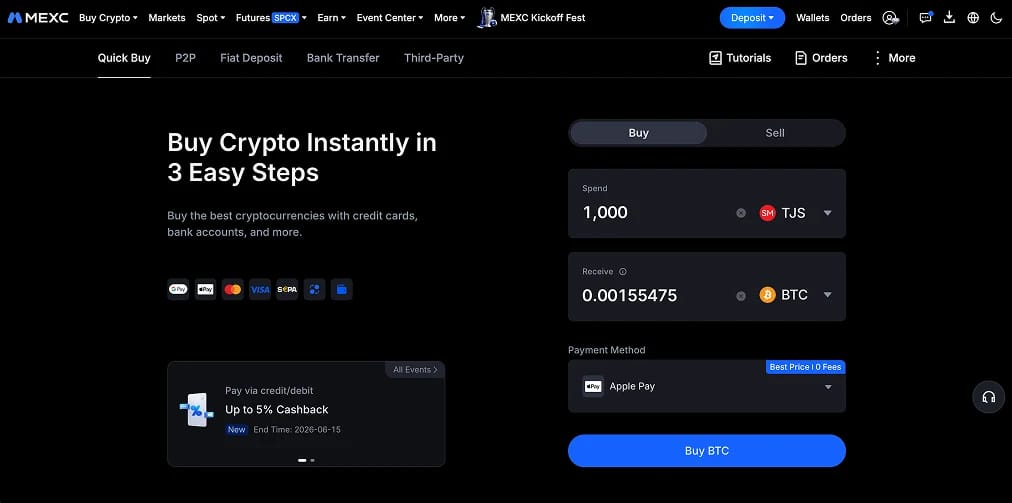
MEXC is the pick when fee compression decides it. Spot trading runs 0% maker and 0.02% taker on most pairs, the cheapest combination on this list, which adds up for anyone converting remittance income into BTC or ETH on a recurring schedule.
The platform lists 2,800+ assets with a pipeline that regularly beats larger venues to new tokens. TJS P2P exists with local card payments, but the merchant pool is younger and shallower than the top three, so most Tajik MEXC users we know buy USDT on Bybit or Binance first and move it across as a TRC20 transfer, which costs about a dollar and settles in minutes.
The trade-off is disclosure. MEXC publishes reserve information less rigorously and less often than Bitget or OKX, so it works best as a trading venue rather than long-term custody for size.
Pros
- 0% maker and 0.02% taker spot fees, the lowest combination available.
- 2,800+ assets with one of the fastest listing pipelines anywhere.
- Reliable TRC20 deposits for users funding from another exchange.
Cons
- TJS merchant pool is thin, so it suits a secondary venue better than a first stop.
- Proof-of-reserves cadence lags top-tier competitors.
- Interface density overwhelms first-time buyers.
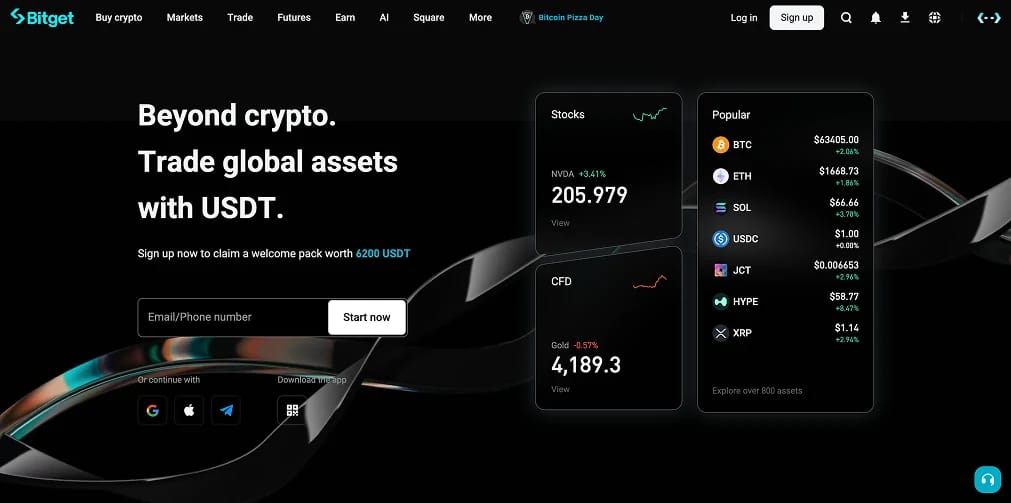
5. Bitget
Bitget earns its slot on reserve transparency and the most mature copy trading product available to Tajik users. Its proof-of-reserves disclosures have shown total ratios well above 100%, and the protection fund sits above $400 million, a genuine cushion in a market where users have zero local recourse.
The TJS P2P desk works through local card and bank transfer payments, with depth landing mid-pack: functional during Dushanbe business hours, thin late at night. A card-purchase option exists as a fallback, though the 2 to 5% processor markup and patchy acceptance of Tajik-issued cards make it a last resort.
Copy trading is the standout. Newer traders can mirror established strategies with position-size controls, and the elite trader pool is large enough to filter by drawdown history instead of headline returns, which is the filter that actually protects capital.
Pros
- Reserve ratio consistently above 100% with a $400M+ protection fund.
- The deepest copy trading pool of any exchange reachable from Tajikistan.
- Zero-fee P2P with local card and bank transfer support.
Cons
- TJS merchant depth is mid-pack and fades outside business hours.
- Card funding carries a processor markup and frequent declines on Tajik cards.
- Lower local brand recognition than Bybit or Binance, so dispute volumes are less tested.
6. Gate
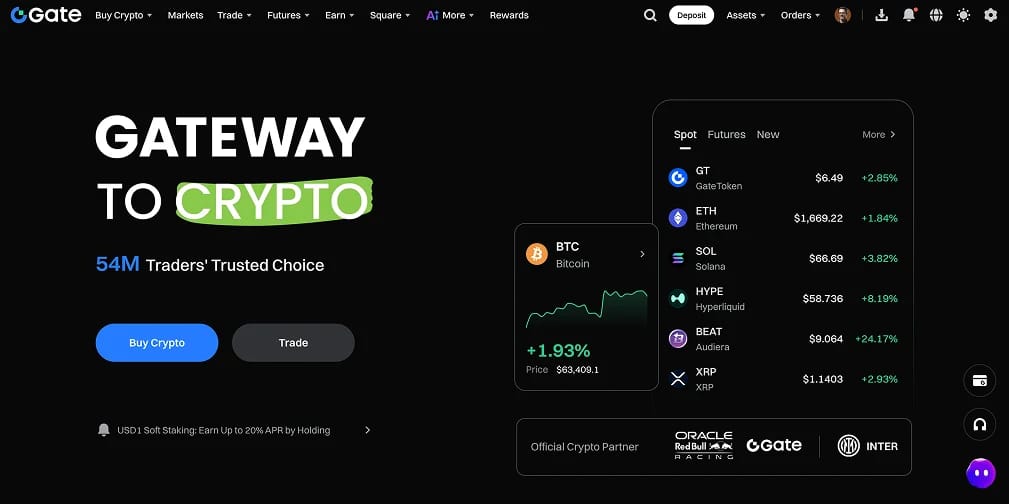
Gate closes the list as the venue for altcoin coverage rather than somoni convenience. The platform lists 3,600+ cryptocurrencies, the widest catalogue here by a distance, and routinely picks up smaller-cap tokens months before they reach Bybit or OKX.
TJS support on the P2P desk is minimal, so the practical pattern matches MEXC: buy USDT with somoni on a deeper desk, then transfer it across on TRC20. That friction suits a secondary venue you visit for specific tokens and disqualifies a primary on-ramp.
Gate publishes one of the higher proof-of-reserves ratios among major exchanges and rounds out the product with copy trading and bots. The long tail of its listings cuts both ways: many low-liquidity tokens demand real due diligence before you size a position.
Pros
- Widest altcoin selection on this list at 3,600+ assets.
- High published reserve ratio relative to major-exchange peers.
- Solid copy trading and bot products for active traders.
Cons
- Effectively no somoni on-ramp, so funding requires a USDT transfer.
- Long-tail listings include many thin, high-risk tokens.
- Compliance profile sits behind the top-tier venues here.
How to Choose a Crypto Exchange in Tajikistan
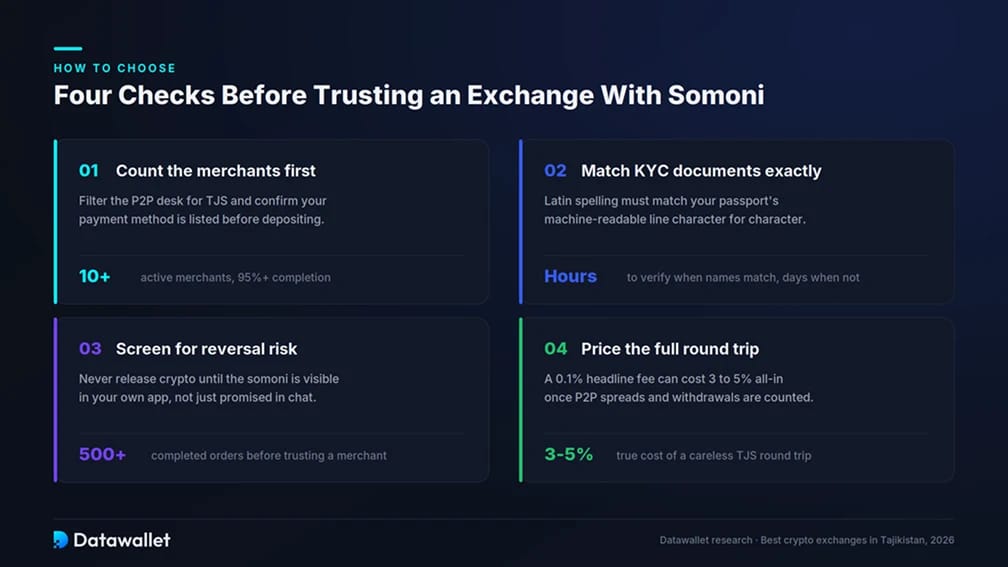
Feature comparisons matter less in Tajikistan than whether somoni moves in and out without losing money to spreads or stalled escrow. Four checks we run before trusting a platform with a real order:
- Count merchants on the TJS desk before depositing. Open the P2P section, filter for TJS, and confirm your payment method is listed: Korti Milli, Alif, DC Wallet, or your bank's transfer option. A workable desk shows at least 10 active merchants during Dushanbe business hours with completion rates above 95%. The TJS market is small enough that desks can thin out overnight, so check the live book.
- Match your KYC documents exactly. Every platform requires a Tajik passport or ID card plus a selfie. The most common verification failure we see is a transliteration mismatch, where the Latin spelling entered at signup differs from the passport's machine-readable line. Copy the passport spelling character for character.
- Screen merchants for payment-reversal risk. The recurring P2P scam in the region is a buyer paying by card transfer, collecting crypto from escrow, then disputing the transfer with their bank. Trade with merchants showing several hundred completed orders and long histories, and never release crypto until the somoni is visible in your own app, not just promised in chat.
- Price the full round trip. Run a small TJS to USDT to TJS loop and measure total slippage. Between the P2P spread on both legs and the withdrawal fee, a platform advertising 0.1% spot fees can cost 3 to 5% all-in. That round-trip figure is the only fee number worth comparing.
Crypto and Bitcoin Regulation in Tajikistan
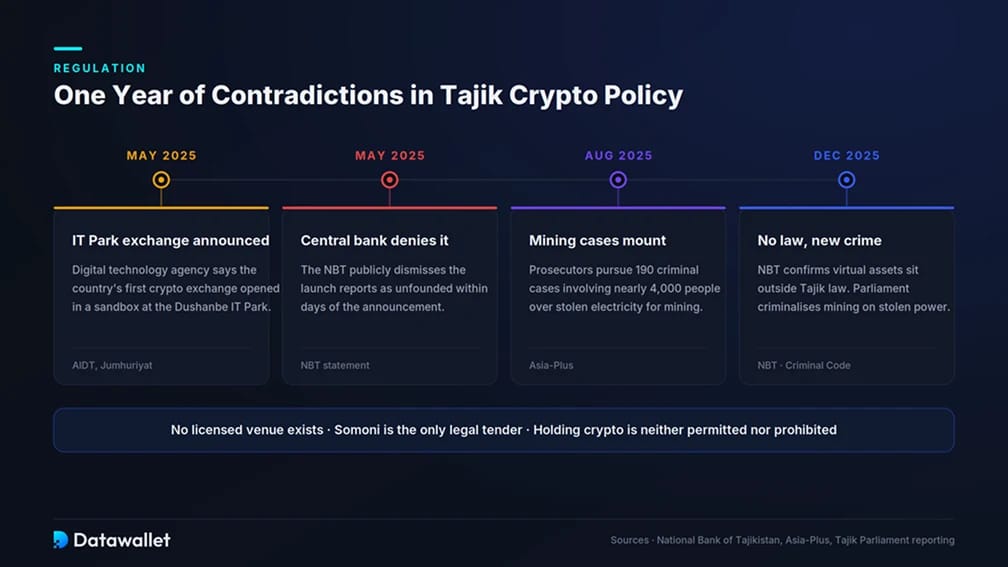
Tajikistan has no crypto law, and the institutions that touch the question spent 2025 contradicting each other in public. The pieces that matter:
- The NBT's position: The National Bank of Tajikistan has stated that virtual asset circulation is not regulated by law, that crypto trading is not a licensed activity, and that no crypto exchange is registered in the country. The somoni is the only legal tender, all settlements must run in it, and the central bank accepts no responsibility for crypto losses. The NBT has confirmed it is studying how to regulate virtual assets, without committing to a timeline.
- The IT Park episode: In May 2025, the director of the Agency for Innovation and Digital Technologies said a crypto exchange had begun operating inside the Dushanbe IT Park under a regulatory sandbox. The NBT denied the launch reports outright. As of mid-2026, no public venue with somoni deposits has materialised from the initiative.
- The December 2025 mining amendments: Parliament approved Criminal Code changes creating a specific offence of illegal electricity use for producing virtual assets, with fines from roughly $1,650 and multi-year prison terms for organised groups. Prosecutors were pursuing 190 criminal cases involving nearly 4,000 people by August 2025. The driver is the grid: Tajikistan generates about 95% of its electricity from hydropower, rations supply every winter, and unmetered mining farms deepen the shortages.
- AML coverage: The Financial Monitoring Department applies existing anti-money-laundering law to crypto-linked transactions, and Tajik banks treat unexplained crypto-pattern activity as a flag. Account freezes on cards receiving repeated P2P inflows are the enforcement most users will ever meet.
The summary position: holding and trading crypto as an individual is neither permitted nor prohibited, because the law does not define it. Paying for goods in crypto breaches the somoni-only settlement rule, and mining with stolen power is now explicitly criminal. Everything else lives in a grey zone neighbouring Kazakhstan has already legislated its way out of, the direction Tajik policy will likely follow.
How Does Tajikistan Tax Crypto?
Tajikistan has no crypto-specific tax rules. The Tax Code predates digital assets as a meaningful category, and as practitioners at AAA Law Offices have noted, taxing crypto gains cleanly is difficult while the asset itself has no legal definition. In practice:
- Individual trading: No dedicated income tax line covers crypto disposals, and the Tax Committee is not collecting on crypto-to-somoni conversions because the framework gives it no clear basis. The Tax Code's broad wording on income, including illegal income, makes this a gap rather than an exemption.
- Mining: Lawmakers explicitly framed the December 2025 amendments as targeting tax evasion in virtual asset production alongside electricity theft. A formal mining tax regime, on the Kazakh or Kyrgyz model of electricity-linked levies, has not yet followed.
- Business activity: If trading rises to the level of an enterprise, ordinary business income tax applies under the general regime, and operating without registration compounds the legal exposure.
- Record keeping: Log every disposal and its somoni value at the time. When Tajikistan formalises the sector, the obligation will reach backwards, and reconstructed records cost more than contemporaneous ones.
Cryptocurrency Adoption in Tajikistan
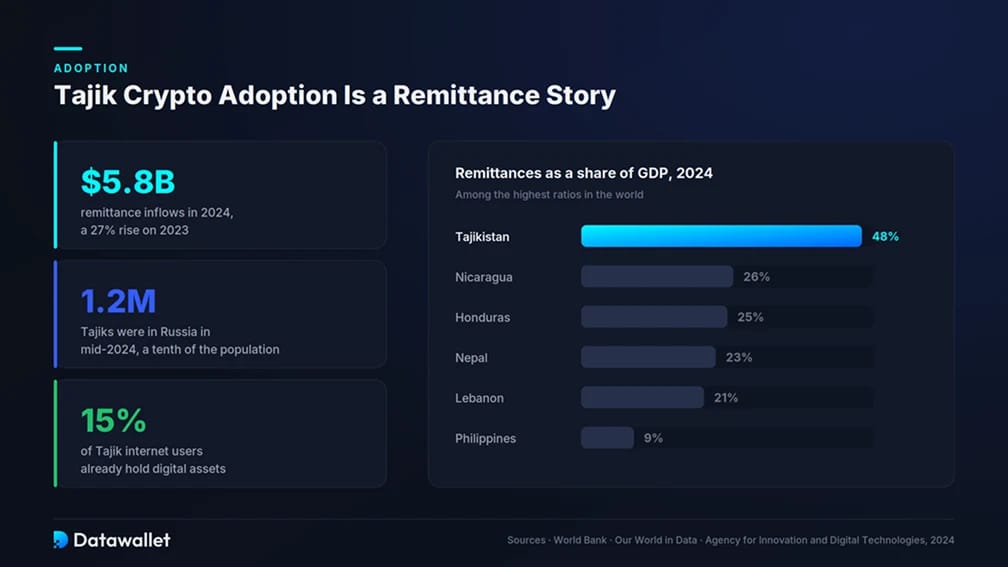
Tajik crypto adoption is a remittance story before it is anything else. The World Bank estimated remittance inflows reached $5.8 billion in 2024, around 45% of GDP, among the highest ratios on earth, with the World Bank's 2025 economic update putting the peak at 49% of GDP. Roughly 1.2 million Tajiks were in Russia in mid-2024, more than a tenth of the population, and the money they send home funds household consumption nationwide.
Sanctions friction on Russian payment rails has pushed a slice of that corridor on-chain. When transfer channels between Russia and Tajik banks tighten, USDT bought in roubles and sold for somoni on a P2P desk does the same job with less counterparty paperwork. The TJS order books reflect it: stablecoins dominate volume, with BTC and ETH a distant second.
Domestic interest runs ahead of the legal framework. A 2024 study by the government's own innovation agency found that about 15% of Tajik internet users already hold digital assets, striking for a country with no licensed venue. With a young, mobile-first population and bank deposits near just 10% of GDP, the phone-based P2P pattern that drove adoption across Central Asia has plenty of room left here.
How to Buy Bitcoin in Tajikistan
The dependable path runs from a local card or wallet into USDT on a P2P desk, then a spot trade into BTC. The sequence we use:
- Open the TJS P2P desk on Bybit or Binance. Filter for TJS and confirm active merchants accept your payment method, whether a Korti Milli transfer, Alif, DC Wallet, or your bank's app. Compare the quoted rate against mid-market USDT before committing.
- Complete KYC with your Tajik passport or ID. Enter your name exactly as the passport's Latin transliteration spells it. Matching details clear verification within hours; mismatches stall it for days.
- Buy USDT through a verified merchant. Pick one with several hundred completed trades and a 98%+ completion rate, pay through your card or wallet app, and only mark the order as paid once the transfer has left your account. Escrow typically releases in 5 to 15 minutes.
- Swap USDT for BTC with a limit order. Skip the one-click convert screen and place a limit order on the BTC/USDT spot pair instead. The difference usually lands 1 to 3% in your favour.
- Decide where the BTC lives. Active traders can leave it on the exchange. Long-term holders should withdraw to self-custody, double-checking the address and network first. Our best crypto wallets guide covers the options.
The same desks work in reverse when you need somoni back, selling USDT to a merchant who pays your card or wallet.
Final Thoughts
For most Tajik users, Bybit is the platform to start with: a live somoni desk, full Russian-language support, and the deepest product stack behind it. Binance backs it up when you need the larger merchant pool for size, OKX adds the longest-running TJS book and Web3 access, and MEXC, Bitget, and Gate each earn a secondary role on fees, transparency, and altcoin reach.
Watch the institutional fight more than the price chart. A digital agency claiming a sandbox exchange, a central bank denying it exists, and a parliament criminalising grey mining within twelve months tells you Tajikistan is approaching the moment where it has to write actual rules. Until it does, nobody licenses the platform you use and nobody protects you if one fails, so spread risk across venues and keep long-term holdings in self-custody.
Before committing real money, run a small round trip. Buy TJS 500 of USDT, sell it back, and measure what the loop cost. Ten minutes of testing beats any review, including this one.
Our Methodology
We evaluated over 15 exchanges accessible from Tajikistan by creating accounts, completing KYC with Tajik documents, funding TJS through P2P with local cards and wallets, executing trades, and selling back to somoni. Each platform was scored across six criteria:
- Trust Score: Our proprietary rating (out of 5) weighting security history, proof-of-reserves transparency, regulatory standing elsewhere, platform longevity, and audit coverage.
- TJS Funding Methods: Confirmed Korti Milli, Alif, DC Wallet, Eskhata, Spitamen, Amonatbonk, and bank transfer support through P2P, testing settlement speed, merchant depth, and spread against mid-market USDT.
- Merchant Quality: Reviewed completion rates, account ages, and dispute resolution speed on each TJS desk, with attention to payment-reversal exposure.
- Language and Usability: Tested Russian-language coverage across the app, support, and dispute process, plus performance on mid-range Android over mobile data.
- Assets and Liquidity: Placed market and limit orders on BTC/USDT, ETH/USDT, and at least one mid-cap pair to measure spread, depth, and fill quality.
- Fee Structure: Compared maker and taker fees, withdrawal charges, P2P spreads, and the all-in cost of a somoni round trip.
We excluded platforms with no functional TJS path or USDT workaround, persistently empty merchant books, and venues with serious unresolved compliance failures. Testing ran from March to June 2026.

.webp)