


Login to Track Your Live Crypto Portfolio
Sign Up and Track Your Live Crypto Portfolio for Free
Forgot your password?
HBO Promises to Unmask Satoshi Nakamoto Next Week

This article has been reviewed and verified for accuracy by our editorial team. All claims, data points and platform details are cross-referenced against primary sources.
Some links on this page are affiliate links. Datawallet may earn a commission when you sign up through them, at no extra cost to you. This never influences our editorial ratings, rankings or recommendations.
Some links on this page are affiliate links. Datawallet may earn a commission when you sign up through them, at no extra cost to you. Ratings and rankings reflect our own testing and assessment criteria.
GM. As we head into the weekend, there’s hope prices might rebound so we can end the first week of October in the green and resume the bull market trend.
On the news front, it feels like we're back to the early days of crypto. We’ve got rumors about Satoshi Nakamoto’s identity and some of Ethereum ICO whales are making onchain movements.
Here are the details. 👇
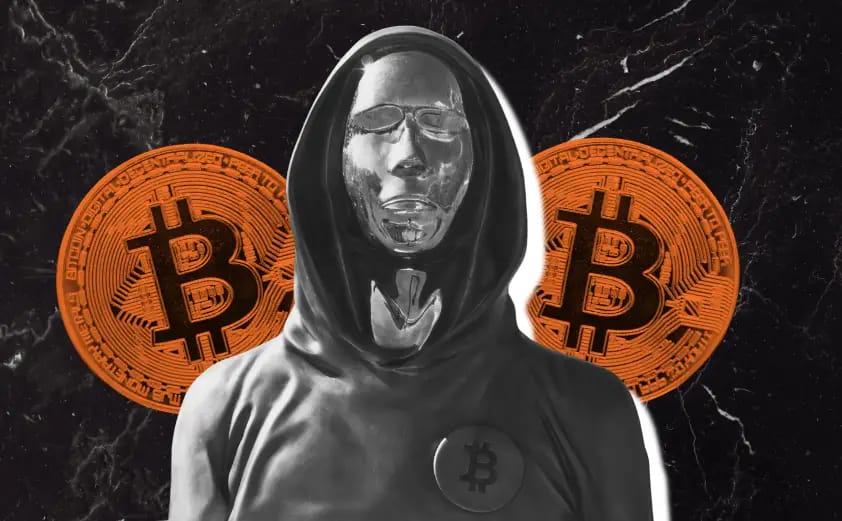
HBO Promises to Unmask Satoshi Nakamoto Next Week
An upcoming HBO documentary, Money Electric: The Bitcoin Mystery, promises to finally reveal the identity of Bitcoin creator Satoshi Nakamoto. The film was produced by the director of "The Big Short", a classic about the 2007-2008 financial crisis. While many suspect it might point to Len Sassaman, a cryptographer who passed away in 2011, viewers will have to wait to find out on Oct 8.
Rumors have circulated on X as people debate about the potential revelation of Satoshi’s identity. If the film does indeed uncover who is behind Bitcoin, the implications could be serious, especially given that Satoshi’s wallets still hold 1.1 million BTC. Some speculate the price impact might be minimal if the identity belongs to a deceased person, while most say that Satoshi will remain a mystery.
Ethereum Whale From the 2014 ICO Dumps $47 Million
Ethereum is facing renewed uncertainty as a whale from its 2014 ICO sold $47.5 million worth of ETH this week. Onchain data revealed that this dormant entity has offloaded 19,000 ETH over the last two days, following a previous sale of 12,000 ETH in late September. This selling spree has contributed to Ether’s sharp price drop, falling 10% in just three days, now sitting at $2,365.
As the market reacts, Ethereum critics have reemerged, amplifying FUD (fear, uncertainty, and doubt) surrounding the asset. Crypto Twitter has joked that even early ETH investors are losing faith. Meanwhile, institutional interest remains intact as Ether ETFs saw good inflows on October 2, displaying that some investors remain bullish despite the price decline.
Vitalik Supports Lowering Ethereum’s Solo Staking Criteria
Vitalik Buterin has voiced support for lowering Ethereum’s staking requirements to encourage greater decentralization. Currently, solo stakers need to lock up 32 ETH, a barrier that limits broader participation in staking. Buterin suggested reducing the requirement to 16 or 24 ETH in the short term, with a future goal of bringing it down to just 1 ETH.
Solo staking plays a crucial role in maintaining Ethereum’s decentralization and security, according to Buterin. He believes that even a small number of solo stakers can serve as a vital defense against 51% attacks. This could affect the network and scaling efforts, according to community discussion, especially with the upcoming Ethereum Pectra Upgrade.
Grayscale Launches Aave Trust for DeFi Lending Exposure
Grayscale has launched a new trust providing investors with direct exposure to Aave, a decentralized lending protocol on Ethereum. The Grayscale Aave Trust allows investors to track the value of AAVE tokens without directly holding them. This aligns with Grayscale’s strategy of expanding into decentralized finance (DeFi) and offering more exposure to innovative blockchain applications.
Aave is one of the largest and most established DeFi projects, offering lending and borrowing services via smart contracts. Grayscale’s trust offers a safer route for investors interested in DeFi without dealing with the complexities of token management. This marks another step in Grayscale’s efforts to bring institutional and retail investors closer to DeFi markets.
Data of the Day
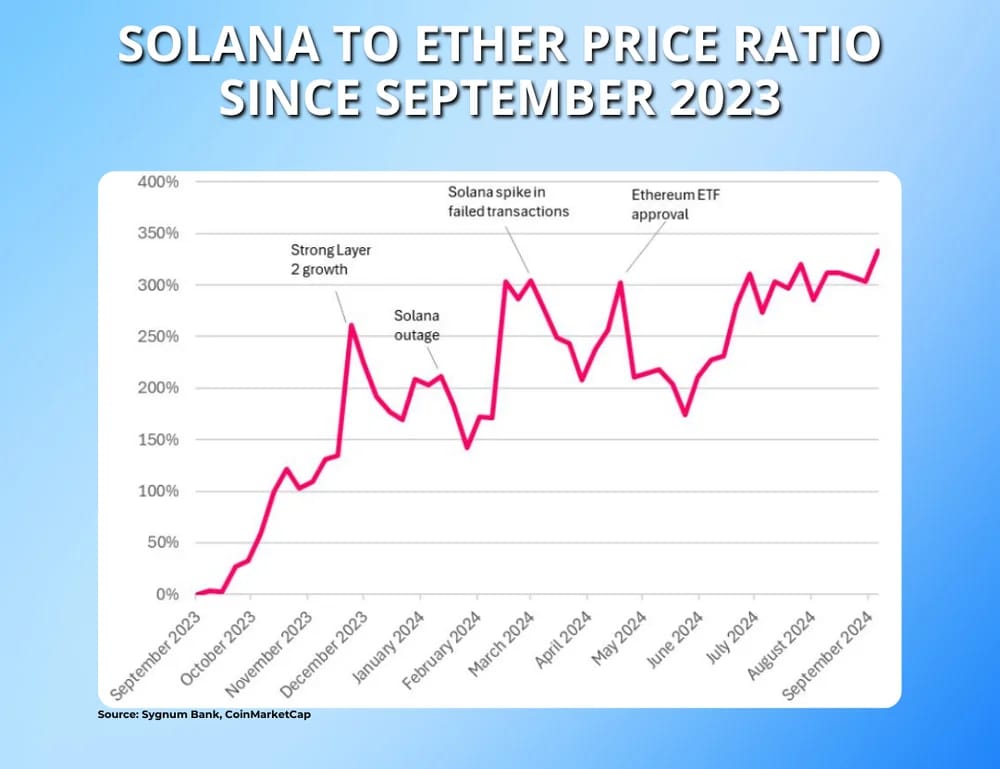
A report by Sygnum suggests that Solana is the top challenger to Ethereum due to its scalability, as major financial institutions like PayPal, Visa, and Franklin Templeton integrate it into their platforms. However, Ethereum's 81% market share and Solana's reliance on meme coin trading remain challenges.
For now, Solana’s price is up 300% year-on-year, but experts caution that Ethereum’s more "robust ecosystem" and technical advantages still give it an edge as the top Layer 1 blockchain behind Bitcoin.
More Breaking News
- Binance trading activity dropped for both derivatives and spot markets in September, hitting its lowest levels since 2023 as combined market share goes to 36.6%.
- Chainalysis co-founder Michael Gronager has stepped back from his CEO role, with President Sari Granat serving as interim CEO amid ongoing personal leave.
- A CryptoPunk NFT sale supposedly worth $56 million has been debunked as a marketing stunt involving a flash loan, costing only $54 in transaction fees.
- Aerodrome Finance now accounts for over $1 billion in deposits on Base, making up more than half of the network’s $2 billion total value locked.
- Binance Labs has invested in Sophon, a ZKsync-based Layer 2 network, ahead of its mainnet launch and token deployment next month, bringing its total funding to $70m.
For the latest updates on digital asset markets, follow us on X @Datawalletcom.
For the latest updates on digital asset markets, follow us on X @Datawalletcom.
Get tomorrow’s issue in your inbox