







Can I Bridge to Robinhood Chain?
Yes, you can bridge to Robinhood Chain from Ethereum, Arbitrum, Base, Solana, and most other major networks. The chain is a permissionless, EVM-compatible Layer 2 built with Arbitrum technology, so any cross-chain bridge that has added the network can deliver assets to a self-custody wallet.
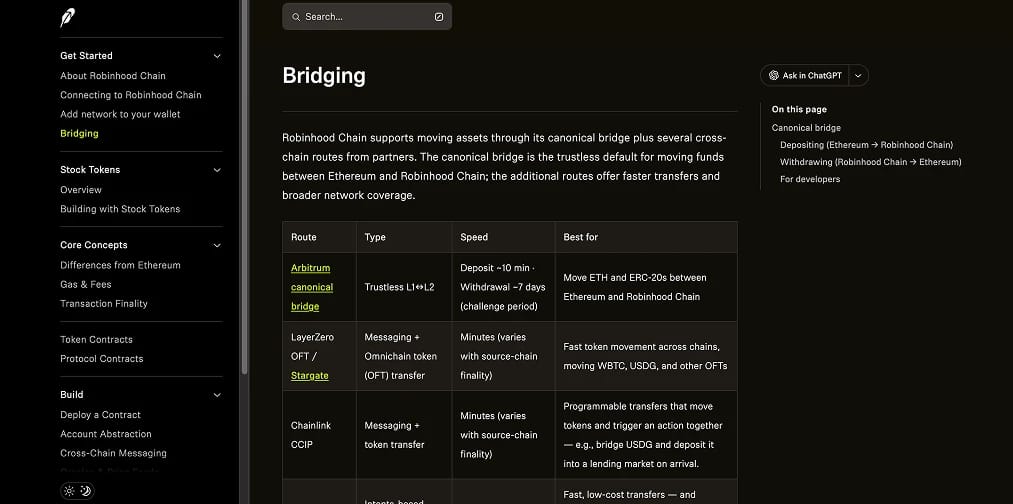
Robinhood's developer documentation names a canonical Arbitrum bridge alongside partner integrations from LI.FI, the engine behind Jumper, as well as Relay, Across, Stargate, and Chainlink CCIP. Inbound liquidity centres on ETH, USDC, and USDG, the Paxos-issued stablecoin that anchors the chain's launch trading pairs.
How to Bridge to Robinhood Chain
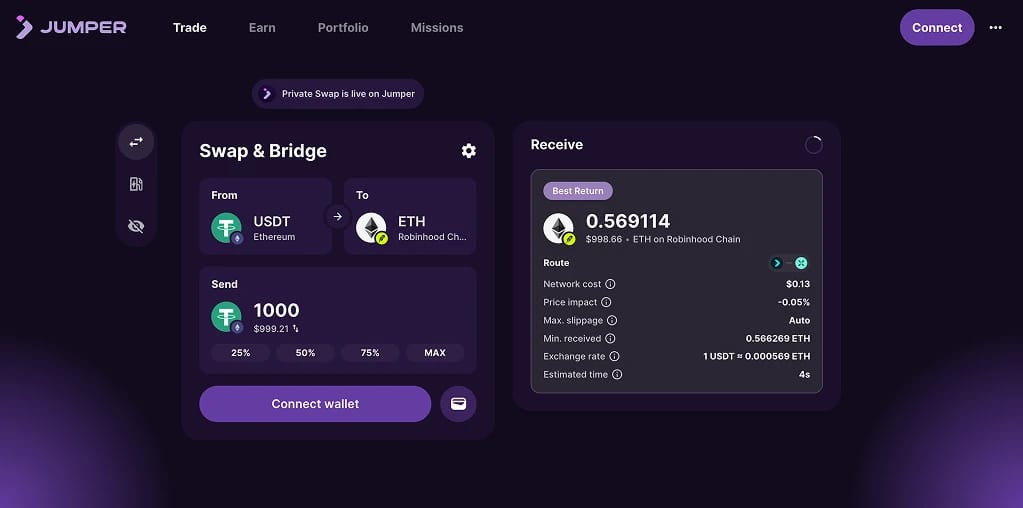
We recommend Jumper, the flagship app of the LI.FI protocol that Robinhood lists among its bridging partners. It compares dozens of bridges and DEXs on every transfer, settles most corridors in under a minute, and lets you swap into a different token mid-transfer.
Follow these steps to bridge to Robinhood Chain with Jumper:
- Connect Your Wallet: Open Jumper and connect MetaMask, Rabby, or another supported wallet.
- Set Up the Transfer: Pick your source chain and token, then select Robinhood Chain as the destination.
- Review the Quote: Jumper ranks the available paths and displays the fee, expected output, and estimated arrival time.
- Sign and Confirm: Approve the transaction, and your assets should land on Robinhood Chain within a few minutes.
Since gas on Robinhood Chain is paid in ETH, include some ETH in your first transfer if you plan to transact from an external wallet.
What are the Fees?
Jumper charges no platform fee of its own, so the total cost of a transfer is the gas on your source chain plus whatever the winning bridge takes, usually a small fraction of a percent. Ethereum is the most expensive starting point, so check current gas prices before moving a large amount.
Once your funds arrive, transactions on the network cost cents because it posts data to Ethereum blobs. Robinhood is also covering gas for eligible Robinhood Wallet users during the first 90 days after launch, including bridging in, though external wallets still pay their own way.
What You Can Do After Bridging
Robinhood Chain launched with a working DeFi stack rather than an empty network. Uniswap runs a dedicated AMM as the primary public liquidity venue, Lighter handles perpetual futures, and Morpho powers the lending markets behind Robinhood Earn.
The headline asset class is Stock Tokens, tokenized equities tradable around the clock in more than 120 countries. Robinhood's disclosures confirm they are unavailable to US persons and restricted in several other regions, so verify eligibility before bridging funds to trade them.
Robinhood Chain Bridging Risks
The main risks are the ones that follow any chain this young, and each takes a minute to manage:
- Thin launch liquidity: Large transfers can see wider slippage than on established networks, so split bigger moves or compare quotes at different sizes.
- Fake bridge frontends: Launch hype attracts phishing clones. Type jumper.xyz into your browser directly instead of following links from social media.
- Unfamiliar contract addresses: Bridged ERC-20s carry different addresses on Robinhood Chain than on Ethereum. Verify tokens on the official Blockscout explorer before trading them.
- Standing approvals: Grant exact-amount approvals and revoke permissions you no longer use, since forgotten approvals give compromised contracts ongoing access to your wallet.
Alternative Robinhood Chain Bridges
A few other platforms handle transfers into Robinhood Chain reliably.
The canonical bridge is the trustless default, but exits wait out Arbitrum's seven-day challenge period and require a final claim transaction on Ethereum, so most users exit through an aggregator.
About Robinhood Chain
Robinhood Chain is a permissionless Layer 2 operated by Robinhood Digital Assets and purpose-built for tokenized real-world assets, connecting the broker's nearly 28 million customers to onchain markets. Chainlink supplies price feeds and cross-chain messaging, while first-come, first-served sequencing keeps transaction ordering predictable.
If you already hold funds in the main app, buying crypto through Robinhood and moving it onchain via Robinhood Wallet is the simplest entry, since the wallet supports the network natively.
Bottom Line
Bridging to Robinhood Chain takes a few minutes with Jumper, which scans dozens of bridges to surface the cheapest working path from wherever your funds sit. Across, Relay, and the canonical Arbitrum bridge cover the remaining corridors.
Bring ETH for gas, confirm Stock Token eligibility in your region before committing capital, and treat the network like any young chain by starting with a small test transfer.
.webp)