







Compare Top African Crypto Exchanges
1. Bybit
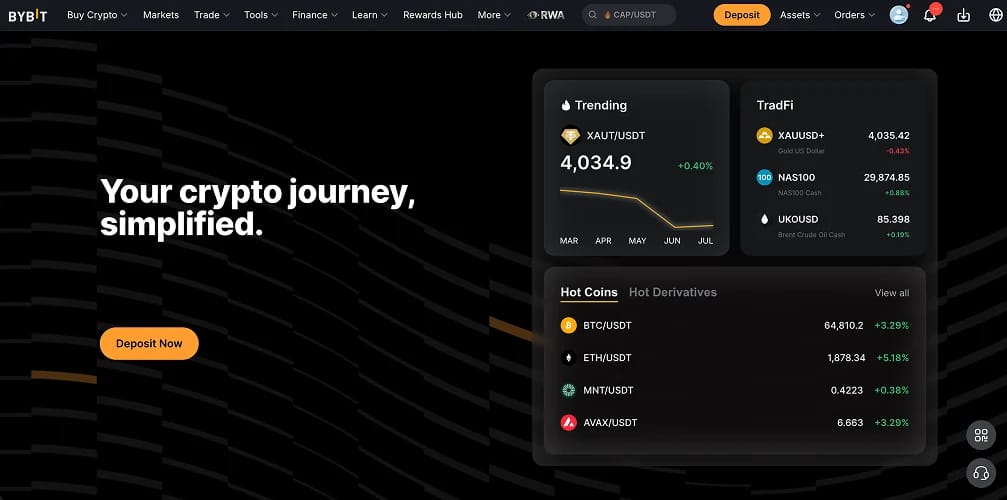
Bybit ranks first as the only global exchange that worked in Nigeria, Kenya, and South Africa at once in our testing. South Africans can deposit rand by bank transfer through Money Doc, Bybit's juristic representative and an authorised financial services provider, while Bybit's own crypto licence application sits with the FSCA. Nigerians kept a working naira P2P desk here after Binance withdrew, and Kenyan merchant counts trailed only Binance in our checks.
It is also the world's second-largest exchange by volume. Spot covers more than 1,800 assets at 0.10%, perpetual futures start at 0.02% maker with leverage to 100x, and the TradFi range adds US stocks, gold, and oil as USDT-quoted perpetual contracts. Hacken verifies the monthly proof-of-reserves reports, and copy trading and Earn products sit in the same account. Our first naira P2P order, paid through a GTBank transfer, cleared escrow in nine minutes.
One scar sits on the record. Bybit lost roughly $1.5 billion to North Korea's Lazarus Group in February 2025, the biggest exchange theft on record, though it refilled reserves within 72 hours and no customer lost funds. It also holds no African licence, a gap shared by every offshore platform here. Our Bybit review has the full record.
Pros
- Working local-currency entry points in Nigeria, Kenya, and South Africa, including rand bank deposits through an authorised FSP representative.
- 1,800+ spot assets plus stock, gold, and oil perpetuals under one account.
- Monthly proof-of-reserves and a recovery from the largest hack in crypto history with zero customer losses.
Cons
- The February 2025 Lazarus Group theft remains a blemish despite full recovery.
- Not yet licensed by the FSCA, Nigeria's SEC, or Kenya's regulators, so users hold offshore counterparty risk.
- The product menu is heavy for a first-time buyer who only wants USDT.
2. Binance
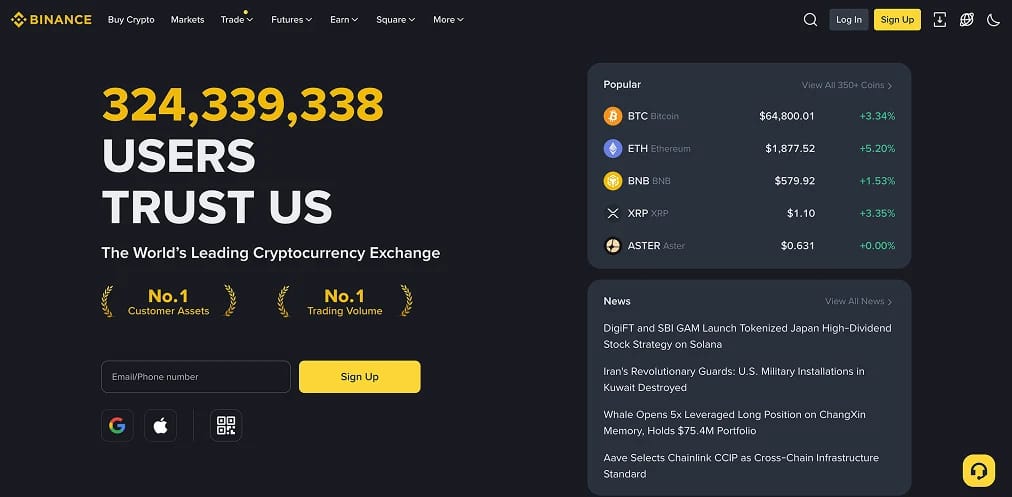
If your money is in shillings, rand, or cedi, Binance still offers the deepest P2P market on the continent. Its KES desk has supported M-Pesa for years and showed more merchants than any rival we tested, ZAR and GHS orders filled quickly through the trading day, and the app works in Swahili alongside English. Trading costs 0.10% on spot across 500+ assets, or 0.075% paid in BNB, against the most liquid order books in crypto.
Nigeria is the big exception. Binance discontinued all naira services in March 2024 after the government blamed its P2P desk for the currency's slide, and Nigerian internet providers block its website. The exchange is now negotiating an out-of-court settlement in the tax case against it, but until that resolves, Nigerians cannot deposit or withdraw naira.
Outside Nigeria the caveats are lighter but real. Binance holds no licence in Kenya and has stated it does not intend to seek one, and the $4.3 billion US Department of Justice settlement from 2023 still shadows the global compliance record. We recommend it for East and Southern African funding and point Nigerians elsewhere. Our Binance review tracks the rebuild.
Pros
- The deepest P2P merchant pools in shilling, rand, and cedi, with M-Pesa settlement in minutes.
- 0.10% spot fees, or 0.075% paid in BNB, on the most liquid order books anywhere.
- Swahili-language interface and support, a detail no major rival matches in East Africa.
Cons
- No naira deposits or withdrawals, and the website is blocked by Nigerian internet providers.
- Unlicensed in Kenya and most African markets, with no stated plan to register locally.
- The 2023 US settlement and the ongoing Nigerian litigation weigh on its record.
3. Bitget
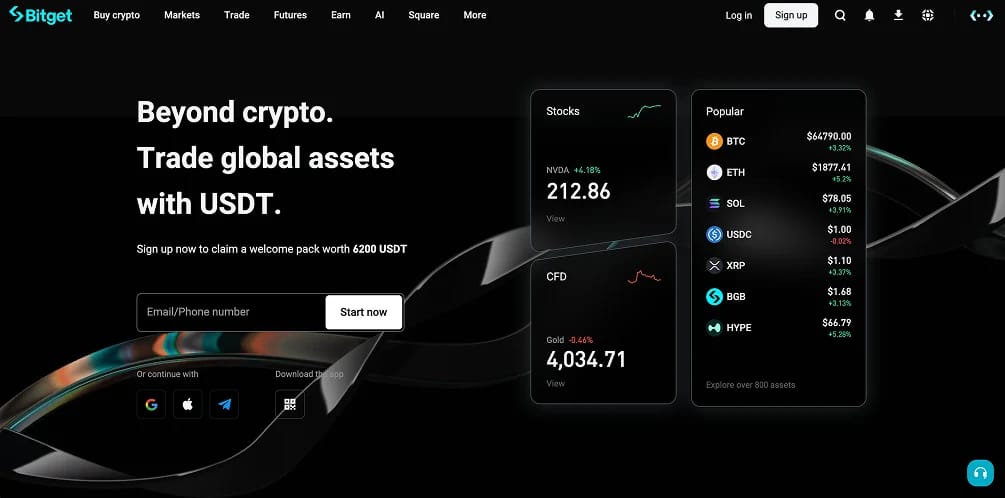
Anyone whose money lives in a mobile wallet rather than a bank account should start their comparison at Bitget. Its zero-fee P2P desk takes M-Pesa and Airtel Money in Kenya, Telebirr and CBE Birr in Ethiopia, OPay, PalmPay, and every major bank in Nigeria, and standard transfers in South Africa. No other platform covered as many African payment methods in our testing, and the app runs in Swahili.
Once funded, the account holds up as a full exchange. Spot spans more than 800 assets at 0.10% fees, Earn products pay yield on idle stablecoins, and the copy trading system leads the industry, compared in our guide to the best copy trading platforms. Bitget's proof-of-reserves reporting most recently showed a 169% total reserve ratio, backed by a protection fund above $400 million.
Merchant depth sets the ceiling. Desks thin out after Kenyan and Nigerian business hours and spreads on small orders widen, so compare its quote against Binance or Bybit before filling anything above a few hundred dollars. Our Bitget review covers the platform in full.
Pros
- Zero-fee P2P spanning M-Pesa, Airtel Money, Telebirr, OPay, PalmPay, and bank transfers.
- 169% proof-of-reserves ratio and a protection fund above $400 million.
- The most mature copy trading product in the industry, plus 800+ spot assets.
Cons
- Merchant pools thin outside peak African hours, widening spreads on small orders.
- No licence in any African jurisdiction.
- The product-dense interface slows down a simple first purchase.
4. OKX
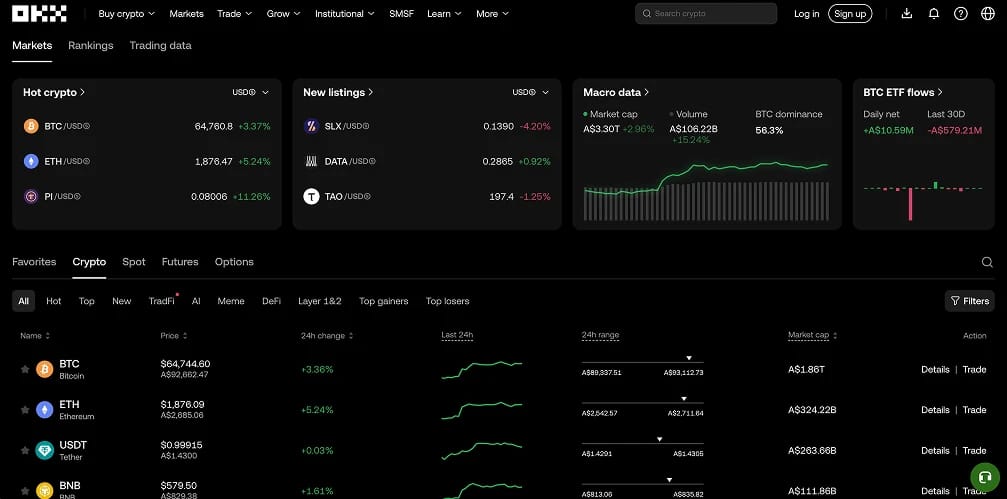
Every trade on OKX costs less than it would anywhere else on this list. Spot fees of 0.08% maker and 0.10% taker undercut every other major venue serving African retail, and the P2P desk quotes naira, shilling, and rand through verified merchants at no platform fee.
The built-in Web3 wallet reaches more than 100 chains and a DEX aggregator without a separate app. A P2P purchase can go straight into DeFi, staking, or tokens that never list on centralised venues, and on a continent where stablecoin yield is often the whole point, that shortcut earns its place. OKX has also published monthly proof-of-reserves attestations since late 2022, one of the longest unbroken disclosure records among the majors.
African merchant depth is where it trails. Our counts found fewer active naira and shilling merchants than on Bybit or Bitget, so small orders give up more to the spread, and OKX holds no African licence. Treat it as the low-cost trading account fed by USDT bought elsewhere. Our OKX review goes deeper.
Pros
- Spot fees of 0.08% maker and 0.10% taker, the lowest of any major exchange in Africa.
- Web3 wallet and DEX aggregation across 100+ chains inside the exchange app.
- Monthly Merkle-tree proof-of-reserves published since late 2022.
Cons
- Thinner African P2P merchant pools than Bybit, Binance, or Bitget.
- No licence in any African market.
- Web3 features add complexity that pure stablecoin savers will not use.
5. KuCoin
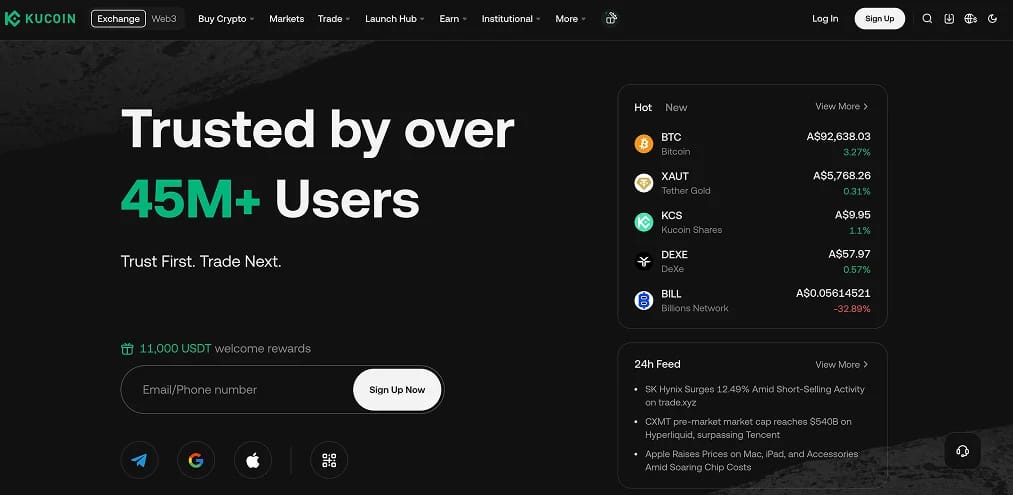
African traders hunting tokens that have not reached Binance or Bybit keep a KuCoin account for that purpose alone. The venue lists more than 700 assets, picks up smaller-cap tokens before the giants do, and runs GemSPACE to surface new projects early. Grid and DCA bots plus yield on idle USDT through KuCoin Earn make the account useful between hunts.
Funding is the weak side. Shallow African P2P desks push most users we know to buy USDT on Bybit or Bitget first and move it across as a TRC20 transfer, a network we explain in our TRC20 USDT guide. That extra step is tolerable for a secondary altcoin account and disqualifying for a primary one.
KuCoin's operating entity pleaded guilty in January 2025 to running an unlicensed money transmitting business in the US, a case that cost $297 million in penalties and a two-year exit from that market. The compliance programme has since been rebuilt, and we still size balances on it accordingly. Our KuCoin review has the detail.
Pros
- 700+ assets and a listing pipeline that catches small caps early through GemSPACE.
- Native grid, DCA, and rebalancing bots plus yield on idle stablecoins.
- Reliable USDT deposits over TRC20 for users funding from another exchange.
Cons
- African P2P depth is too thin to serve as a primary entry point.
- The January 2025 US guilty plea carried $297 million in penalties.
- Better as a secondary altcoin venue than a first exchange.
6. MEXC
For anyone averaging into BTC or ETH on a schedule, MEXC's zero maker fees on most spot pairs repeat their saving every month. The catalogue of 2,800+ assets is the largest here, and new tokens often appear before the bigger venues pick them up.
African funding is the compromise. P2P support for local currencies is patchy, so the standard path is a card purchase at a 2% to 5% processor markup or a TRC20 USDT transfer from a P2P buy completed elsewhere.
MEXC also publishes proof-of-reserves less often than Bitget or OKX, part of the price of the fee structure. Our MEXC review sets out where it fits.
Pros
- 0% maker fees on most spot pairs, the cheapest repeat-purchase structure on this list.
- 2,800+ listed assets with the fastest listing pipeline of any major venue.
- Low futures fees for active traders who fund in USDT.
Cons
- African local-currency P2P support is thin and inconsistent.
- Less frequent proof-of-reserves disclosure than the top-tier venues.
- Card funding carries the standard 2% to 5% processor markup.
How to Choose a Crypto Exchange in Africa
The checks below run in order of consequence. The early ones protect your balance, and the fee comparison at the end separates platforms that already passed.
- Check your country's rulebook before anything else: South Africa requires exchanges serving locals to hold an FSCA licence, and the regulator publishes its approved list of crypto asset service providers, which includes Luno, VALR, and Yellow Card. Kenya's VASP Act is in force but no platform has been licensed yet, Nigeria's SEC has issued provisional approvals to local exchanges Quidax and Busha, and Egypt and Morocco prohibit trading. Our country guides for South Africa, Nigeria, Kenya, Egypt, and Morocco cover each market.
- Test the P2P desk with a small order first: Filter for your currency and look for 20 or more merchants active during your business hours, completion rates above 95%, and quotes inside 1% to 2% of the mid-market USDT price. If the desk sits empty, the platform does not serve your country regardless of what its marketing claims.
- Match the platform to your payment method: M-Pesa and Airtel Money users get the widest choice on Bitget and Binance, Nigerian bank and OPay users should compare Bybit and Bitget quotes, and South Africans can fund Bybit by rand bank transfer or use an FSCA-licensed local platform. Our guides to buying crypto with Capitec, FNB, and Standard Bank cover what each South African bank permits.
- Measure the full round trip, not the headline fee: The real cost of an African crypto purchase sits in the P2P spread on both sides plus the withdrawal fee, and a platform advertising 0.10% trading fees can cost 3% to 5% all-in. A small USDT purchase, sale, and cash-out will reveal your true rate before serious money is involved.
- Mind your bank's tolerance: Banks in Nigeria, Ethiopia, and Egypt have frozen accounts showing crypto-linked transfer patterns, and even in permissive markets a first payment to a new P2P counterparty can trigger a fraud review. Keep payment references neutral, never write crypto terms in transfer descriptions, and save a record of every trade.
Crypto and Bitcoin Regulation in Africa
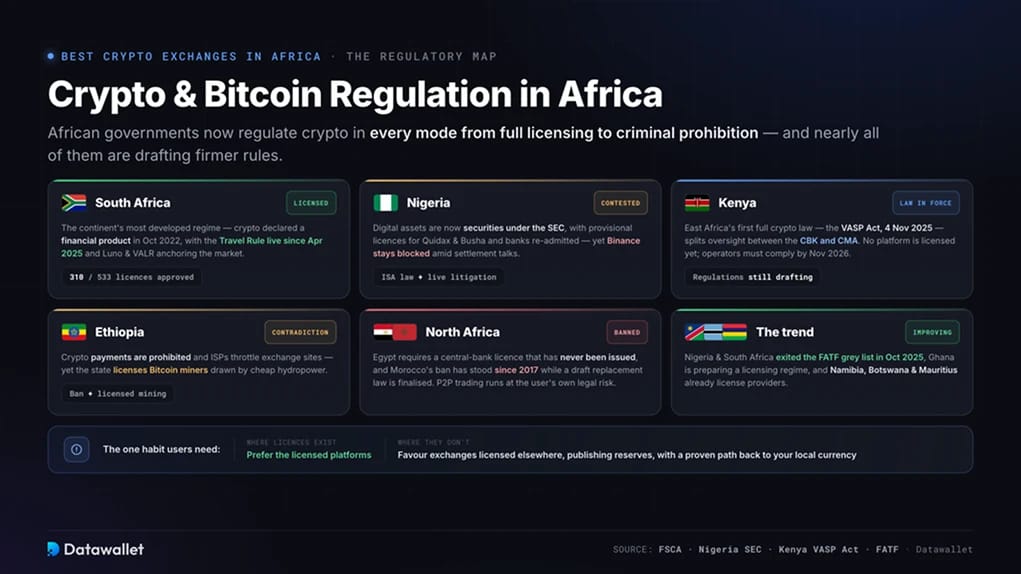
African governments now regulate crypto in every mode from full licensing to criminal prohibition, and nearly all of them are drafting firmer rules.
- South Africa runs the continent's most developed regime: The FSCA declared crypto assets financial products in October 2022 and had approved 310 of 533 licence applications by the end of March this year. The Travel Rule has attached sender and recipient details to transfers since April 2025, the regulator is investigating unlicensed operators, and licensed platforms such as Luno and VALR anchor the local market.
- Nigeria recognised crypto in law while fighting its biggest platform: The Investments and Securities Act classifies digital assets as securities under the SEC, which has issued provisional licences to local exchanges Quidax and Busha but has been slow to approve more. Banks may serve licensed crypto firms again after the central bank lifted its ban in December 2023, yet Binance remains blocked and in settlement talks over billions in claimed taxes and damages.
- Kenya passed East Africa's first full crypto law: The Virtual Asset Service Providers Act came into force on 4 November 2025, splitting oversight between the central bank for wallets, payments, and stablecoins and the Capital Markets Authority for exchanges and brokers. No platform has been licensed yet because the enabling regulations are still being drafted, and operators have until November 2026 to comply.
- Ethiopia bans payments while licensing miners: The National Bank of Ethiopia prohibits using crypto for payments, yet the state licenses Bitcoin miners drawn by cheap hydropower, and internet providers throttle exchange websites. Our Ethiopia guide covers how users work within that contradiction.
- North Africa remains the hardest region: Egypt's banking law prohibits dealing in crypto without a central bank licence that has never been issued, and Morocco's ban has stood since 2017 while its central bank finalises a draft law to replace it. Trading in both countries happens on P2P desks at the user's own legal risk.
- The compliance map is improving underneath: Nigeria and South Africa both exited the FATF grey list in October 2025, Ghana's central bank is preparing a licensing regime of its own, and Namibia, Botswana, and Mauritius already license providers. Each new statute pulls another slice of the continent's trading out of the offshore market.
Users need one habit here. Prefer licensed platforms where your country has them, and where it has none, favour exchanges holding licences elsewhere, publishing reserves, and offering a proven path back to your local currency.
How Does Africa Tax Crypto?
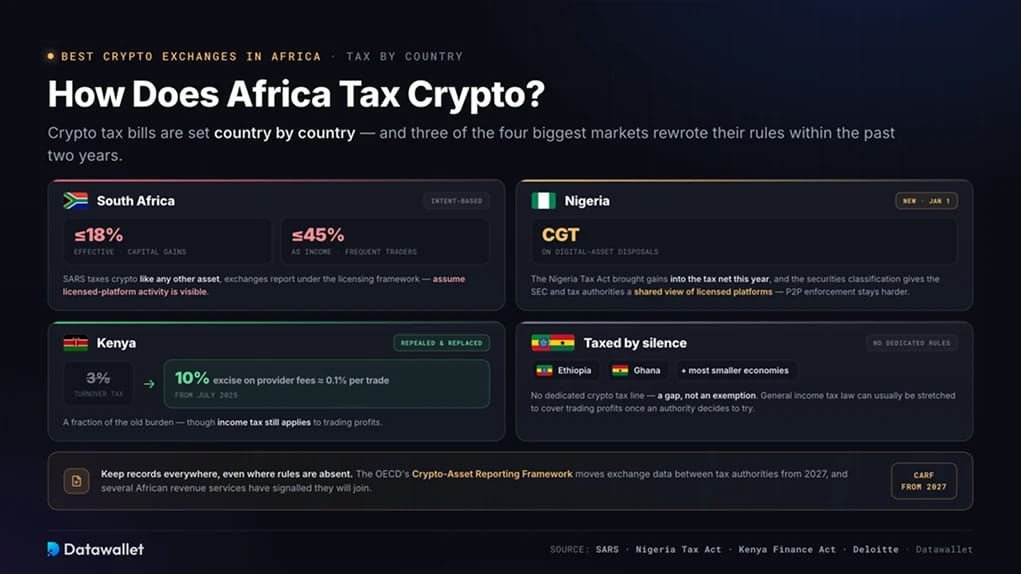
Crypto tax bills in Africa are set country by country, and three of the four biggest markets rewrote their rules within the past two years.
- South Africa taxes crypto like any other asset: SARS treats gains as capital or revenue depending on intent, taxed at up to 18% effective for capital gains or up to 45% as income for frequent traders. Exchanges report under the licensing framework, and SARS has run compliance campaigns asking taxpayers to disclose crypto holdings, so assume your licensed-platform activity is visible.
- Nigeria brought gains into the tax net this year: The Nigeria Tax Act that took effect on 1 January applies capital gains treatment to digital asset disposals, and the securities classification under the ISA gives the SEC and tax authorities a shared view of licensed platforms. Enforcement against P2P activity remains harder, but the legal basis now exists.
- Kenya scrapped its turnover tax for a fee levy: The Finance Act repealed the 3% digital asset tax on gross transaction value and replaced it with a 10% excise duty on the fees charged by virtual asset providers from July 2025. On a trade with a 1% platform fee, the duty works out to 0.1% of the transaction, a fraction of the old burden, while income tax still applies to trading profits.
- Most other markets tax by silence: Ethiopia, Ghana, and most smaller economies have no dedicated crypto tax line, which is a gap rather than an exemption. General income tax law can usually be stretched to cover trading profits once an authority decides to try.
- Keep records everywhere, even where rules are absent: The OECD's Crypto-Asset Reporting Framework will move exchange data between tax authorities from 2027, and several African revenue services have signalled they will join. A dated export of every trade is cheap insurance against rules applied after the fact.
None of this is tax advice, and cross-border earners in particular should speak to a professional who knows their jurisdiction.
Cryptocurrency Adoption in Africa
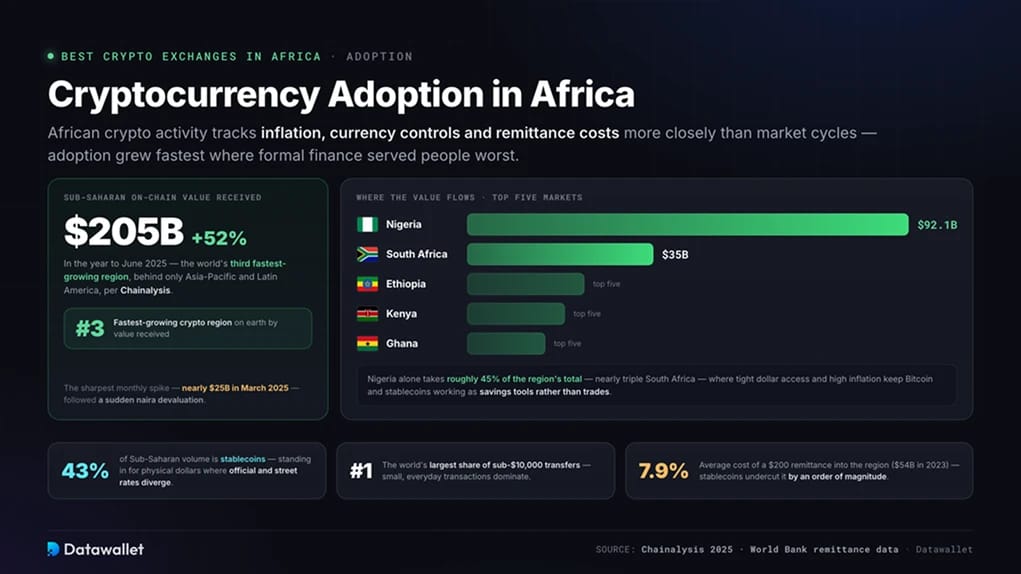
African crypto activity tracks inflation, currency controls, and remittance costs more closely than market cycles.
- Sub-Saharan Africa is the world's third fastest-growing region: On-chain value received reached $205 billion in the year to June 2025, up 52%, behind only Asia-Pacific and Latin America, according to Chainalysis. The sharpest monthly spike, nearly $25 billion in March 2025, followed a sudden naira devaluation.
- Nigeria is the continent's centre of gravity: It received $92.1 billion over that period, roughly 45% of the region's total and nearly triple South Africa's $35 billion, with Ethiopia, Kenya, and Ghana rounding out the top five. Tight dollar access and high inflation keep Bitcoin and stablecoins working as savings tools rather than trades.
- Stablecoins do the everyday work: Dollar-pegged tokens carry 43% of Sub-Saharan crypto volume, standing in for physical dollars in economies where official and street exchange rates diverge. Small transfers dominate too, and the region's share of sub-$10,000 transactions is the largest in the world.
- Remittances explain much of the pull: Sub-Saharan Africa received about $54 billion in remittances in 2023 at an average cost near 7.9% for a $200 transfer, the most expensive corridor globally. Stablecoins over cheap networks undercut that by an order of magnitude, which is why freelancers and families adopted them first.
Our crypto adoption statistics and stablecoin statistics pages track the global comparison. Adoption grew fastest where formal finance served people worst.
How to Buy Bitcoin in Africa
Anyone with a verified account and a live P2P desk in their currency can buy Bitcoin in Africa in about fifteen minutes, and the cheapest sequence buys USDT first, then converts on the spot market.
- Pick the platform that matches your country and wallet: Bybit or Bitget in Nigeria, Binance or Bitget for M-Pesa users in Kenya, an FSCA-licensed platform or Bybit in South Africa, and Bitget for Telebirr users in Ethiopia. Confirm the P2P desk shows active merchants in your currency before registering.
- Complete KYC with matching documents: A national ID or passport plus a selfie clears most platforms within minutes. Type your name exactly as the document prints it, since name mismatches stall more African verifications than any other error.
- Buy USDT through a verified P2P merchant: Pick a merchant with a completion rate above 95%, place the order, pay through M-Pesa, bank transfer, or your mobile wallet, and mark payment as sent. Expect escrow to release within five to fifteen minutes, and never write crypto-related words in the payment reference.
- Convert USDT to BTC with a limit order: Open the BTC/USDT spot pair and set your own price with a limit order instead of tapping the one-click buy screen. Instant-buy quotes carry a hidden markup, and the limit order recovers 1% to 3% of it on a typical purchase.
- Decide on custody and start a record: Active traders can leave funds on the exchange, while long-term holders should withdraw to self-custody, an option we compare in our best crypto wallets guide. Export your trade history immediately, since several African tax authorities now have a legal basis to ask for it.
To sell, run the steps in reverse. Once the merchant confirms, the P2P release lands in M-Pesa or a bank account in minutes.
Final Thoughts
Bybit earned first place by working in Nigeria, Kenya, and South Africa simultaneously, a spread no rival matched. Binance keeps the deepest P2P markets everywhere its naira absence does not bite, Bitget covers more mobile money services than anyone, OKX wins on raw trading cost, KuCoin feeds altcoin hunters, and MEXC compresses fees for traders who fund in USDT.
Behind the rankings, Africa's regulators have stopped shouting from the sidelines and started issuing licences. South Africa has a functioning register, Kenya has a law waiting on its regulations, and Nigeria has both a securities framework and a court case that will define how global platforms are treated. Expect the exchanges serving Africans in a few years to be the ones on those registers, which makes today's offshore P2P desks a bridge rather than a destination.
Before trusting any platform with real money, run a rehearsal with a small amount. Deposit through your normal payment method, buy on the spot market, sell again, and pull the cash back out. What the loop cost and how long escrow held your money will tell you more than any ranking.
Our Methodology
Every platform here went through the same cycle in our hands. We registered, passed KYC on regional documents, deposited through M-Pesa, Nigerian bank transfer, South African EFT, and card, traded the live order books, and pulled local currency back out. Six criteria set each score.
- Trust Score: Our proprietary rating out of 5, weighting licences and registrations, reserve transparency, security history, longevity, and audit coverage.
- African Funding Methods: Confirmed P2P support for mobile money and bank transfers in naira, shilling, rand, cedi, and birr, measuring merchant depth, escrow speed, and spread against mid-market USDT.
- Regulatory Standing: Verified licence claims against the FSCA register, Nigeria's SEC announcements, and Kenya's CBK and CMA notices, and weighted enforcement history in African markets.
- Security Track Record: Reviewed breach history, custody arrangements, proof-of-reserves cadence, protection funds, and account controls such as 2FA and withdrawal whitelists.
- Assets and Liquidity: Placed market and limit orders on BTC/USDT, ETH/USDT, and one mid-cap pair on each venue, measuring spread, depth, and fill quality.
- Fee Structure: Compared maker and taker schedules, P2P spreads on both sides, withdrawal charges, and the all-in cost of a $200 equivalent round trip, the transfer size most African users move.
Platforms fell out of contention when they lacked a working entry point from a major African currency, failed repeatedly on access, or carried unresolved enforcement actions putting user funds at identifiable risk. Testing ran from April to July, and we rechecked regulatory statuses against official registers before publication.
.webp)